Tornado Damage Roof Repair in Rockford, IL
Tornado damage roof repair for commercial buildings in Rockford, IL: emergency dry-in, structural checks, claim records and a rebuild planned around winter.
Tornado Damage Roof Repair
Tornado Damage Roof Repair
Rockford, IL
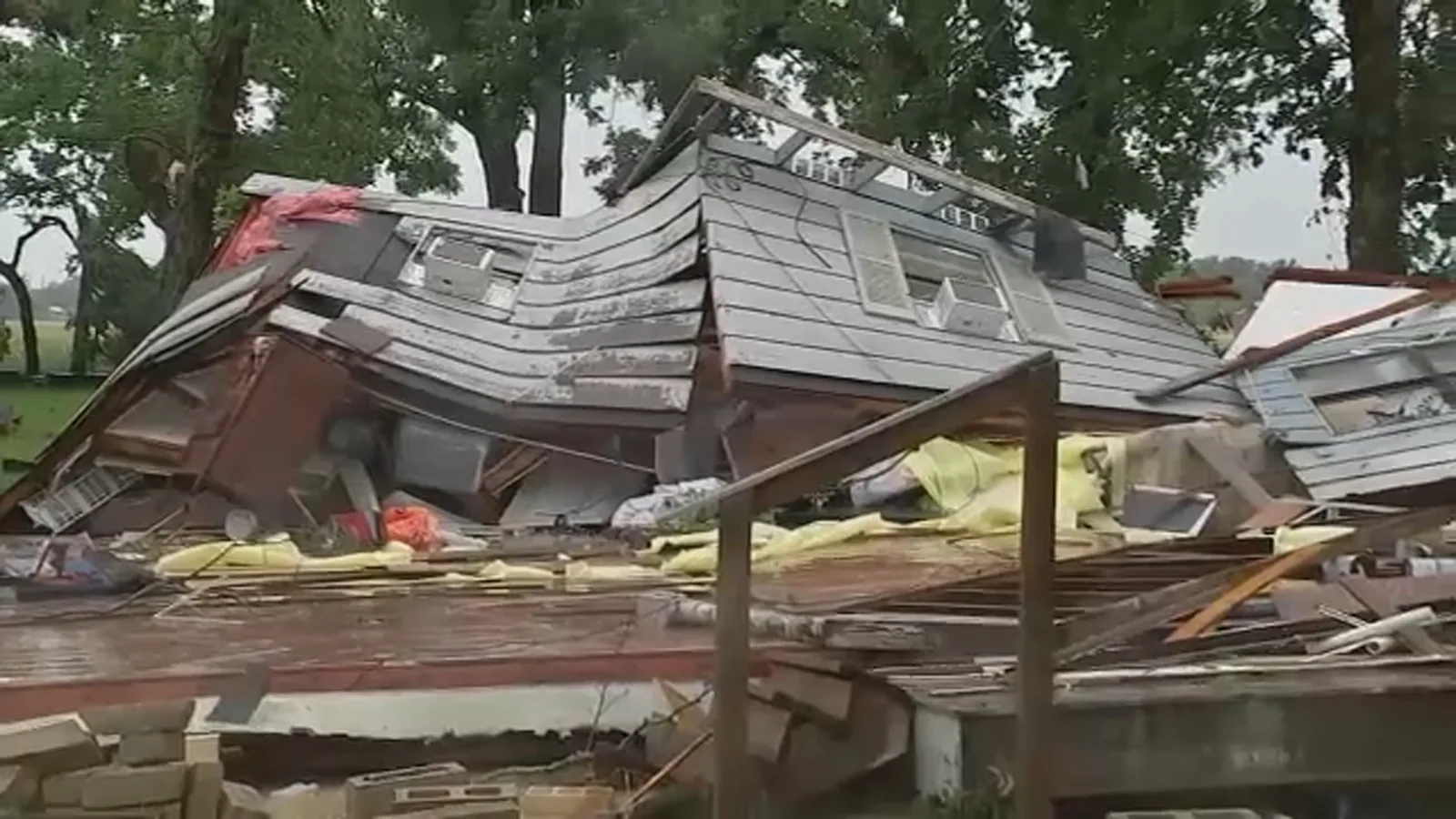
An F4 tornado killed 24 people in Belvidere on April 21, 1967, and the F4 of September 14, 1928 ripped nearly 26 miles through Rockford's factory districts, so no owner in this part of northern Illinois can call a tornado a freak event. What a tornado does to a roof is rarely subtle, but it is easy to misjudge. Some roofs lose a section of deck and are open to the sky. Others look intact and have been lifted, shifted and set back down, with fasteners pulled and the structure beneath quietly compromised. Because Rockford, IL then goes straight back to cold weather, with about 134 freezing days a year, an unprotected opening turns into a water, ice and snow-load problem within days. How you handle the first week decides how much of the building is left to save.
Do not climb onto a tornado-hit roof until someone has confirmed it can carry you.
Make the building safe before you plan the roof
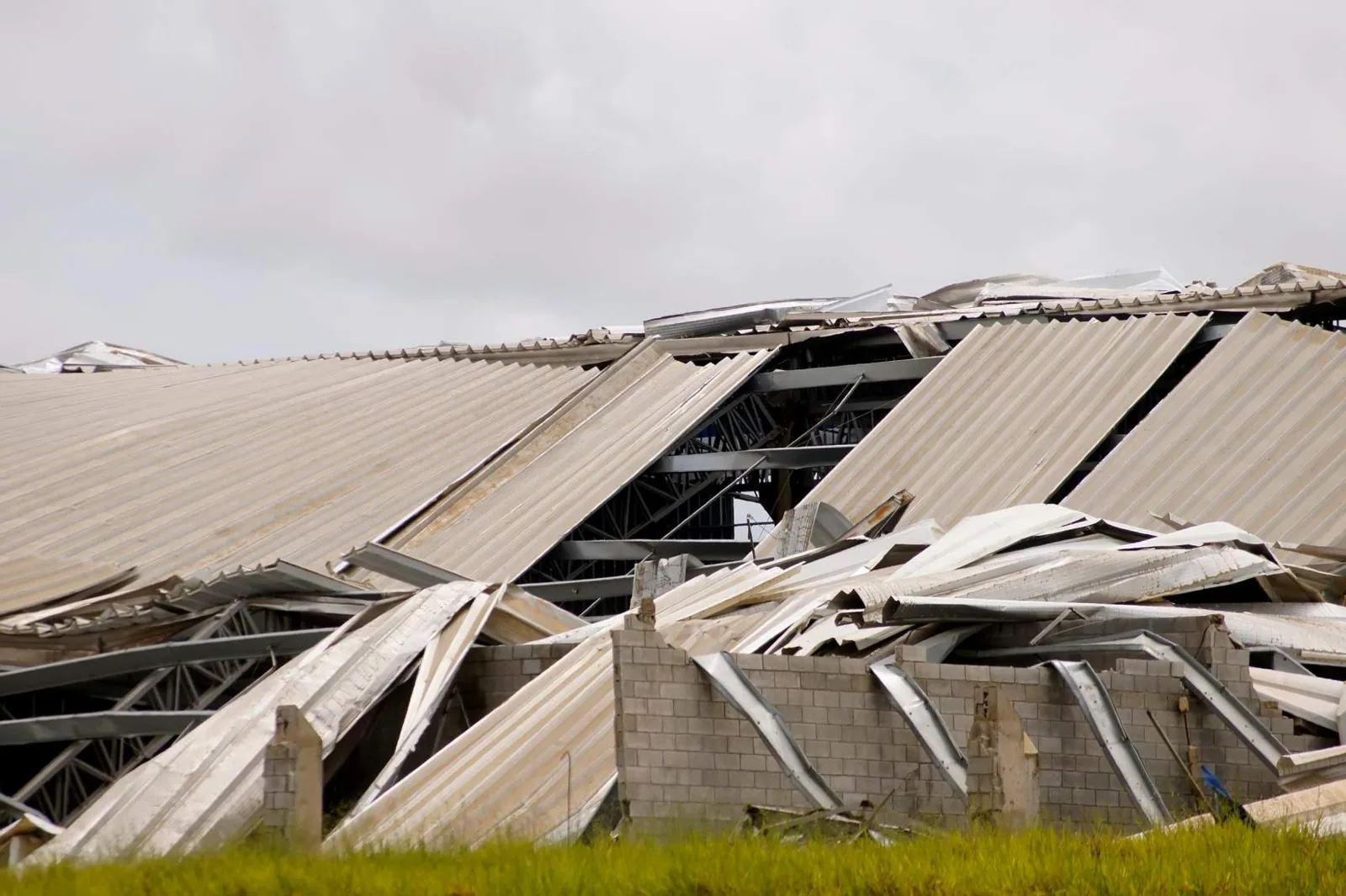
After a tornado, the roof is not the first priority, and the structure is. Deck can be torn or peeled, joists can be twisted, walls can be racked and gas, electric and sprinkler lines can be damaged. A structural engineer should clear the building before anyone works on it, and before occupants return. Once it is safe, we assess from a distance with a drone inspection, because a roof that has been lifted and dropped may not carry a crew. In the meantime keep people out from under any hanging roof panels, loose coping and wall sections, since wind that has already done its damage can finish the job with the next gust. This is the stage where owners feel pressure to move fast, and the right answer is to move carefully and quickly at the same time, with the structural opinion first.
Read what the storm actually did to the roof
Tornado damage ranges widely, and the repair follows the severity. An EF-1, like the one confirmed in Rockford at the end of March 2023 with damage reported near Sinnissippi Golf Course, may peel membrane, tear off edge metal and throw debris onto neighboring roofs. An F4, like the one that went through the factory districts in 1928 and collapsed buildings including Rockford Chair and Furniture Company Factory B, can take decks, walls and the building underneath. In between, we see the pressure effects: a roof that has been lifted and set down, rooftop units thrown off their curbs, deck sections that look in place but are no longer fastened and membrane punctured by debris from other buildings. The repairs that follow are the ones a smaller blow would call for, only on a bigger scale: lifted edges are reset as in wind damage roof repair, and debris holes are cut out and patched as in membrane puncture repair.
Put up a temporary roof that survives the next storm
The temporary cover is the most important decision of the first week. A tarp that blows off in the first wind makes things worse, so the covering has to be secured to the structure, not just weighted down, and someone has to inspect it after each storm and each big snow. For openings, we use rated tarps, temporary membrane, and boards where needed to keep water out and keep the building dry for as long as the permanent work takes. Our crews respond around the clock, holidays included, working the way an emergency roof repair call should be worked. Keep all receipts, photograph the damage before the cover goes on and record where the cover is fastened. In Rockford, which averages about 36 inches of snow a year, a temporary roof may carry the building through one winter, and it needs to be engineered for that, not improvised.
Plan on the temporary roof being there longer than you hope.
Keep the roof scope separate in a big claim
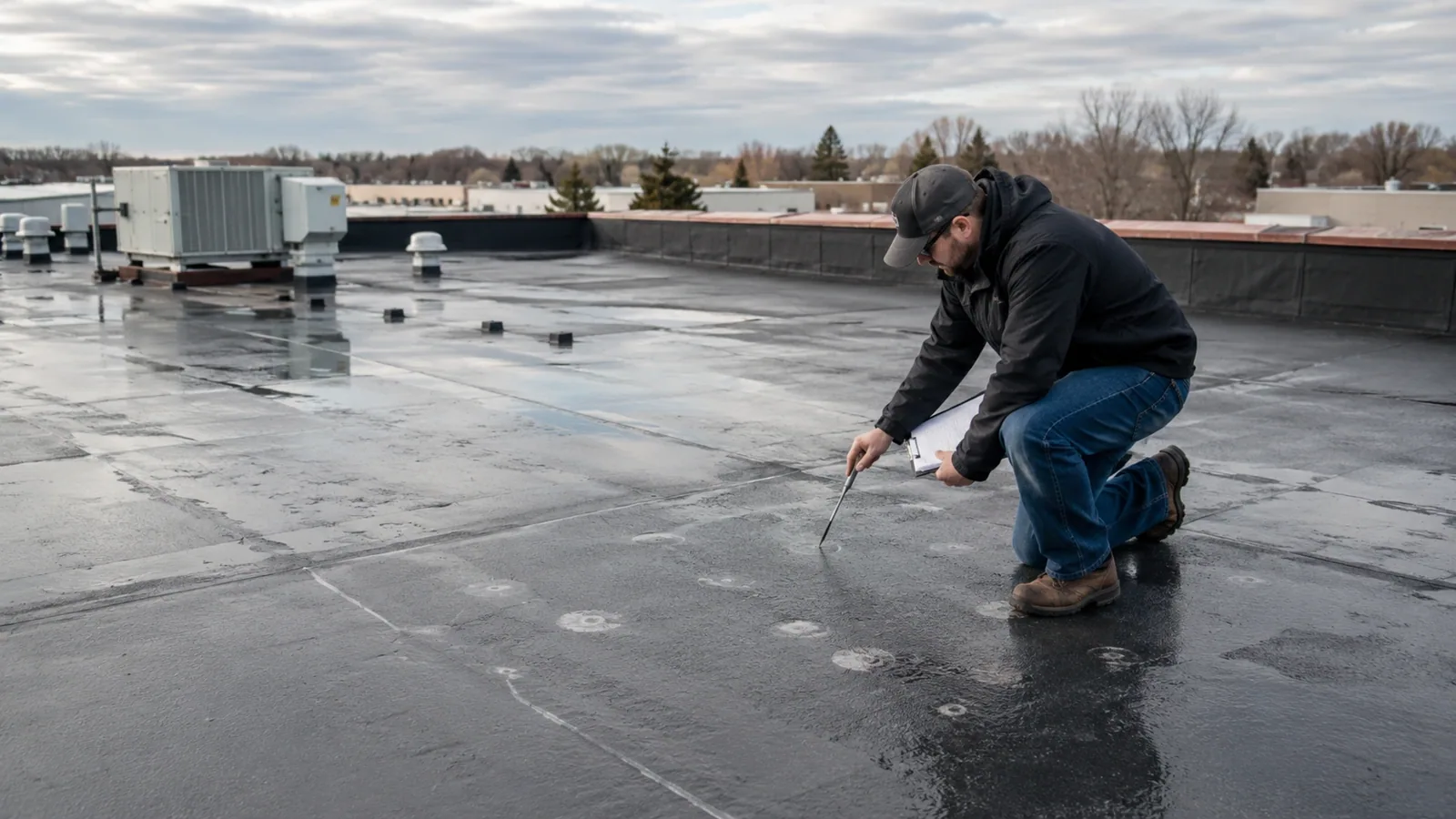
A tornado loss is rarely just a roof. It may involve contents, equipment, walls, interior damage and business interruption, and the roof becomes one line in a much larger claim. That makes it easy to lose track of what you are being offered. Ask for the roof scope as its own document, with photographs, measurements and a price you can compare with another bid. Our claim documentation is built for that purpose, and it helps whether you hire us or not. Large industrial buildings, including the roughly 5.3 million square foot Belvidere Assembly Plant, show why scale matters: damage that looks small against the whole can still mean acres of roof, and it should be measured, not estimated. Do not sign a release, an assignment or a replacement contract until the damage is documented and you have read the price next to the repair alternative.
Rebuild to current code, not to what was there
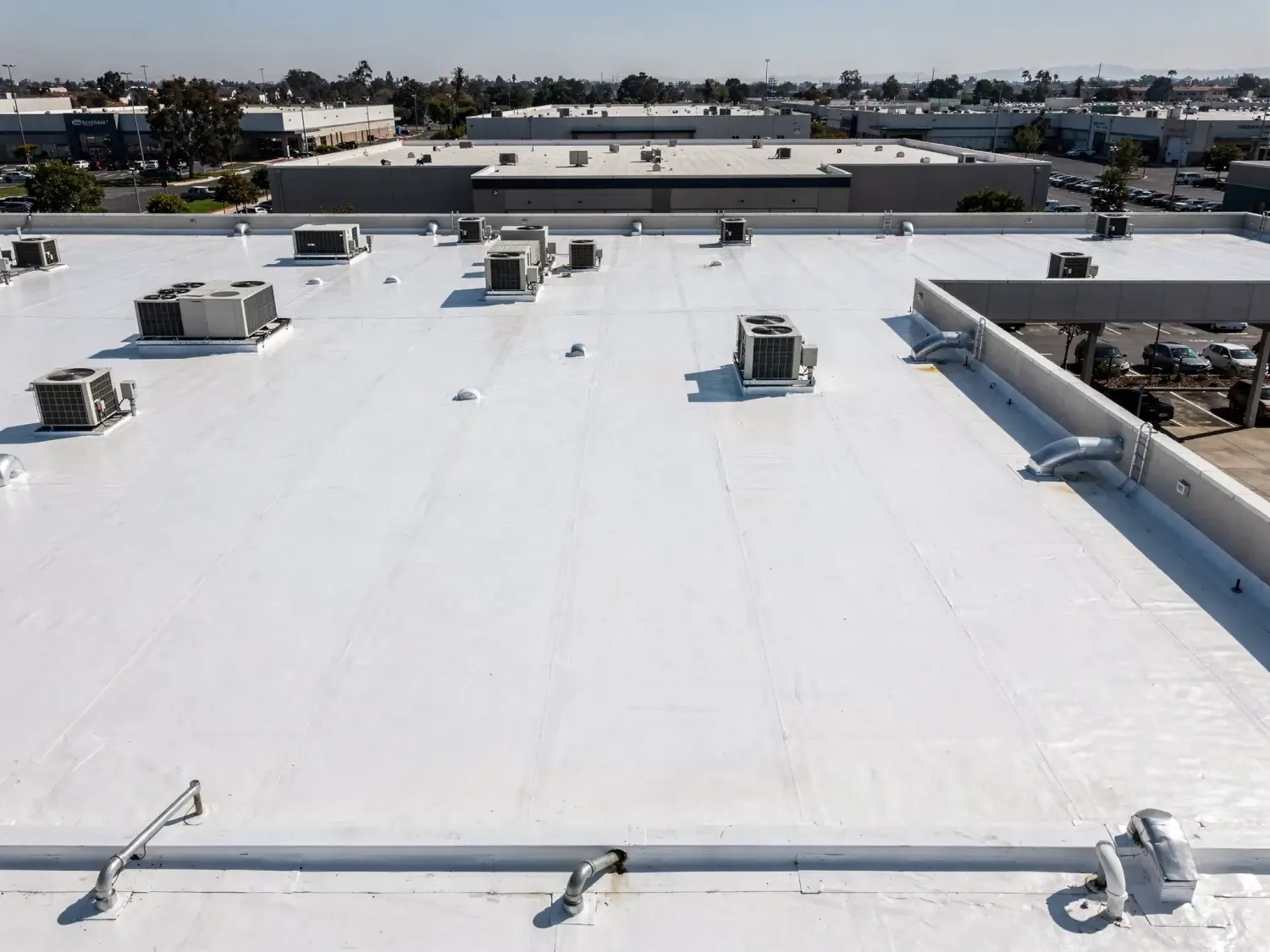
Repair or replace depends on the extent of the damage, the condition of the structure and the code in force. Rockford's permit office works from the 2021 International Building Code and Existing Building Code, with the 2024 Illinois Energy Conservation Code on top, so a substantial rebuild is usually permitted to the current edition, including wind uplift and insulation requirements. That can be good news. A new roof designed for modern attachment and edge details is better prepared for the next storm than the one that was lost. If most of the roof is gone or heavily damaged, the work is a full commercial roof replacement, with the manufacturer's attachment and edge requirements, and with careful attention to the perimeter where a tornado does its worst work. Where the damage is partial, we compare both options so you can decide.
Schedule the rebuild around the winter
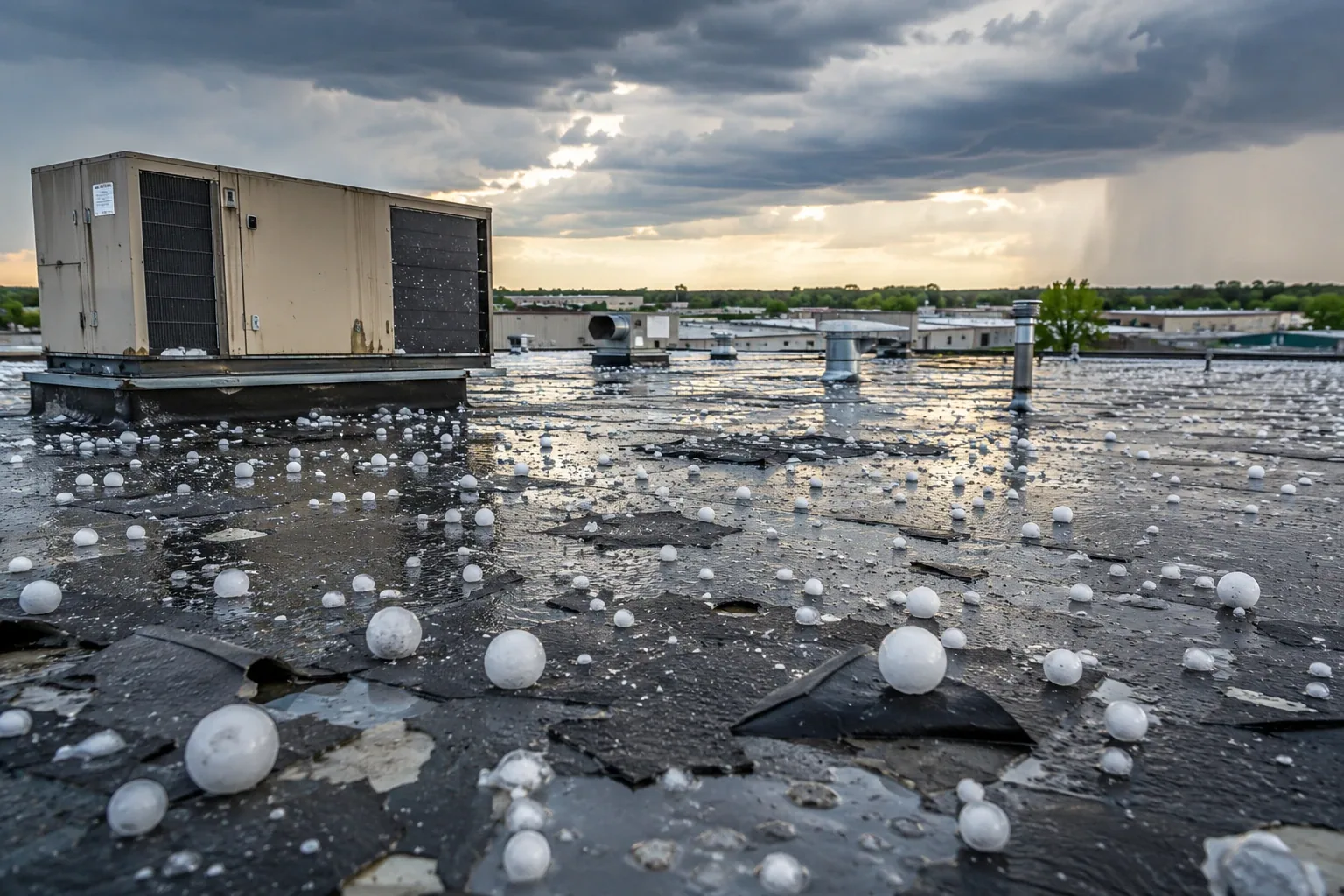
A spring tornado leaves a full building season ahead for repair, while a fall or winter loss pushes most permanent work into the following year. A November tornado that hits a former factory building at Colman Yards, or a roof in Belvidere, will get a temporary roof, a dry-out and a spring rebuild, and the plan should say so in writing. The March 2023 system that produced Rockford's EF-1 also carried straight-line winds up to 70 mph, and when hail rides in with a storm like that, hail damage roof repair joins the same scope. Whatever the season, ask for a schedule that shows what is temporary, what is permanent and when each happens.
Buildings around Belvidere and Winnebago need a post-tornado walk that includes edge metal, rooftop units and debris impact points, even when the membrane appears intact from the parking lot. A marked plan helps separate the storm path from older repairs.
Questions Owners Ask
What comes first after a tornado hits my building?
Safety. Get a structural engineer to clear the building, shut off damaged utilities and keep people away from loose roof sections. Roofing work follows the engineer's opinion.
Can a roof that looks intact still be damaged?
Yes. A roof can be lifted and set back down with fasteners pulled and deck loosened, so an inspection has to look under the surface, not just at it.
How long can a temporary roof last through a Rockford winter?
Long enough, if it is secured to the structure and checked after every storm. Treat it as a planned part of the project, not a stopgap you forget.
Will insurance pay to bring the roof up to current code?
Policies differ, and some carry an ordinance or law provision that helps. Ask your agent before the work starts, and get the code upgrade priced as its own line.
Is it worth repairing a tornado-damaged roof, or should it all come off?
Repair makes sense when the damage is limited and the structure is sound. We price both and show you the numbers, so you are not choosing on a hunch.