EPDM Roofing in Rockford, IL
EPDM rubber roofing in Rockford, IL: how black membranes handle hail, cold and snow melt, where the splices fail, and how to spend roof money wisely.
EPDM Roofing
EPDM Roofing
Rockford, IL
Snow slides off a black rubber roof faster than off a white one, which is why an EPDM roof in Rockford, IL is often the first on the block to show its drains in February. That dark surface warms quickly in winter sun, and it takes the same heat in July, when Rockford runs about 15 days above 90 degrees. The rubber is elastic enough to take both, and EPDM is still one of the longest-lived and least expensive single-ply sheets for a flat roof. Its weak points are known and fixable: splices, flashings that shrink, and punctures where people walk. An owner who understands those three things can keep an EPDM roof running far longer than most buildings expect, and avoid paying for a new roof that the old one does not need.
Before you replace a rubber roof, find out whether the sheet is tired or whether only the splices and flashings are. They are different bills.
Read what hail and cold do to black rubber
EPDM is vulcanized synthetic rubber, and elasticity is its best trait in this climate. The sheet stays flexible at temperatures far below the 12 or so days a year that Rockford drops under zero, and it springs back from impacts that crack stiffer membranes. On November 10, 2020, hail of about 1 inch fell in Roscoe and Rockton, with estimates of 1.25 inches near Rockton, and a rubber roof in good condition usually takes that kind of hit without a tear. What it does not take well is a sharp edge under the hail, a dropped tool or a repeated foot path to an air handler. Damage shows up later as a pinhole that wets the insulation through an entire winter before anyone sees a ceiling stain. Heat is the other half of the year: a black sheet in July is hot enough that a dropped screw or a dragged ladder leg can scar the surface, so summer foot traffic needs a plan too.
After any hailstorm, have the roof walked and the drains checked, even if nothing is leaking yet. Any hail damage repair begins with that walk.
Inspect the splices before you trust the sheet
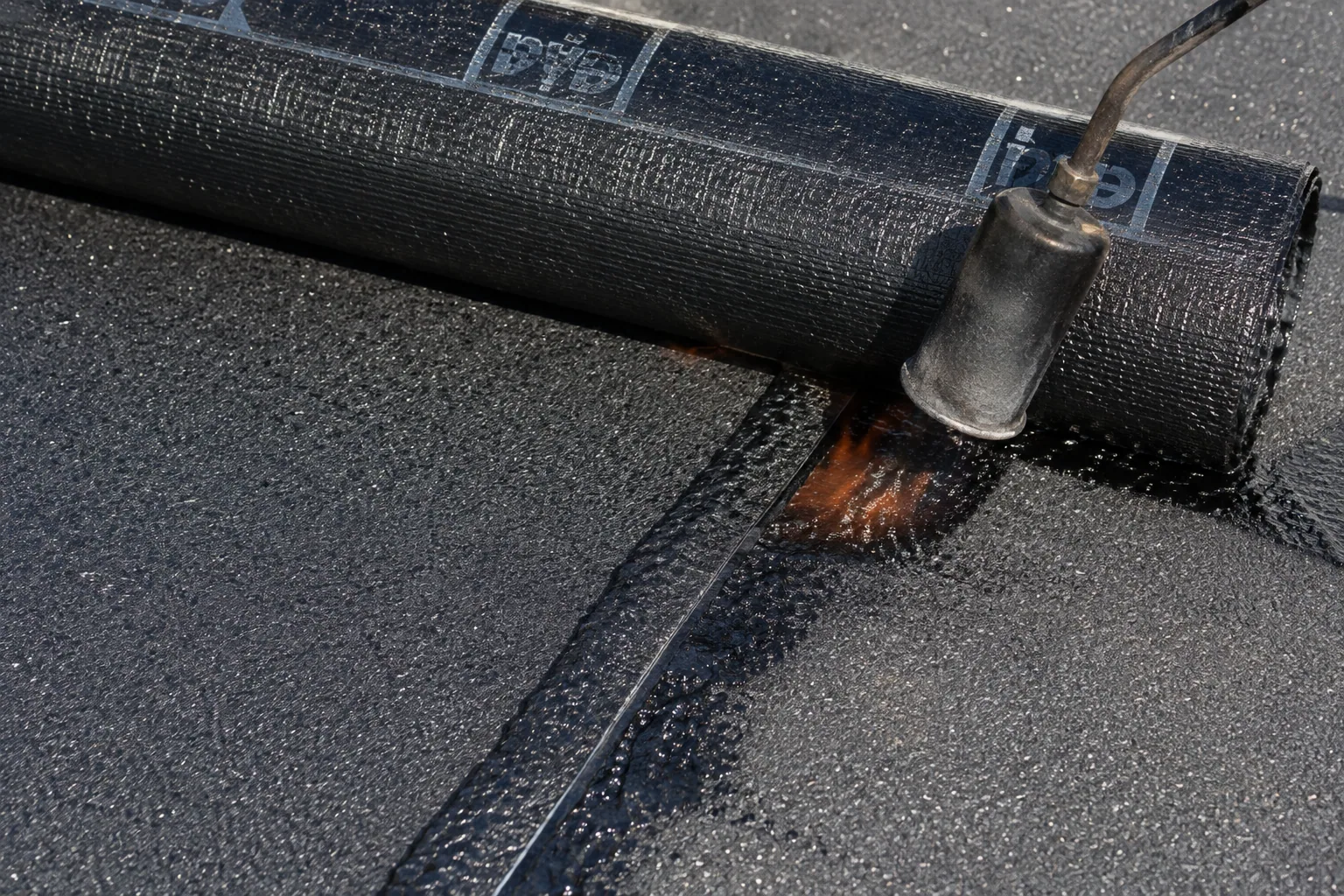
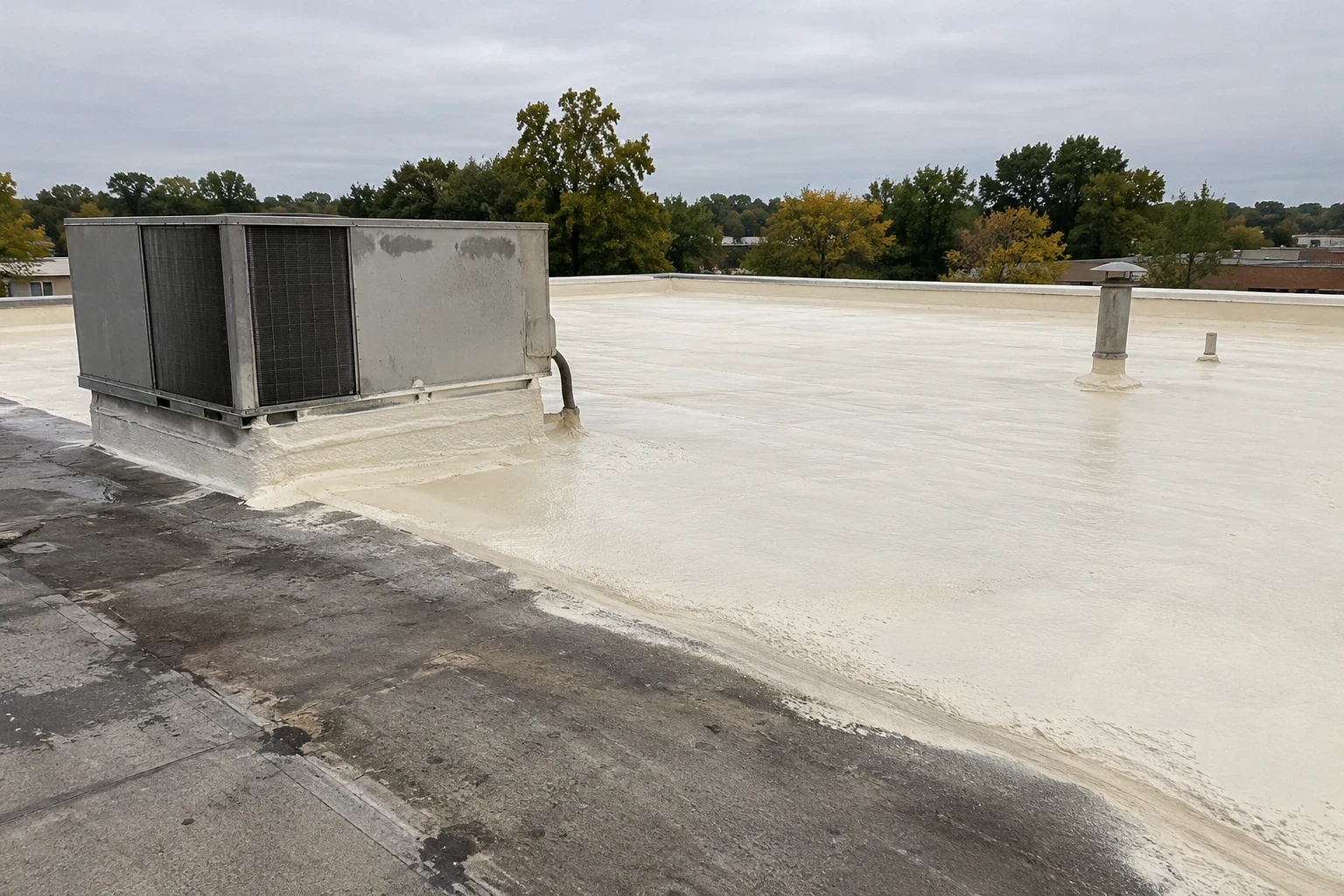
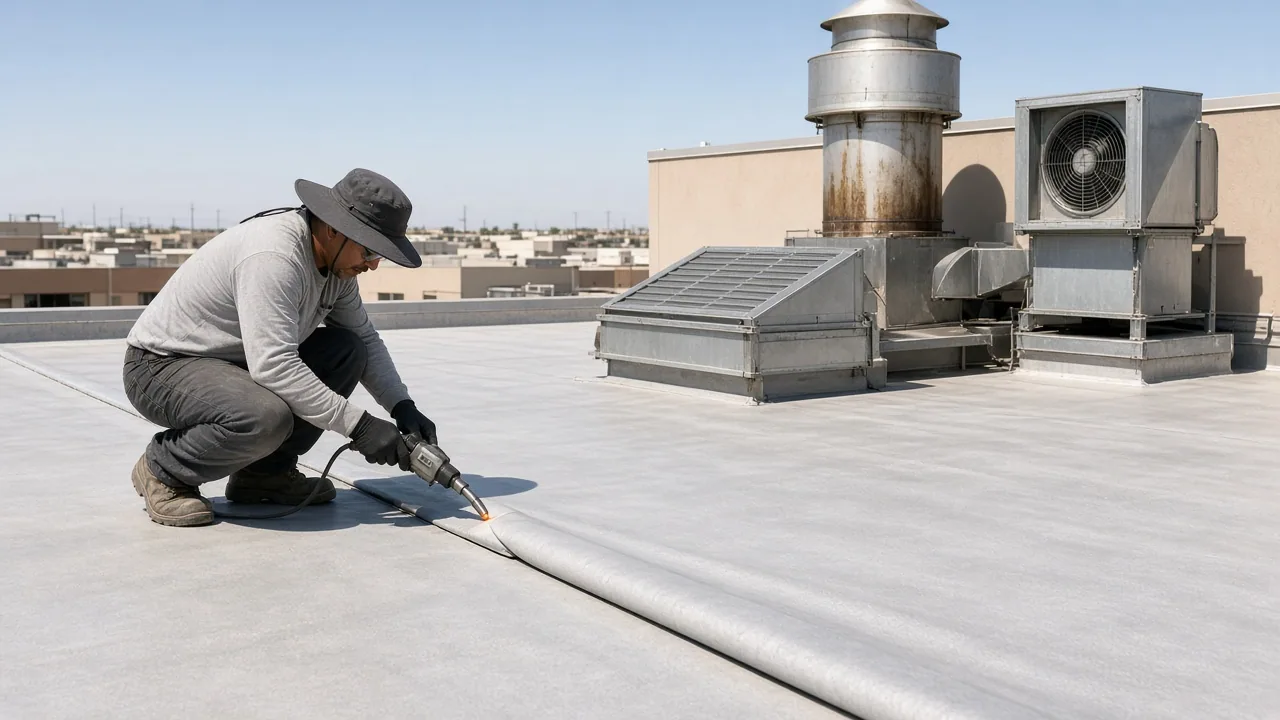
The sheet itself is rarely the failure. EPDM seams are made with splice tape or liquid adhesive instead of heat welds, so the seam is a bonded joint that depends on clean rubber, correct primer and enough pressure when it was made. Over many winters those joints can creep, peel at the edges or pull apart where two sheets overlap at a T-joint. Flashings are the second weak point, because old EPDM shrinks over time and pulls itself away from walls, curbs and pipes, leaving an opening that looks small and lets a lot of water in. We probe the splices with a blunt tool, feel for loose edges along the walls and look hard at every corner. A failed flashing repair is a far smaller bill than a new roof, so ask for that estimate first.
Repair what the probe finds before the next freeze. A loose splice does not tighten itself.
Choose how the rubber is held down
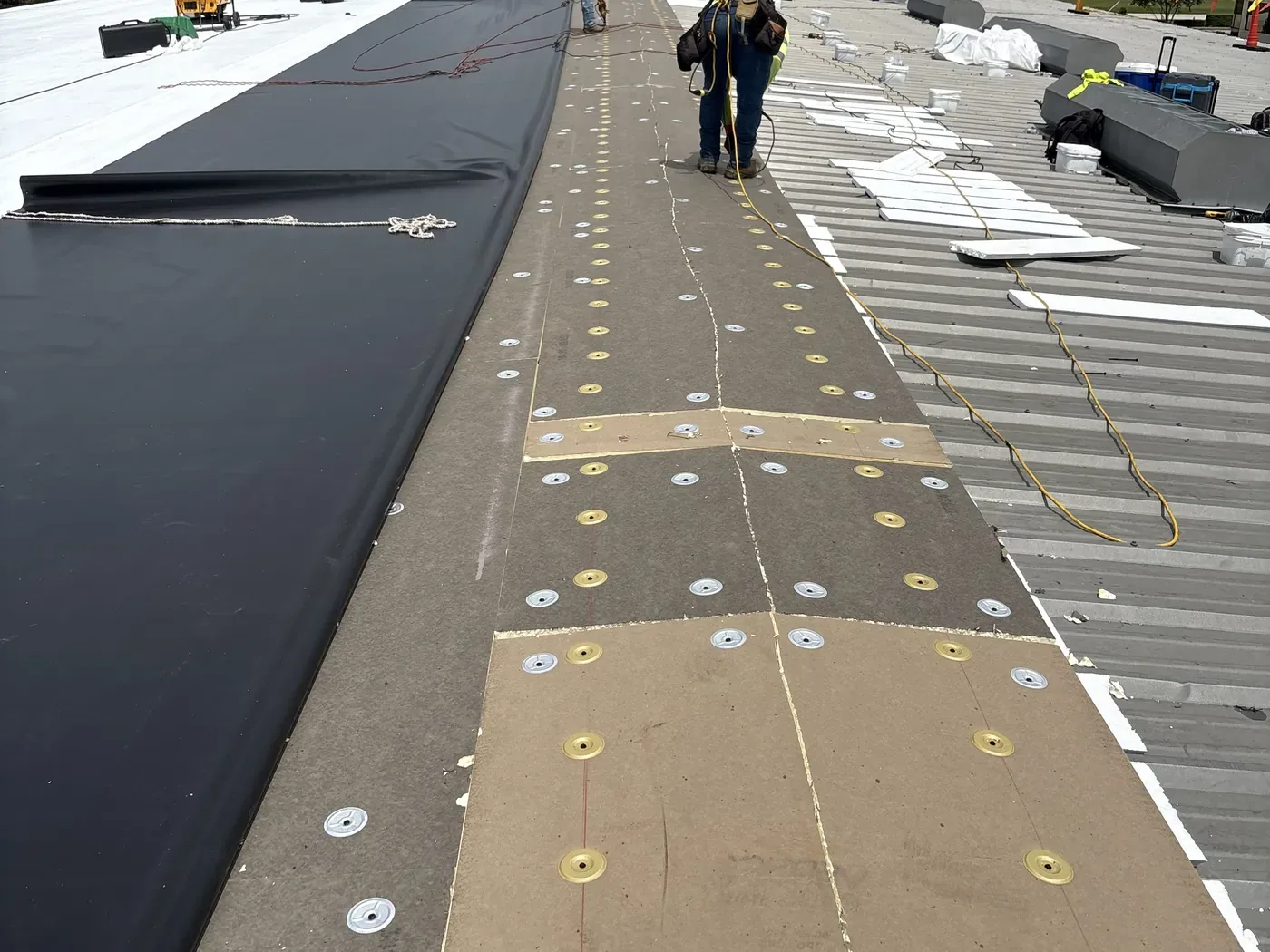
EPDM goes on as ballasted, fully adhered or mechanically attached, and each option has a different bill. Ballasted rubber is laid loose under round stone, which is easy and protects the sheet from sun, but the structure has to carry the stone on top of snow, and a leak under ballast is hard to trace because every spot has to be swept clear. Fully adhered rubber gets a smoother, lighter roof that is easier to inspect and walk. Mechanically attached is the quickest on large areas. Manufacturers such as Carlisle SynTec and Versico publish EPDM systems in all three methods, and Holcim Elevate sells a rubber membrane line of its own, so ask which approach your bid assumes and what the warranty requires.
If a bid is vague about ballast weight or adhesive coverage, make the contractor spell it out before you compare prices.
Spend on thickness and flashings, not on color
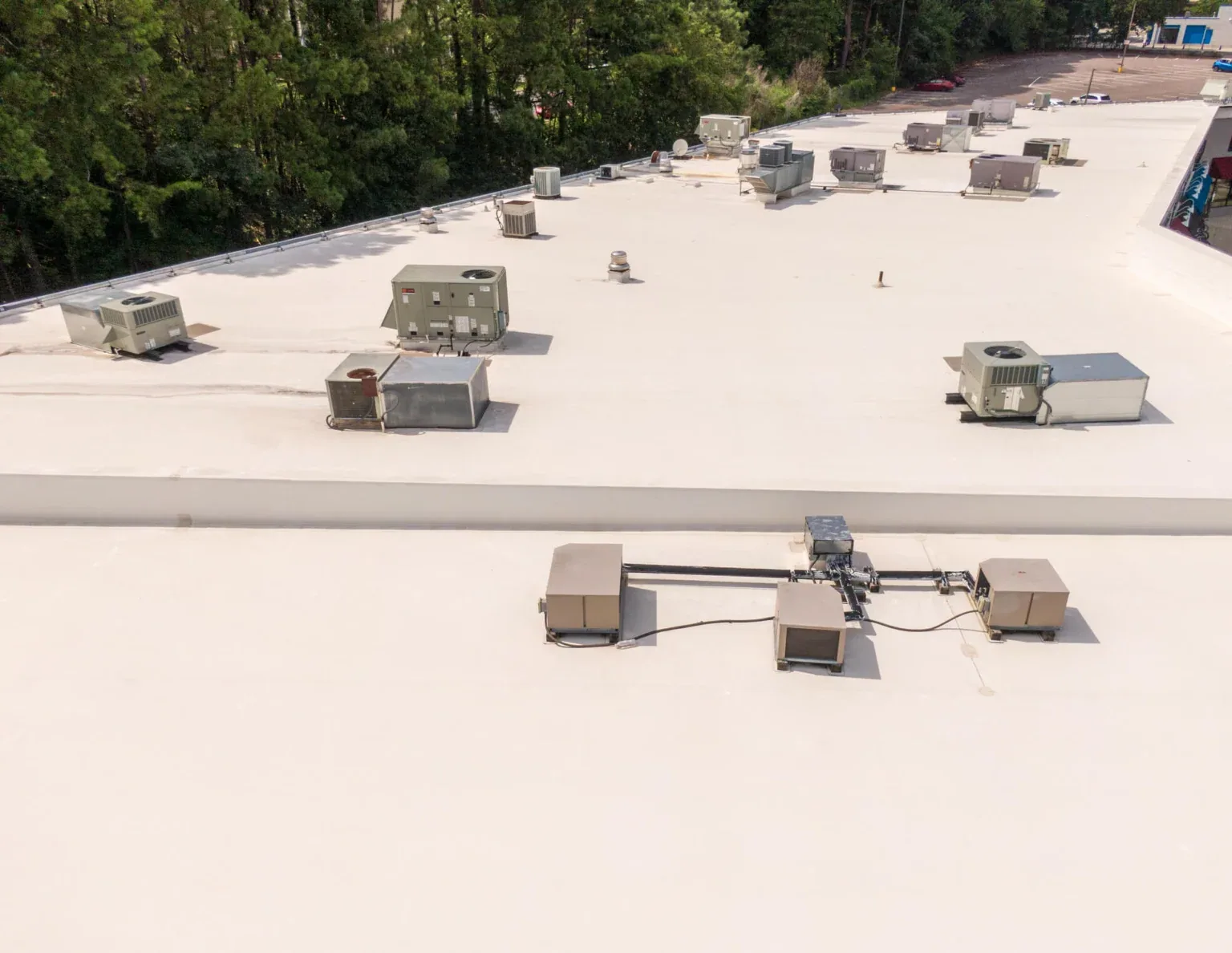
Most of the cost difference between EPDM bids is thickness, whether the sheet is reinforced, and how the flashings are built. A thin sheet saves money up front and punctures more easily when roofing crews, HVAC technicians and snow removal contractors all walk the same roof. Walkway pads from the door to the equipment are cheap and pay for themselves quickly. Replace brittle pipe boots and corner flashings with molded or prefabricated parts, not caulk, because caulk dries out and cracks within a couple of seasons. Check the drains and scuppers too, since ponding water sits on rubber long enough to age it unevenly.
- How thick is the sheet, and is it reinforced?
- Are walkway pads included from every roof door to every unit?
- Are seams taped or glued, and who inspects them?
If a bid cannot answer those, you are comparing prices for different roofs.
Book school and campus work for summer
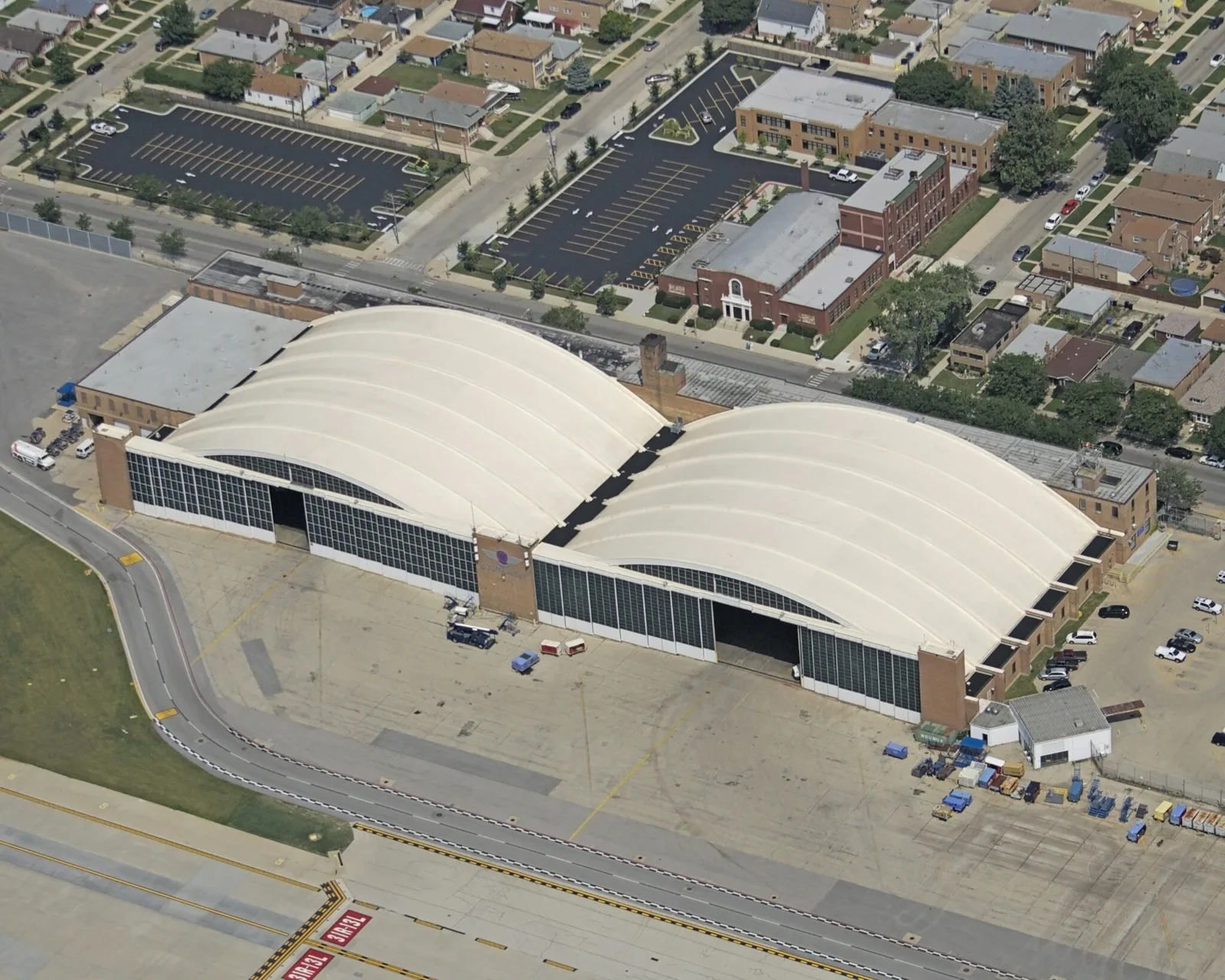
EPDM is a natural fit for schools, churches and campuses where owners watch every dollar and the roof is flat and busy. Rock Valley College's 217-acre main campus at North Mulford and Spring Brook roads and Rockford Public School District 205, one of the city's largest employers at about 4,075 people, both have to schedule building work around a school calendar. Summer is the obvious window for a school, and it is also the best weather for adhesives, which want dry, warm surfaces. The most common mistake is waiting until a January leak forces a rushed deal. Start school roofing projects early: walk the roofs in fall, get bids by spring and book the crew for June. If a leak will not wait, a temporary dry-in carries you until then. A roof in Roscoe, where one-inch hail fell in the November 2020 storm, deserves the same fall walk as one in the city.
Put the walk on your calendar now, while you still have a choice of dates. Compare TPO and KEE bids against the same substrate, attachment, and repair boundary.
EPDM repairs depend on clean surfaces and compatible primers, tapes and uncured flashing. Before accepting a patch, check that the repair extends to sound rubber and that no moisture is trapped beneath the sheet. Ballasted assemblies need a controlled plan for moving aggregate without scouring the membrane; adhered systems require different access and repair methods. Photograph each repaired zone and record the product used so a later crew does not apply an incompatible material or mistake the patch for an original seam.
Questions Owners Ask
Is EPDM still a good roof in northern Illinois?
Yes, for the right building. The rubber stays flexible through hard winters and shrugs off most hail. Choose it for flat roofs without grease exposure and keep walkway pads in place.
Why is my rubber roof pulling away from the walls?
Old EPDM shrinks as it ages, which tugs the flashing off the wall. New flashings and, in some cases, new seams are the fix. Caulk only hides it for a season.
Can an EPDM roof be patched in January?
Only as a temporary measure. Adhesives and tapes need dry, reasonably warm surfaces, so cold patches are meant to hold until a proper repair in spring.
Does hail void an EPDM warranty?
Many warranties exclude storm damage unless extra coverage was bought. Read yours, document the storm date and photograph the roof before any cleanup.
Should I coat an old EPDM roof or replace it?
Coat only if a moisture scan shows dry insulation and the sheet still has life. Coating a wet roof traps water. Get the survey first, then compare prices.