Commercial Roof Insurance Claim Assistance in Rockford, IL
Roof damage documentation and claim support in Rockford, IL: dated photos, moisture maps and an honest scope you can hand to your insurer.
Commercial Roof Insurance Claim Assistance
Commercial Roof Insurance Claim Assistance
Rockford, IL
Snow can hide storm damage in Rockford, IL for weeks, and the clock on an insurance claim does not stop for it. A wind crease along a parapet, a fractured patch of membrane under a drift, a hail bruise: all of it can sit under white until a thaw exposes it, and by then water has been working under the sheet through several freeze-thaw cycles. The area gets about 36 inches of snow in a typical year, and the insurer will ask when the damage happened and whether you can show it. Claim assistance means we put that evidence together while it is still clear: dated photographs, moisture readings, a plain scope and a clean separation between what the storm did and what age did. Whether the claim pays is the insurer's decision. Making sure the insurer has the facts is our job.
Call before you sign any claim document or let anyone start permanent repairs. That one habit protects a claim more than anything else you can do.
Photograph the roof before anyone touches it
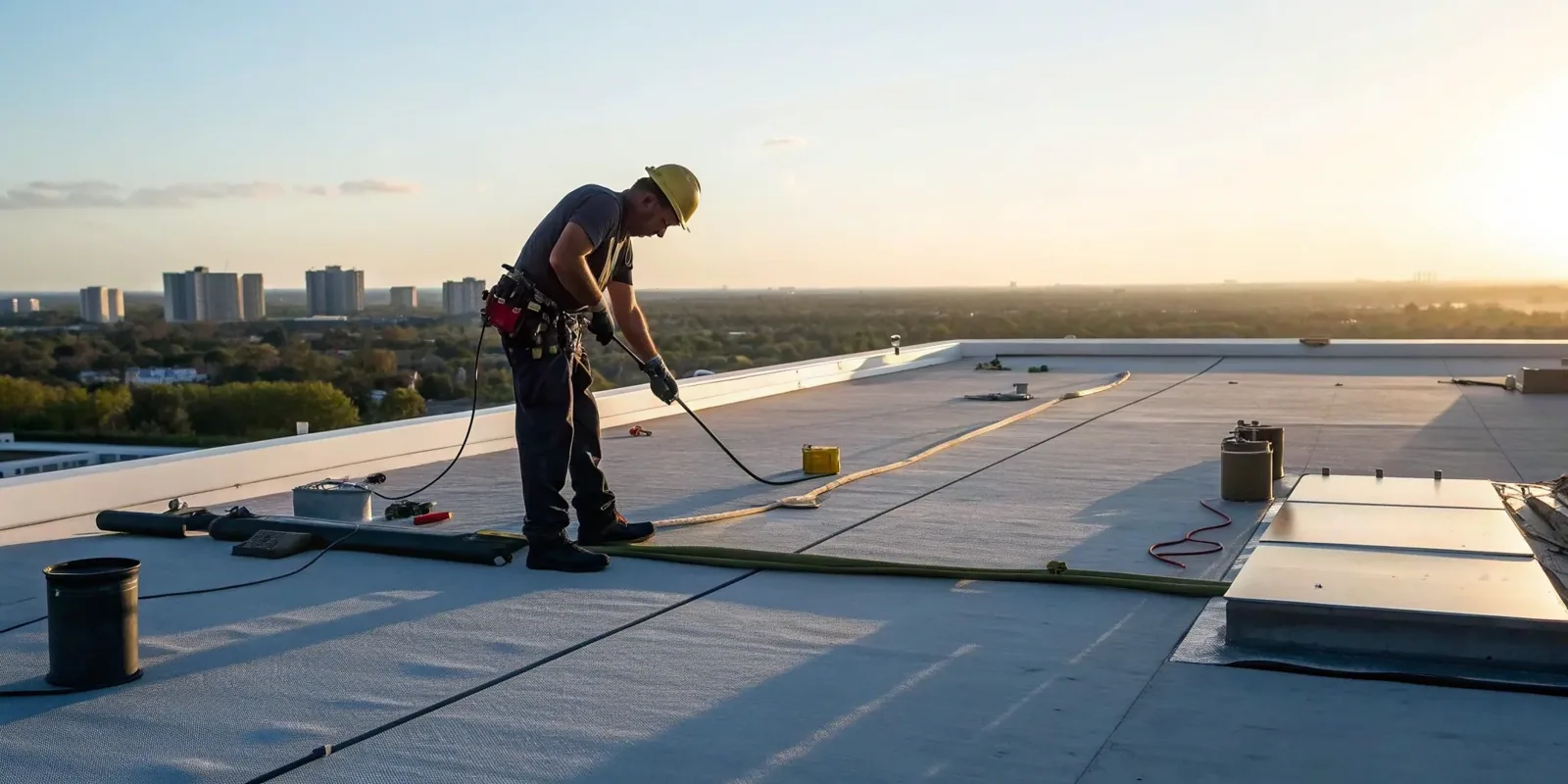
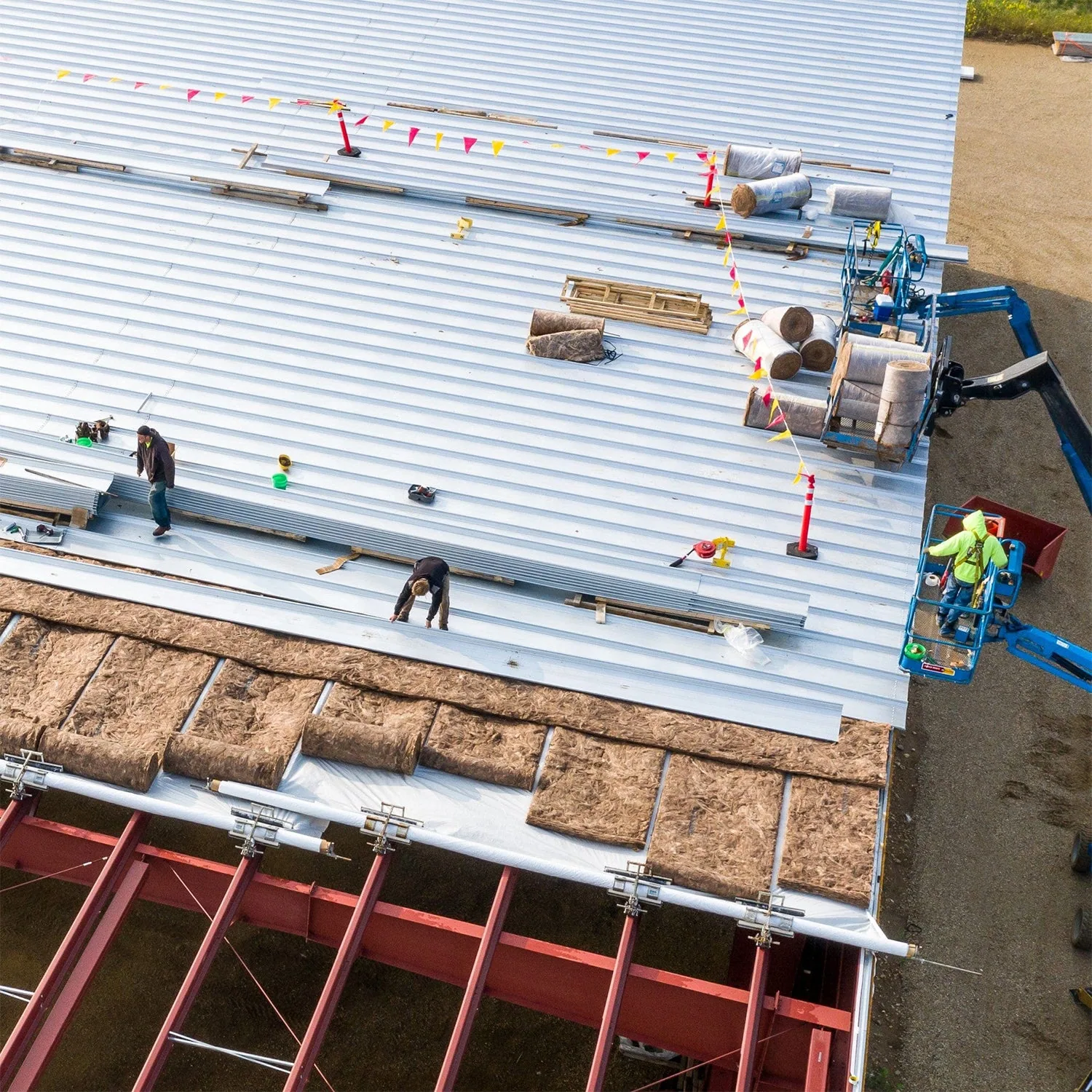
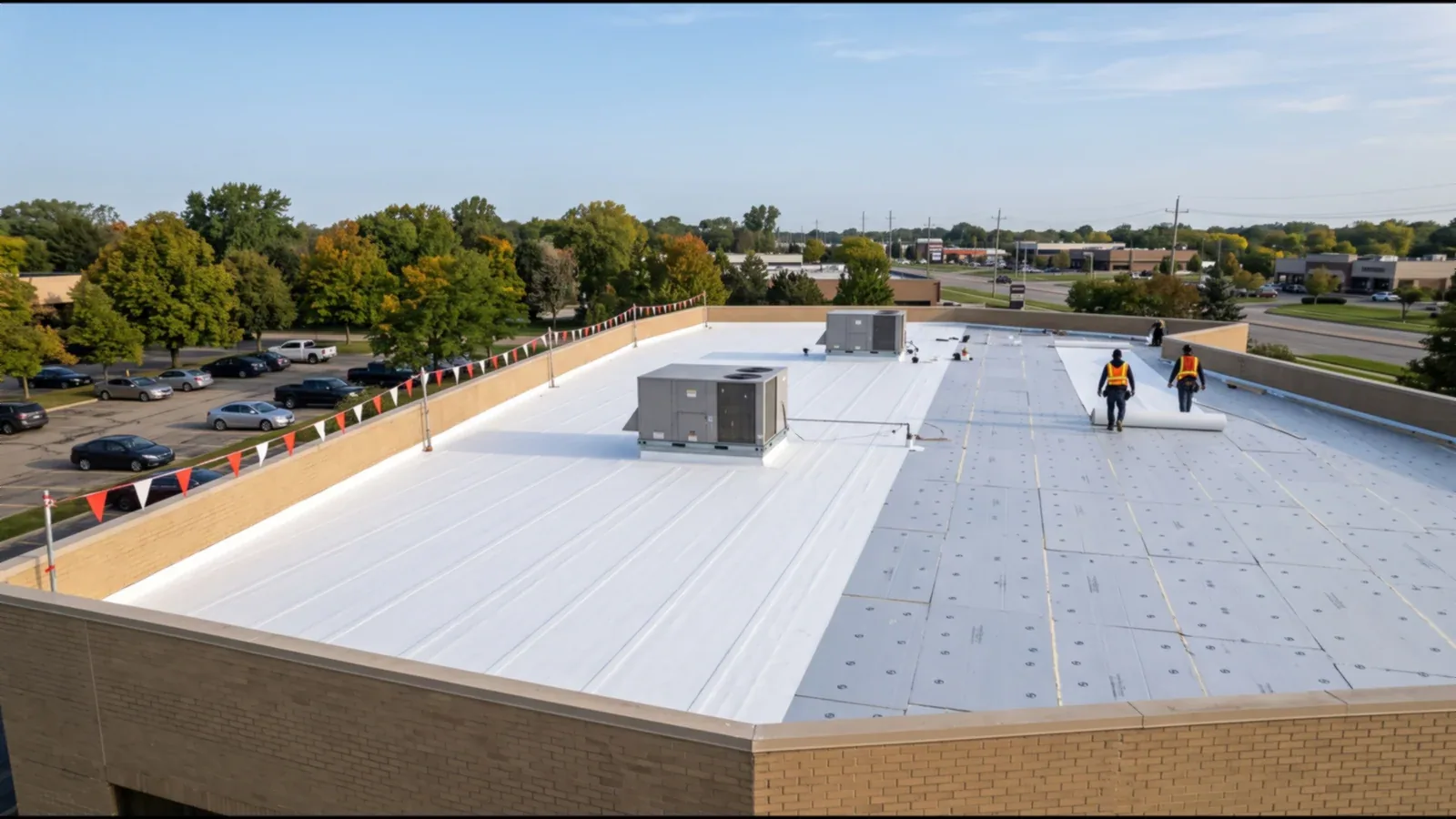
Evidence is perishable. Debris gets swept up, a tarp covers the bruise, a crew cuts out a wet section and the proof goes into the dumpster. Before any of that, the roof needs a complete record: wide shots of every side of the building, close photographs of each defect with something beside it for scale, interior ceiling and wall damage, and a date on all of it. On large roofs a drone flight gives your contractor and the adjuster the same overhead picture. Moisture readings add what photographs cannot show, which is where the water actually went. Most policies expect you to take reasonable steps to stop further damage, and the steps in emergency roof repair are meant to be done and documented in the same visit.
Keep any damaged membrane or insulation that comes off until the adjuster has seen it, or photograph it with a ruler beside it.

Separate storm damage from wear in writing
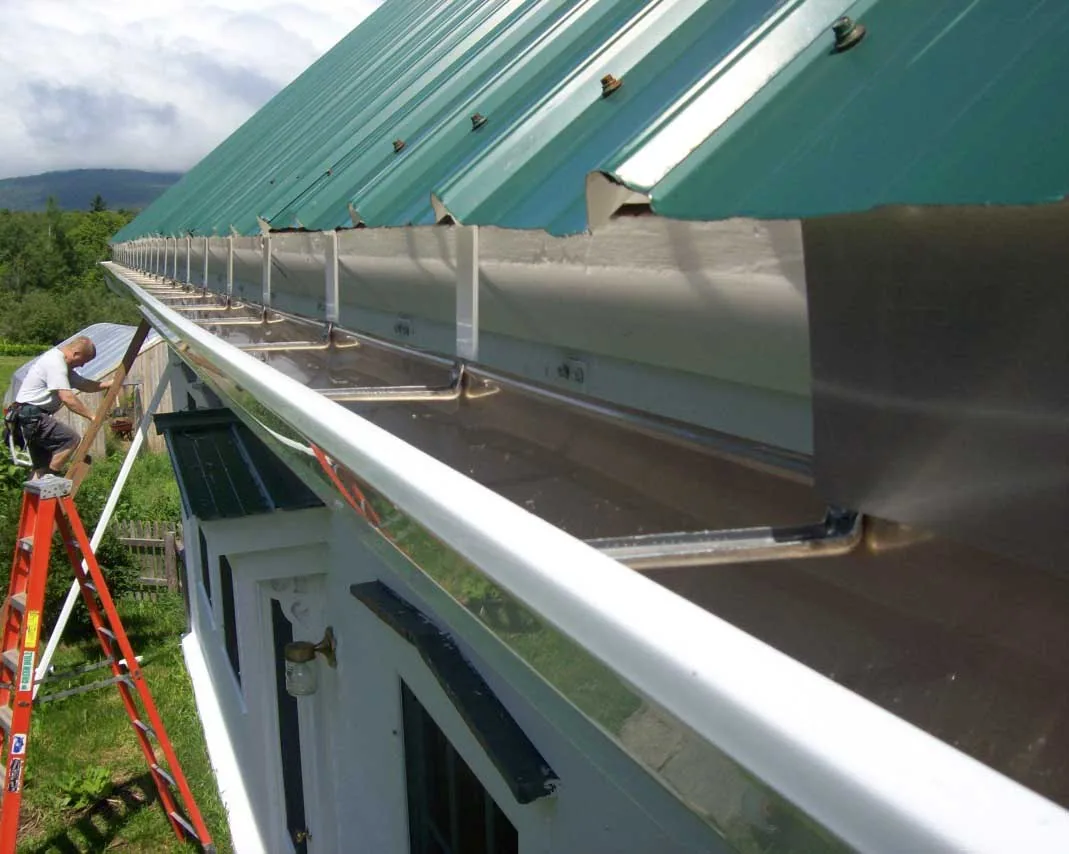
Most claim disputes live on the line between storm damage and wear. An insurer pays for a sudden event, not to replace a roof that was already near the end of its life. So the scope has to show which findings belong to the storm: fresh tears, directional lifting, impact marks in a pattern, debris strikes. It also has to be honest about everything else. After the November 10, 2020 storm, with 1 to 1.25 inch hail around Rockton and wind damage across Winnebago County, a good report separates the hail bruises from the old blisters on the same roof. A report that blames everything on the storm gets set aside, and the real damage goes with it.
Honest reports hold up better under questions. That is the kind we write.
Meet the adjuster on the roof, not on the phone
The adjuster's visit is short, and what goes in the file that day is often all the carrier ever sees. We can be on the roof for it, with the photograph set and the scope in hand, walking the same ground so every item gets looked at. If the adjuster disagrees with a finding, ask for the reason in writing instead of arguing it on the spot. A pre-loss record helps a great deal here, which is why a current set of roof condition reports is worth keeping: it shows what the roof looked like before the storm, and that makes the difference between fresh damage and old wear hard to argue with.
Do not hand over the only copy of anything. Give the adjuster copies and keep the originals.
Read your policy for the numbers that move the check
Three items in the policy decide most of what you end up paying out of pocket. The first is the deductible, which for wind and hail is often separate from the standard one. The second is depreciation: some policies pay actual cash value first and release the rest only after the work is done, and the holdback can be large on an older roof. The third is code upgrades. Rockford follows the 2021 International Building Code and Existing Building Code, and a replacement now falls under the 2021 IECC based insulation rules, so ask whether your policy pays for the extra work the city will require.
- Deductible: is wind and hail separate, and how is it calculated?
- Depreciation: is the payment replacement cost or actual cash value?
- Code upgrades: does coverage include work the city requires?
- Water: how does the policy treat flood water versus rain through a storm-opened roof?
That last one matters in this area. A June 2018 flood caused $30 million in damage at Mercyhealth's original cancer facility on Rockton Avenue, and the cancer institute now stands on Riverside Boulevard. Rising water and roof leaks are usually handled differently, so read before you file.
Act inside the policy deadline, not the weather
Policies set notice deadlines and time limits for suing, and winter does not extend them. Report the loss promptly, even if the roof is under snow, and tell the insurer in writing that permanent repair has to wait for conditions that allow it. Keep the dry-in in place and document it after each storm. If the carrier has issued its scope, put it next to ours line by line. Missing flashings, edge metal, wet insulation and disposal are the usual gaps, and they are worth asking about before you accept a number. Once the scope is agreed, the work goes the way storm damage roof repair does, dry-in first and permanent fix after, and hail bruising calls for its own testing before any hail damage roof repair is priced.
Restoration firms and managers who handle claims all the time want that same paper trail, and the insurance restoration side of the business depends on it. For everyone else, the rule is simple: paper first, permanent work second.
Keep the claim file tied to observable conditions. Dated photos, a marked roof plan, weather timing, temporary-protection invoices and a written repair scope make it easier to separate emergency work from permanent restoration. Record which areas were inaccessible and what testing remains, rather than treating an estimate as proof of hidden damage. Before agreeing to a repair, compare the proposed materials and quantities with the roof inspection so the completed work can be checked against the same documented conditions.

Questions Owners Ask
Do you act as my public adjuster?
No. We document the roof, write the scope and meet the adjuster to explain the findings. Negotiating coverage is for you, your agent, or a licensed public adjuster or attorney.
Can I make temporary repairs before the adjuster arrives?
Yes, and most policies expect it. Keep water out, photograph everything first and save receipts and any material that comes off.
What if the adjuster's number is lower than our repair scope?
Ask for the line items in writing, compare them with ours and request a re-inspection with the photographs in hand. The usual gaps are flashings, edge metal and wet insulation.
Will filing a claim raise my premium?
That varies by carrier and claims history, so ask your agent before filing. Do not skip a claim for real storm damage out of fear, and do not file one for ordinary wear.
Is flood water treated differently from rain through a damaged roof?
Usually, yes. Rising water and rain entering through a storm-opened roof are often handled under different parts of a policy, so read how yours defines each before you file.
How long should I wait before replacing a damaged roof?
Until the adjuster has inspected and you hold the carrier's written scope, unless water is still coming in. Stop the leaks now and let the paper catch up before permanent work.