Modified Bitumen Roofing in Rockford, IL
Modified bitumen roofing in Rockford, IL: SBS versus APP, torch versus cold application, and how to judge an aging roof before you spend on a new one.
Modified Bitumen Roofing
Modified Bitumen Roofing
Rockford, IL
A modified bitumen roof tells you its age in January every year. Step onto it at five degrees and a worn cap sheet crackles, the granules come loose under your boots and the laps at the edges lift like old tape. Rockford, IL puts roofs through about 134 freezing days a year, and asphalt-based membranes that were soft and forgiving in their first decade become stiff and brittle in their third. That is not a reason to panic, because modified bitumen is a tough, repairable system and many commercial buildings are still protected by one. It is a reason to learn the age, the ply count and the condition of the sheet before you decide between repair, a recover and a new roof. The wrong guess costs real money in either direction.
Ask for a close look at the cap sheet, the laps and the flashings before anyone quotes you a replacement.
Match SBS to the cold and APP to the heat
Modified bitumen is asphalt blended with a polymer and reinforced with fabric, installed in a base ply and a granule-surfaced cap sheet. The two common polymers behave differently. SBS is a rubber modifier, so the sheet stretches and recovers, which is what a roof needs when it moves through about 12 days a year below zero and the freeze-thaw swings that follow. APP is a plastic modifier that holds up well under strong sun and heat, but it is stiffer when the temperature drops. In Rockford, where winter is the harder season on a roof, SBS is usually the more forgiving choice, though a south-facing roof that bakes through summer afternoons can make a case for APP. The granule surface on the cap protects the asphalt from sunlight and gives the roof some resistance to hail and foot traffic.
Ask your contractor which polymer is in the bid and why. A vague answer means the choice was made for their convenience, not your roof.
Pick the application method before the torch comes out
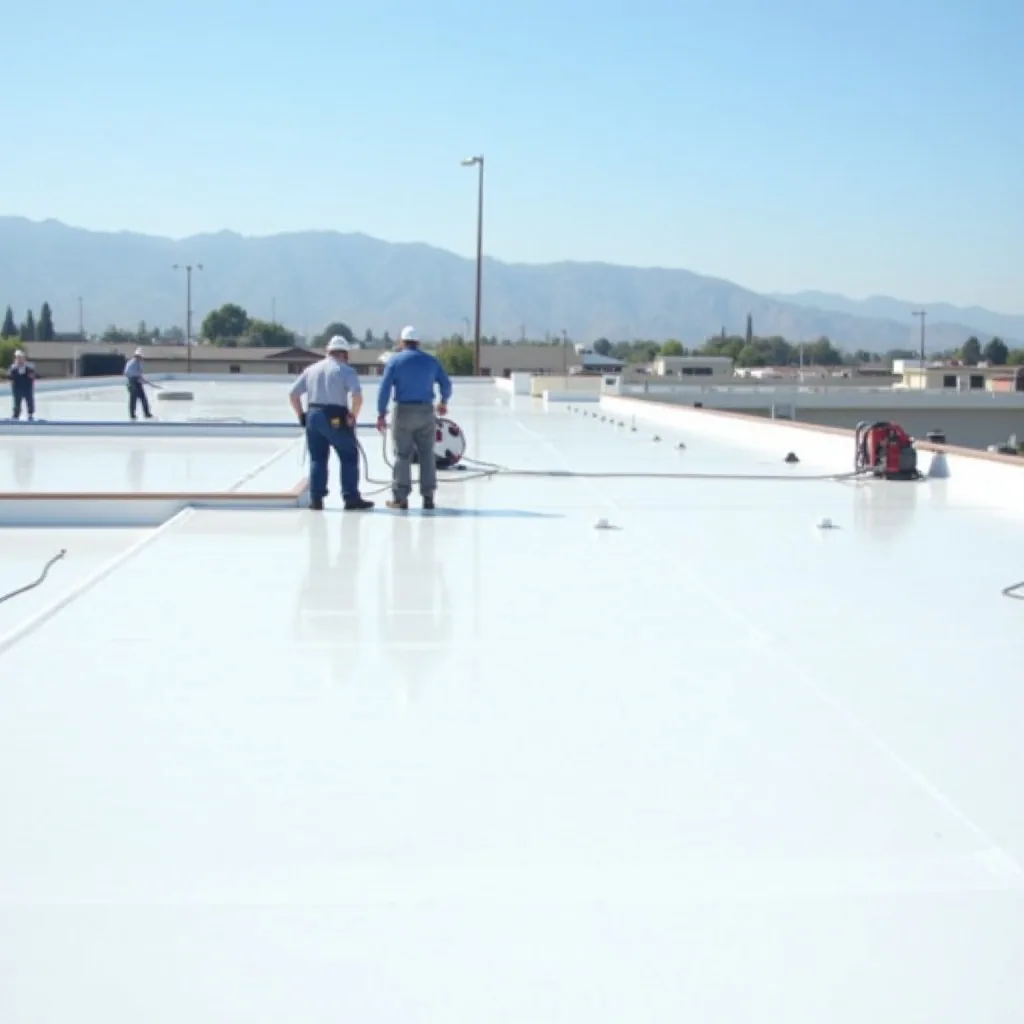
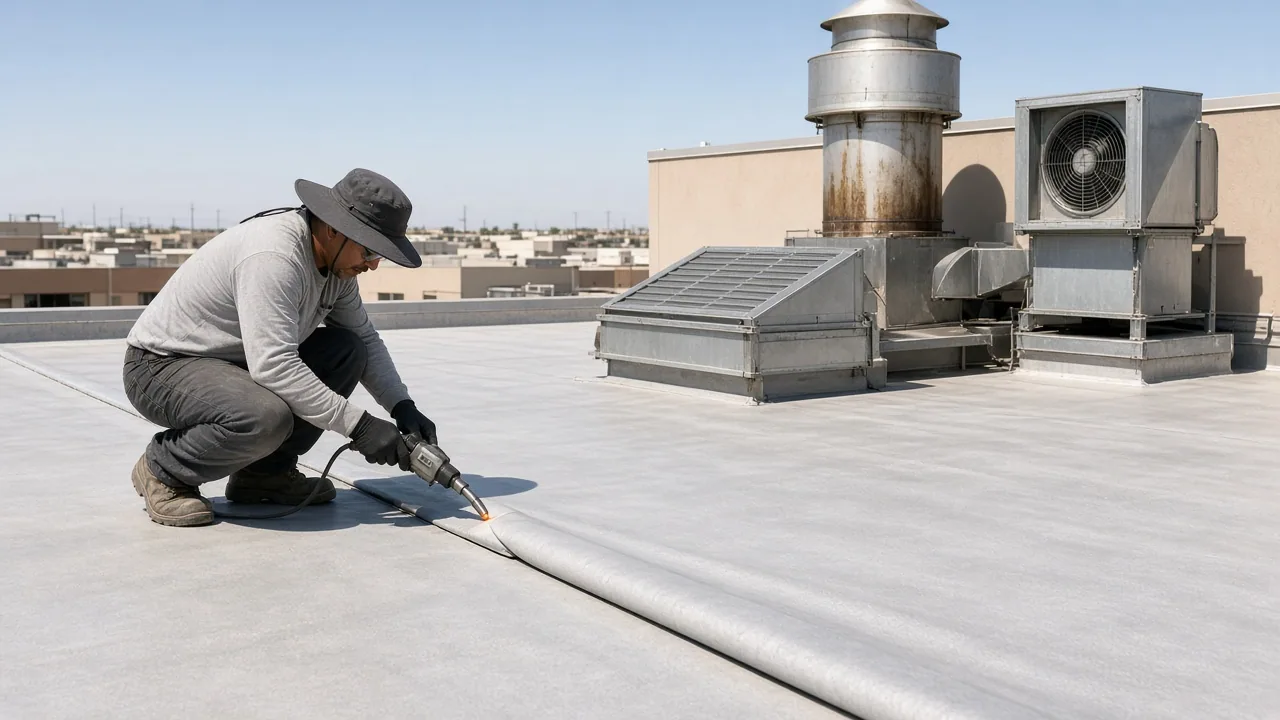
Modified bitumen can be applied with a propane torch, mopped in hot asphalt, set in cold adhesive or stuck down as a self-adhered sheet. Torching is fast and gives strong laps, but it puts an open flame on a roof, and on a building with wood decking, old insulation or combustible materials in the wall assembly, that is a risk you should weigh seriously. Plenty of owners and insurers now prefer cold-applied or self-adhered systems for exactly that reason. Conversions are where the question comes up most. The five former Barber-Colman manufacturing buildings slated for renovation at Colman Yards on South Main Street, and the 1902 two-story brick Chicago Northwestern Freight Station in downtown Rockford that the city plans to convert to apartments and storefronts, are buildings where the deck, the insulation layers and the walls should be confirmed on site before any flame is lit.
Get the fire watch, the permit and the application method in writing before you approve any torch work.
Spot a tired roof before it starts to leak
Aging modified bitumen gives warnings. Granules wear off in the walking paths and at drains, exposing the asphalt to sun. The cap sheet alligators or crazes in a pattern like dry mud. Blisters rise where moisture is trapped between plies, and ridges form over the edges of insulation boards. Laps open at the ends, and flashings pull away from walls where the cold shrinks the material. Not one of those means the roof is finished. A blister can be cut, dried and patched, and a lifted lap can be reheated and sealed. What decides the call is whether the insulation under the plies is wet, and a moisture scan or a few small cores will answer that. After a winter that leaves ice damage on edges and drains, snow and ice roof damage repair begins with that kind of survey.
- Are the granules worn through to the asphalt?
- Do blisters or ridges follow the insulation joints?
- Is the insulation dry at the cores?
Pay for plies and details, not for a heavier invoice
A good modified bitumen system has at least two layers, and the details around them matter as much as the field of the roof. Compare bids on ply count, base sheet type, insulation, cover board, edge metal and wall flashing. A thin, single-ply bid in this material is a clear red flag. If the old roof is dry and has only a few damaged areas, a recover can add years for less money than a tear-off, but a roof that has already been recovered once may not allow another layer under code or under the weight limits of the structure. Compare the price of a new modified bitumen roof with the price of TPO and built-up roofing, since a heavier, traffic-tolerant roof can be worth the extra cost on a building with many rooftop service visits. Manufacturers such as Soprema and GAF publish multiple modified bitumen systems, with different warranty terms.
Do not let a change order rescue a bid that left something out. List every scope item before you sign.
Install it in warm, dry weather with neighbors in mind
Modified bitumen needs warm, dry conditions to bond. A cold sheet is stiff and hard to roll, moisture on the surface prevents adhesion, and cold-applied adhesives can take longer to cure. Late spring through early fall is the right season in Rockford, and the best contractors keep a close eye on forecast rain, because an open mod bit roof is vulnerable between plies. Hot-work smoke and fumes can drift to air intakes and neighboring businesses, so a job in Downtown Rockford, near the BMO Center on Elm Street or the Ziock Building on South Main Street, for example, should have the crew coordinate with building management first. If the roof leaks before the installation window arrives, a temporary dry-in is the right move until the weather allows.
Book early and have a plan for rain days. A good schedule leaves room for weather.
At closeout, keep the approved assembly, application method and repair details with the roof record. Schedule a follow-up walk after the first heavy rain and again before the next freeze; pay particular attention to drains, wall terminations and transitions where the old roof remains. That record makes later repairs easier to scope and helps you judge whether the new work is performing as promised.
Questions Owners Ask
How long will an old modified bitumen roof keep going?
Look at the granules, laps and blisters, then cut a core to check the insulation. A dry roof with a worn cap can often be coated or repaired for years. A wet one cannot.
Is torch-down safe on my building?
It can be, with a fire watch, trained crew and a deck that is not combustible. On wood decks and old buildings, ask for a cold-applied or self-adhered option first.
SBS or APP for a Rockford roof?
Usually SBS, because the winter is the harder test and SBS stays flexible in the cold. APP can make sense on a sun-baked roof with little shade.
Can modified bitumen be coated instead of replaced?
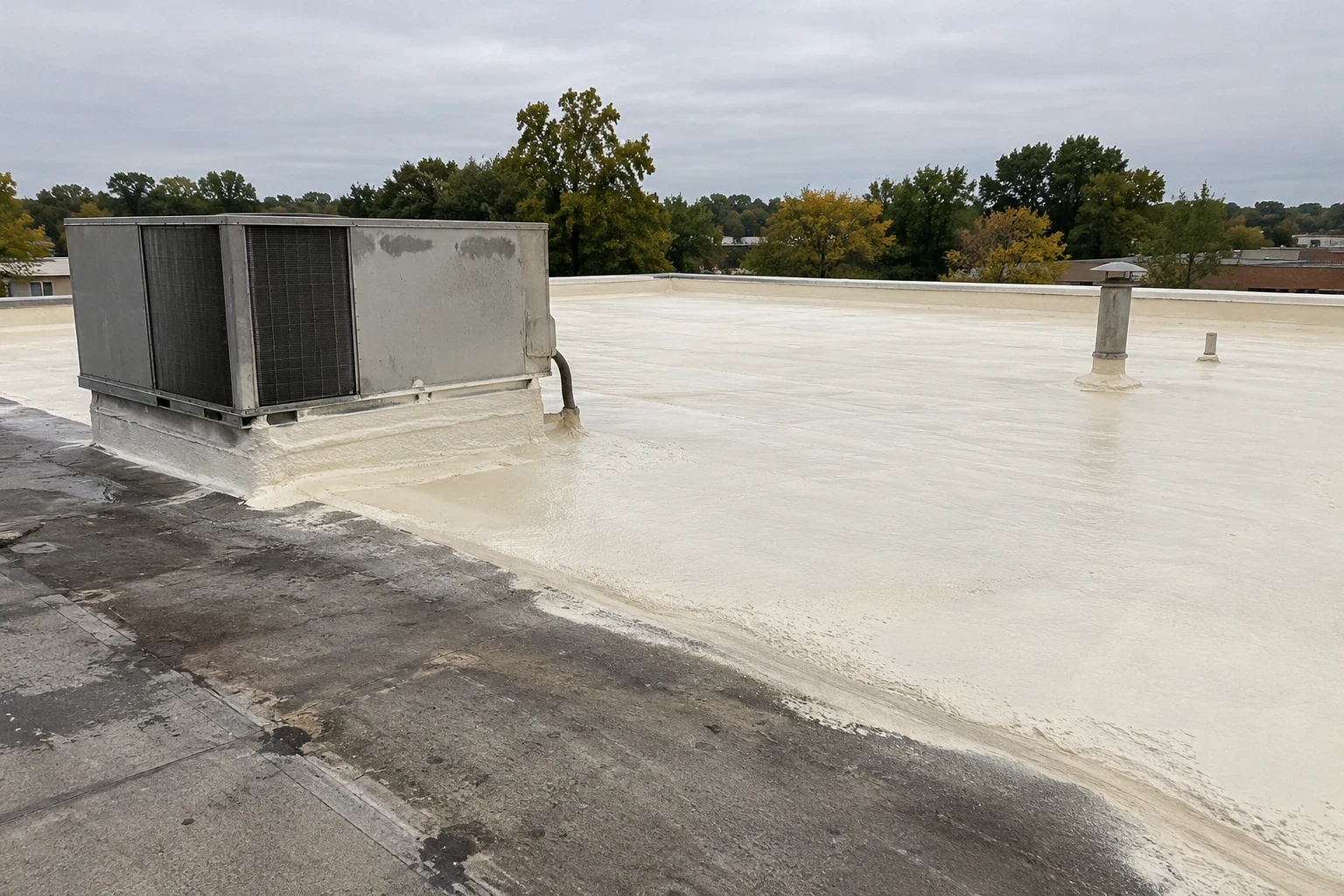
Yes, when the sheet is sound and the insulation is dry. Coating stretches the roof's life, but it will not fix wet insulation or open laps.
What does a blister on my roof mean?
Trapped moisture or air between plies. A small one can be cut and patched. Many blisters, or blisters over wet insulation, point toward a bigger problem.