Commercial Roof Leak Repair in Rockford, IL
Find and stop commercial roof leaks in Rockford, IL by tracing the water to its real entry point and fixing the cause, not just the stain.
Commercial Roof Leak Repair
Commercial Roof Leak Repair
Rockford, IL
The ceiling stain you find in February usually started in November, when a thaw sent meltwater into a seam that had already opened. Rockford sees about 134 freezing days a year, and each cycle of snow, melt and refreeze pushes water into whatever gap the roof offers. The water travels along the deck, finds a fastener or a joint in the metal, and drips onto a tile, a machine or an inventory rack far from where it got in. That distance is why leaks come back after a quick patch. A leak is a symptom, and the only repair that holds is the one made where the water actually enters.
Before anyone pays for roof work, insist that the entry point is found and shown to you.
Trace the water back to where it enters
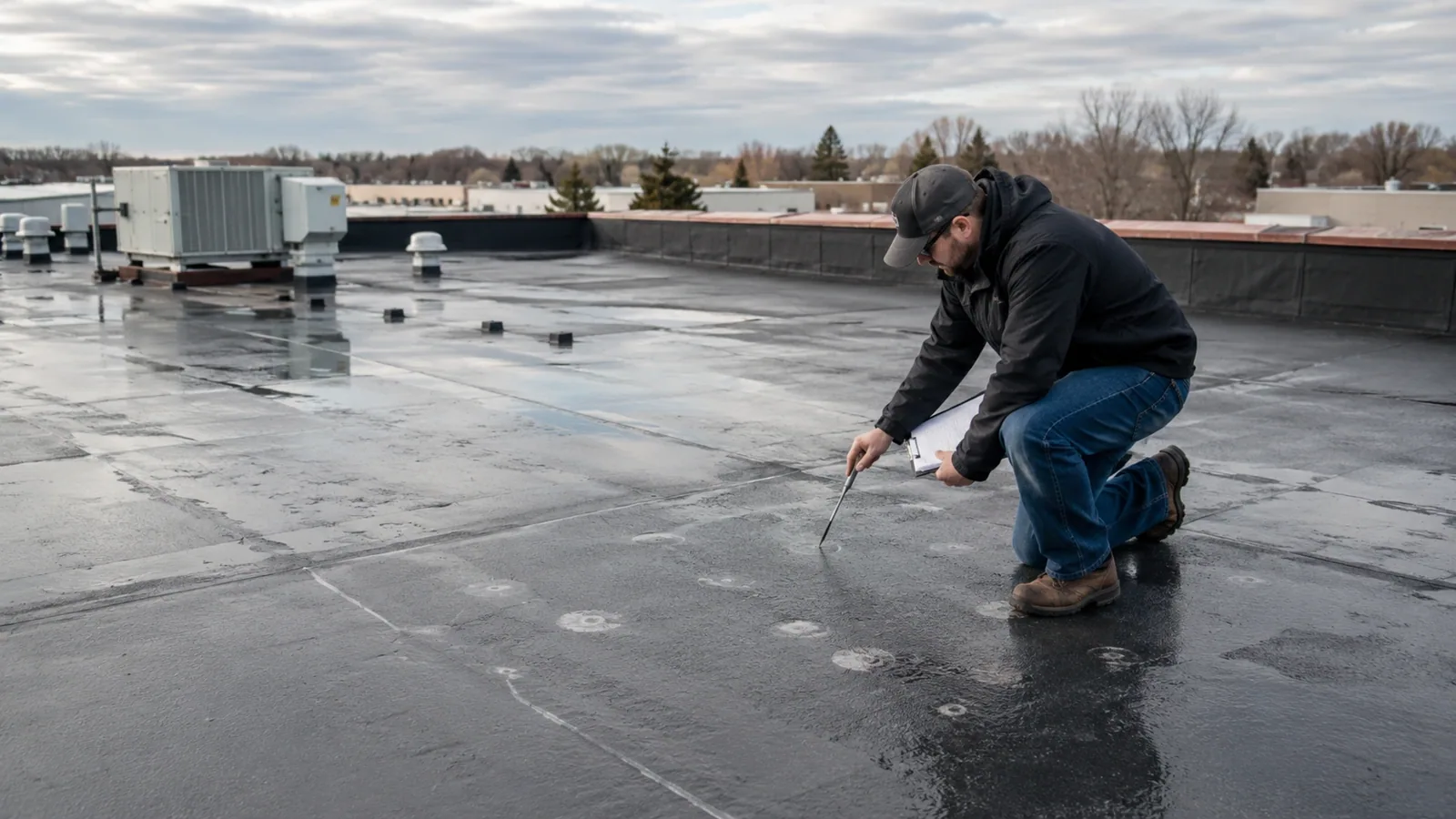
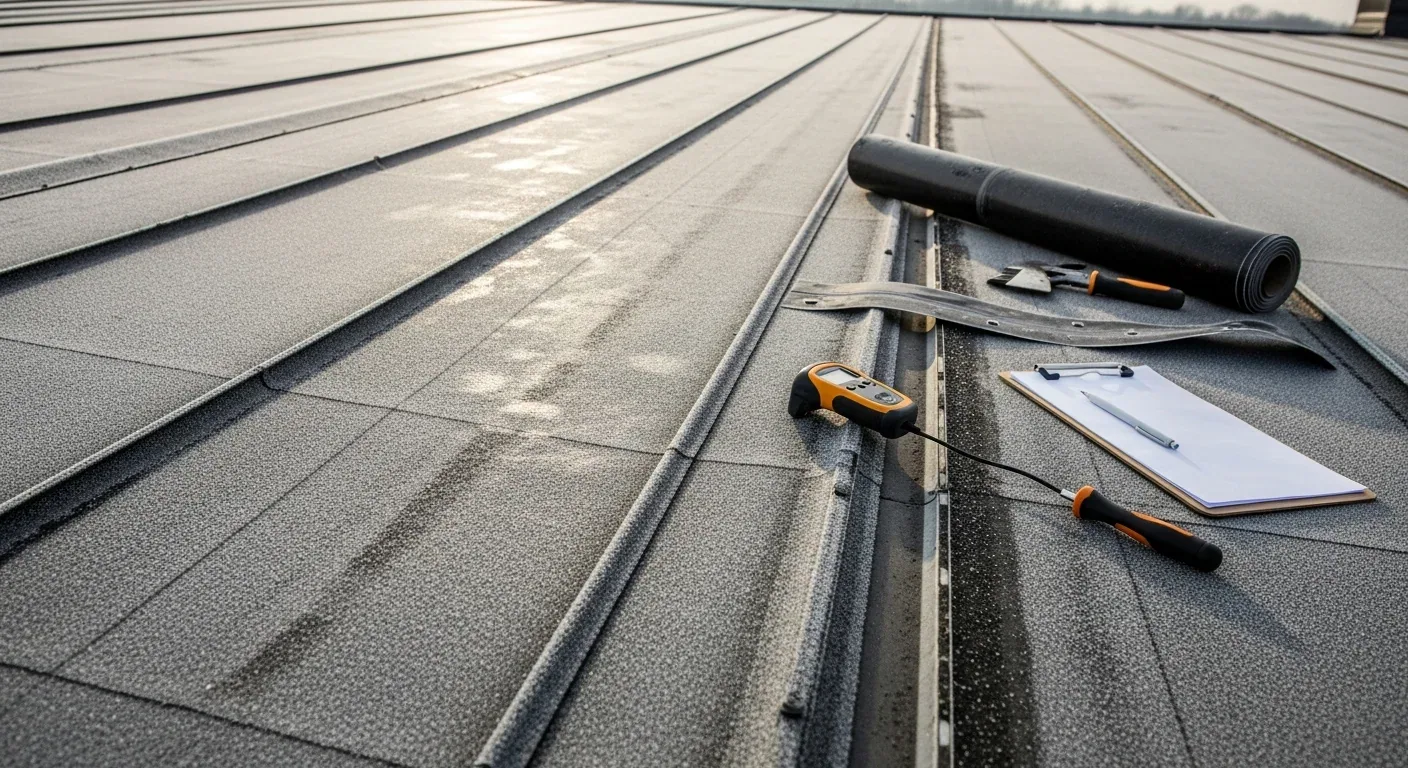
Leak work is detective work. We start inside, looking at where the water shows up, how fast it appears after rain or melt, and whether it follows wind direction. Then we go up and map the roof against what we saw. Common entry points are seams and laps, base flashing at walls, penetrations for pipes and conduit, drain bowls and clamping rings, expansion joints and the edge metal along the perimeter. Each one gets tested. Sometimes we flood-test a small area with a hose and watch the interior while a second person stays on the roof.
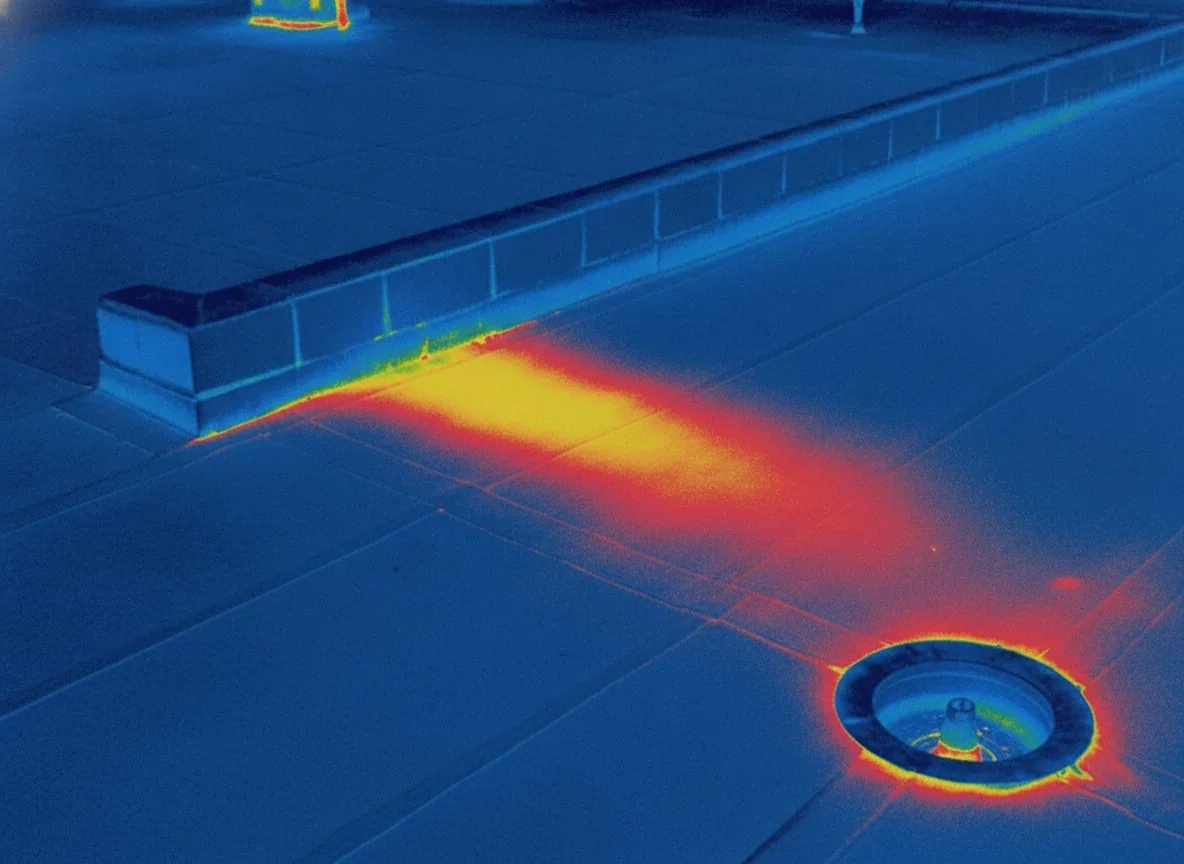
On larger roofs, scans can narrow the search. An infrared moisture survey shows where wet insulation is spreading, which tells you how long the leak has been active and how much roof is affected.
Stop the leak in the right order
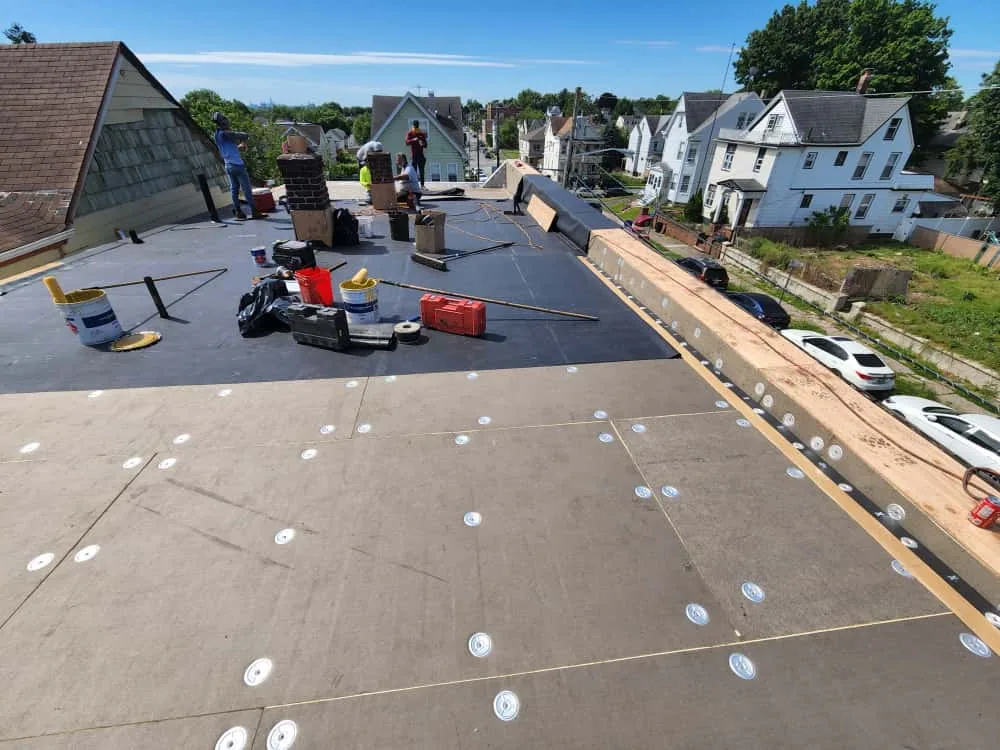
Stopping a leak happens in three steps, and skipping one is expensive. First, make the building safe and keep water out, with a temporary seal if the weather will not allow a permanent one. Second, find and fix the actual cause. Third, deal with the wet material the leak left behind. Wet insulation that stays under a repaired roof will keep corroding the deck and feeding moisture upward, so the repair must either dry it or cut it out.
For a leak that is soaking a building right now, call for emergency roof repair. For a leak that is slow and recurring, planned commercial roof repair costs less and gets a better result. Either way, ask the contractor for photographs of the entry point before and after the fix.
Wet insulation deserves its own conversation. Foam and fiberboard that have taken on water lose their insulating value, hold moisture against the deck, and can freeze and expand in winter. If a moisture survey shows a small wet area, we cut it out, replace it with dry material and tie the new section into the membrane. If the wet area is large, you are not looking at a leak repair anymore, and you should ask for a replacement price to compare it with.
Keep a small leak from becoming a big bill
Leaks are cheap early and costly late. A cracked boot or an open seam may cost a modest repair today, while a year of water in the insulation turns into replacement of the wet material, deck repair and interior damage. Slow leaks are the worst, because they never get anyone's attention. Roofs over ponding areas are a common culprit, since water that sits is water that eventually finds a way in. A roof that holds puddles after a rain needs ponding water roof repair before the next freeze.
Keep a record. Date every leak, note the weather, and photograph the ceiling and the roof. When it is time to talk with a roofer, an insurer or a landlord, that record is worth real money, and it keeps you from paying twice for the same problem.

Ask what the proposal does not say
Cheap leak repair often leaves out the part that matters. Ask whether the price includes finding the source, repairing it and checking it after the next rain. Ask whether wet insulation is being removed or left in place. Ask who is responsible if the leak returns in the same spot, and for how long. Water events in this region are not light. A July 2024 flood overwhelmed Rockford's stormwater systems, and a June 2018 flood caused $30 million in damage to a Mercyhealth cancer facility on Rockton Avenue. Roofs on medical buildings in the Rockton Avenue corridor and on hospital roofs generally cannot tolerate even a small leak, so the response there is different.
If a leak has already damaged contents or ceilings, you may need documentation, and roof insurance claim assistance is how dated photographs and moisture readings get into the claim file.
Act while the damage is still small
Treat every leak as urgent in the sense that it should be looked at soon, and as an emergency only when the building is taking on water that threatens people, products or equipment. Winter leaks are tricky because ice can hide the entry point and cold stops some repairs from curing. A short-term seal now and a permanent fix in warmer weather is often the sensible plan, and we will tell you which parts of the work can be done today and which should wait. If a storm comes through with straight-line winds, as the March 31, 2023 system did across the area, check the roof as soon as it is safe.
Do not wait for a second leak before acting on the first. Walk the roof after every major storm and every big thaw, look at drains and seams, and clear debris from drain bowls so water does not back up. Those ten minutes cost nothing, and they are the cheapest leak prevention an owner will ever buy. If you cannot get on the roof safely, call us and we will do it for you.
A durable repair begins by tracing the water path rather than sealing the visible stain. Check the field membrane, seams, parapet corners, equipment curbs and drain bowls around the point of entry, then look for wet insulation or a compromised deck. If the source is not confirmed, explain what additional opening or test would resolve the uncertainty. After the repair, photograph the finished detail and note what rainfall or follow-up visit would show whether the leak has stopped.
For buildings in the North Main Corridor, check whether wind-driven rain can reach the roof edge as well as the field seam; at larger logistics roofs south of U.S. 20, confirm that a temporary patch will not obstruct drains or loading operations.
Questions Owners Ask
Why does my roof leak in a different spot than the damage?
Water runs along the deck and the insulation before it drips through. The entry point can be many feet from the stain, so we trace the leak back instead of patching the visible spot.
How long does it take to find a leak?
Some leaks show themselves in an hour. Others need a flood test, an infrared scan or a return visit during the next rain. We will tell you which kind you have.
Do I have to replace the roof because it leaks?
Not usually. Most leaks come from seams, flashings and penetrations and can be repaired. A roof with wet insulation across a large share of its area is the exception.
Can a leak be fixed in winter?
A temporary seal can go on in cold weather, and a permanent fix often needs warmer temperatures. We separate the two so the building stays dry in the meantime.
What should I do while I wait for the roofer?
Move contents away from the drip, lay plastic, and photograph everything. Do not go on the roof yourself in snow or ice. Call, and we will talk you through the safe steps.
Is the leak covered by insurance?
Sometimes, depending on the cause and your policy. Sudden storm damage is treated differently from long-term wear. Document it and talk to your carrier early.