
Roof Systems
TPO, PVC, EPDM, modified bitumen, metal and coating systems for Rockford, IL roofs, chosen for freeze-thaw, snow load and summer heat before you sign.

what to know
Roof Systems
Rockford, IL
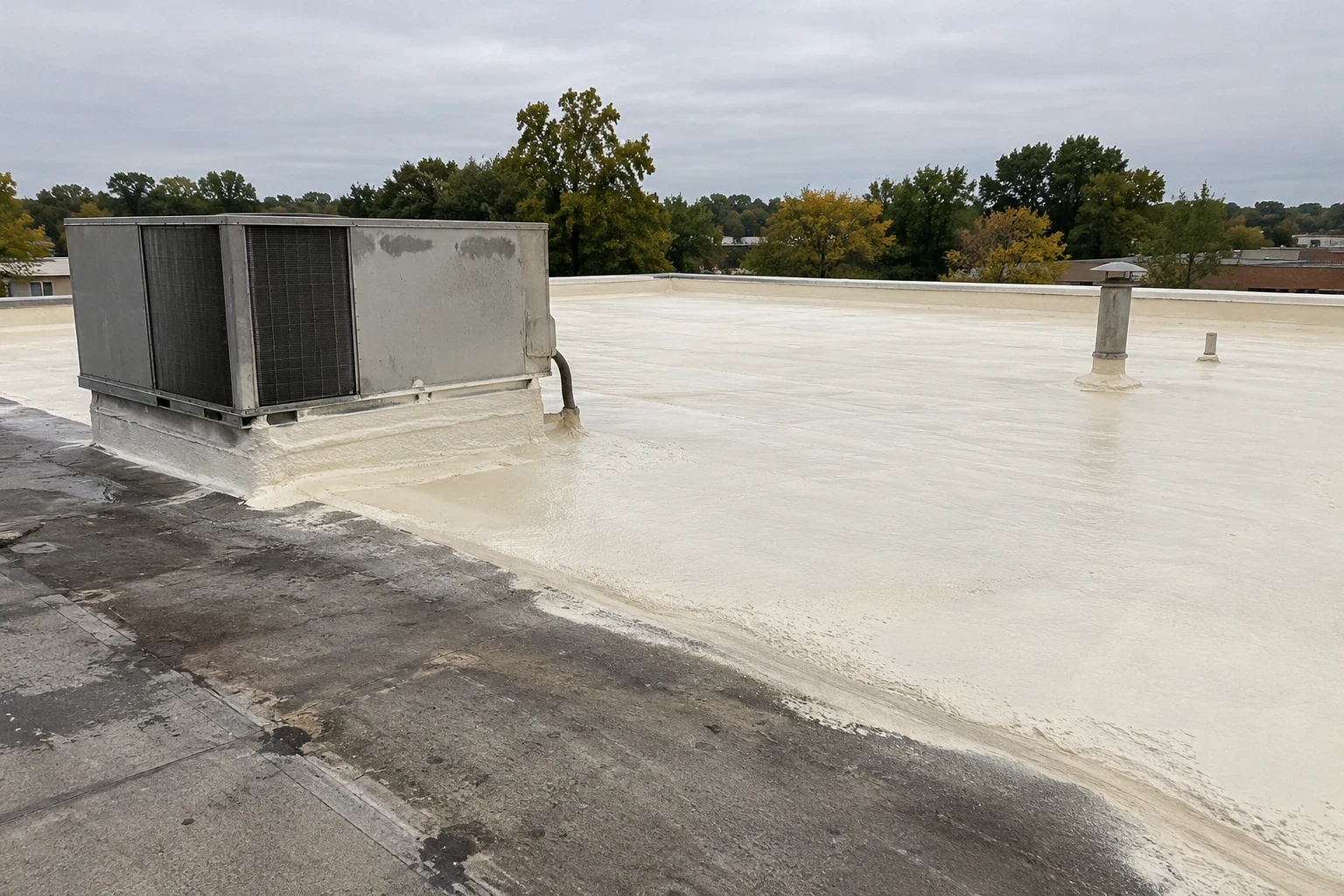
A dark membrane in Rockford, IL gets asked for opposite things in the same year. Roughly 15 days climb past 90 degrees, when the sheet expands and the surface cooks, and about 12 days fall below zero, when that same sheet shrinks, stiffens and tugs on every seam and flashing it touches. A system that looks like a bargain on the bid can be the wrong one for that swing, and you will not learn it until the second or third winter. Choosing a membrane is a decision about how much stress your building can tolerate and who pays when the stress wins. A flat roof here also carries wet snow for weeks at a time, so drainage and slope count as much as the sheet itself.
Pick the system for the roof you own, not for the roll the contractor happens to stock.
Weigh each membrane against a northern Illinois winter
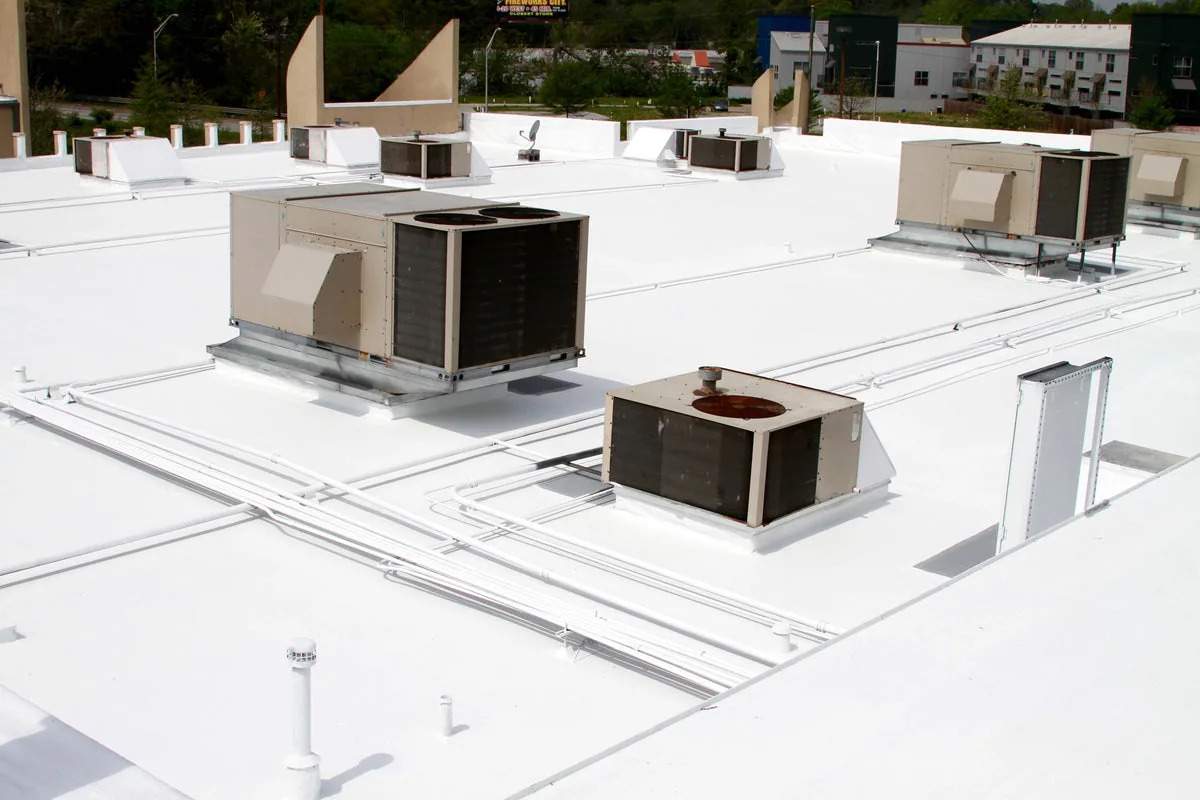
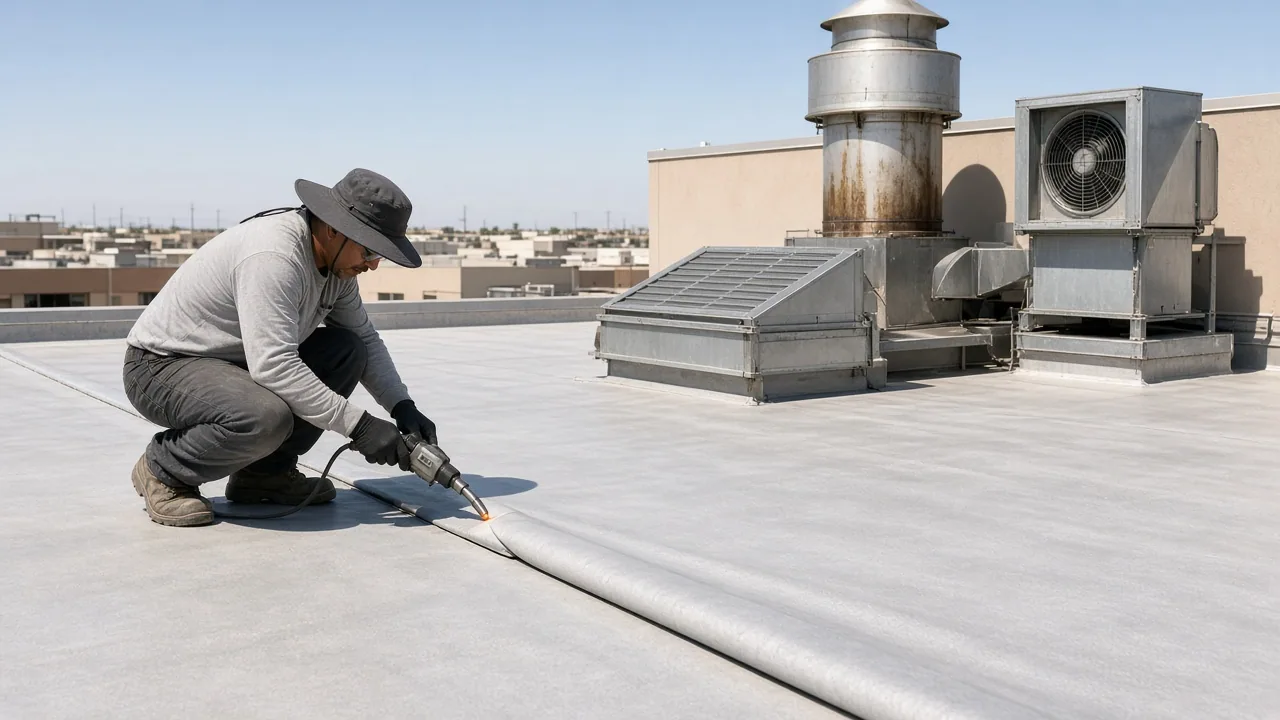
Single-ply sheets such as TPO, PVC and EPDM dominate flat roofs for good reasons: they are light, relatively quick to install and repairable. Each ages differently, though, and the seams are where Rockford freeze-thaw usually shows up first. Older layered roofs, from modified bitumen to built-up roofing, carry more redundancy and more weight, which matters on a deck that already holds snow drifts against every parapet. Where a building wants a metal roof, a standing seam system sheds snow quickly but needs its clips and penetrations detailed with care.
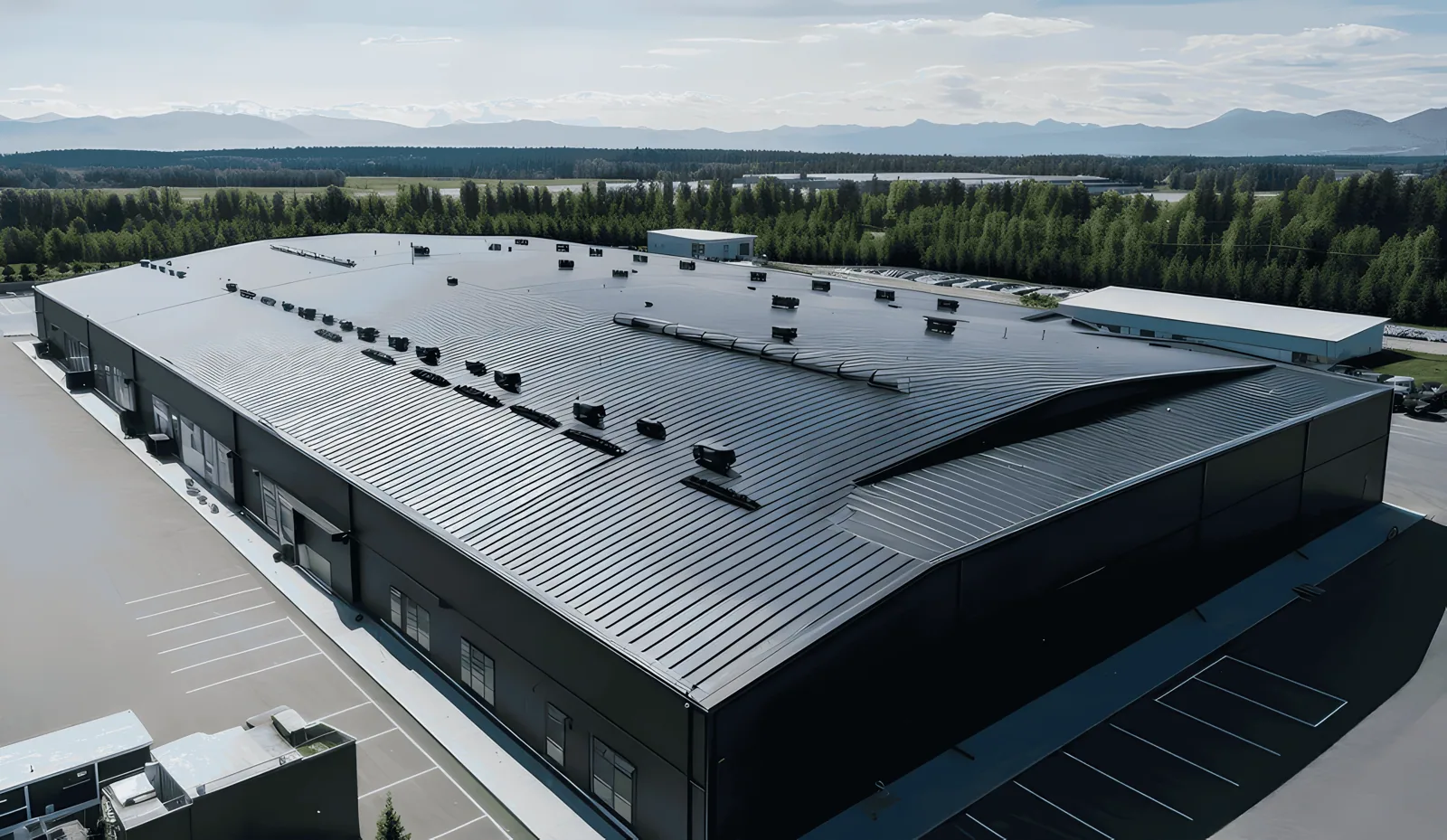
Choose by the building, not the brochure
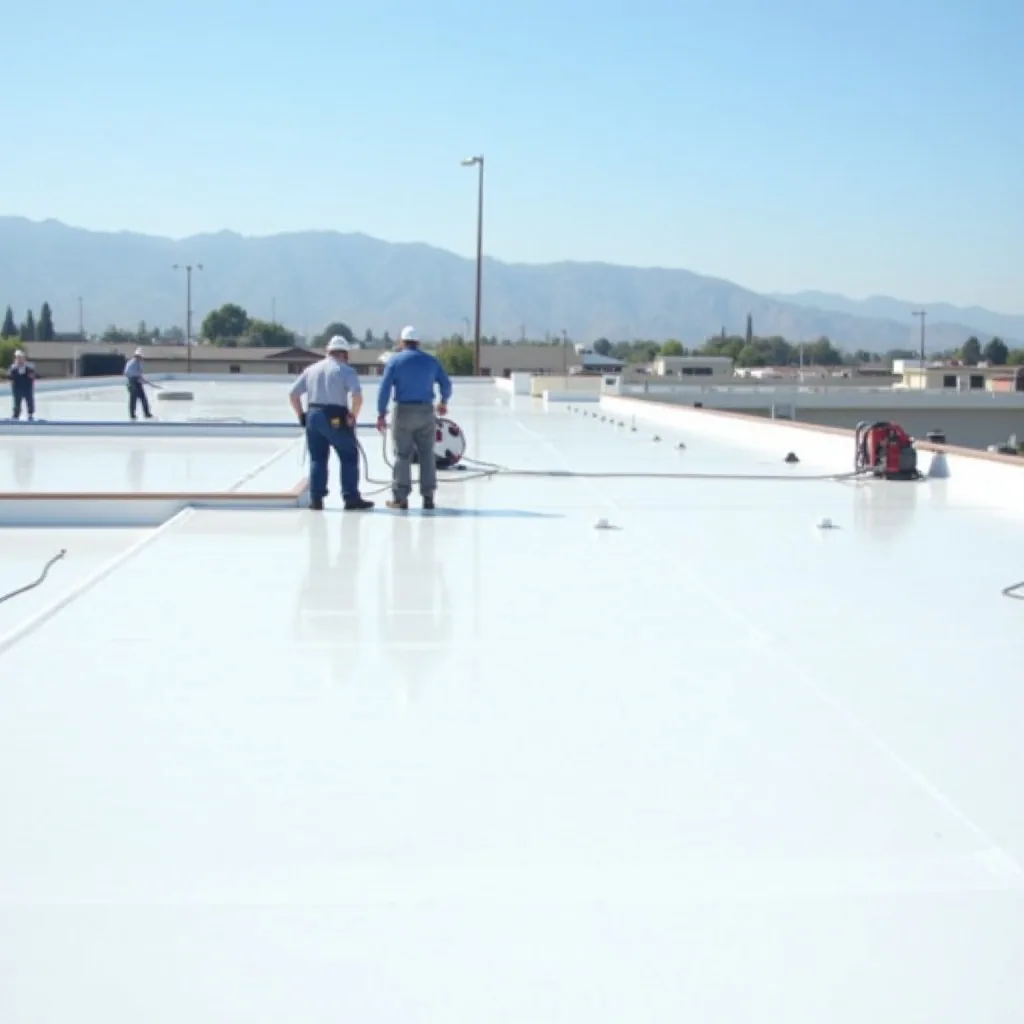
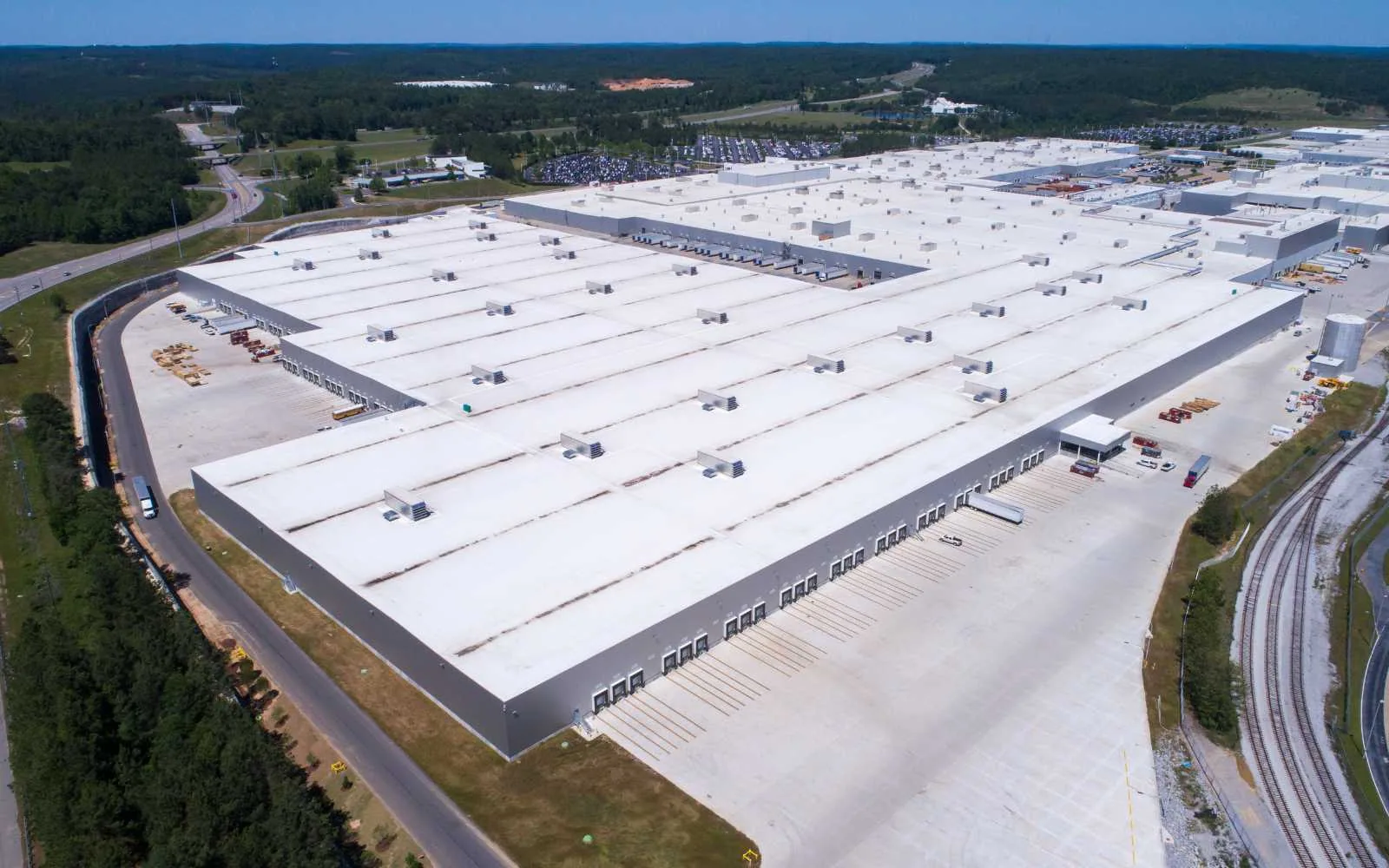
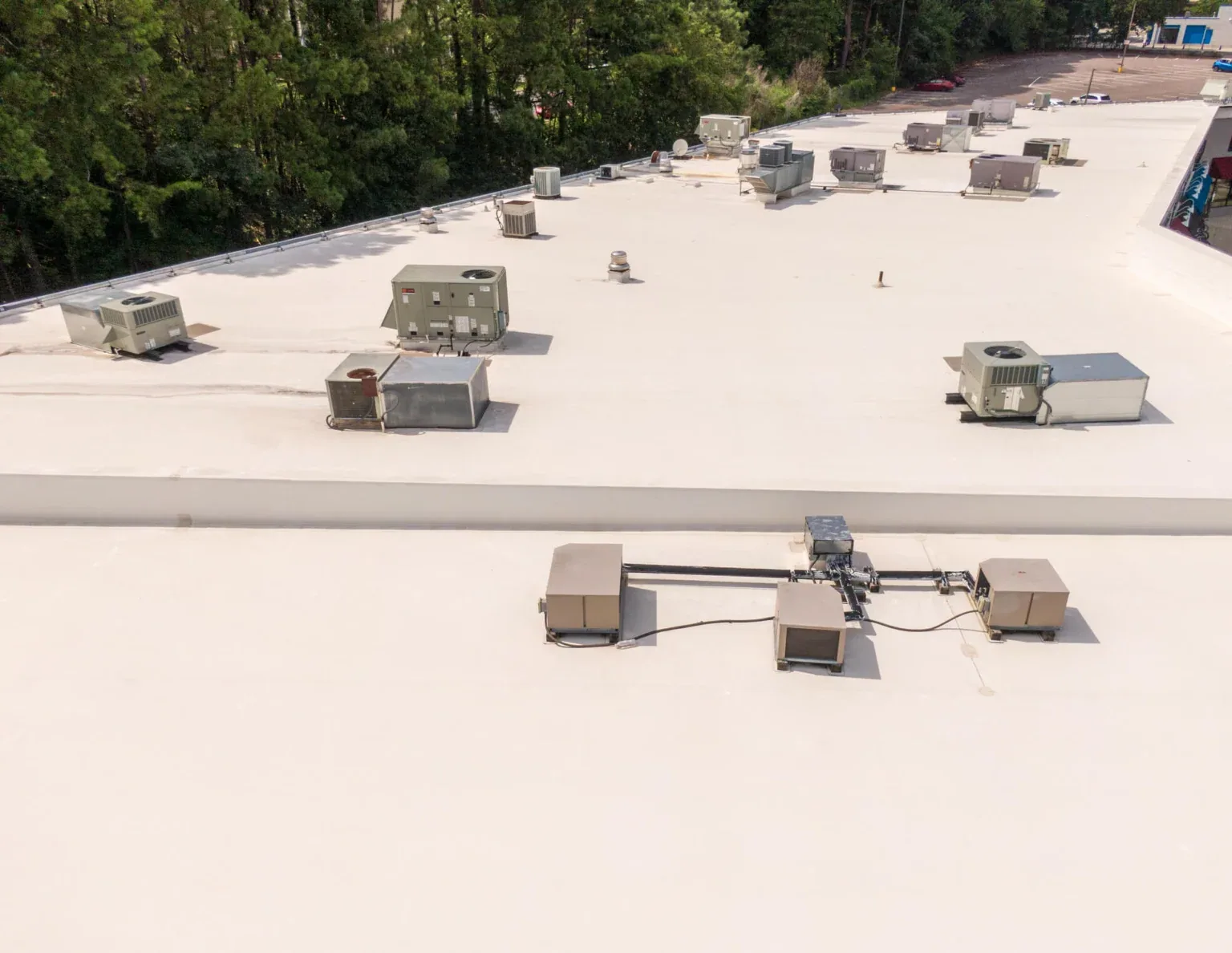
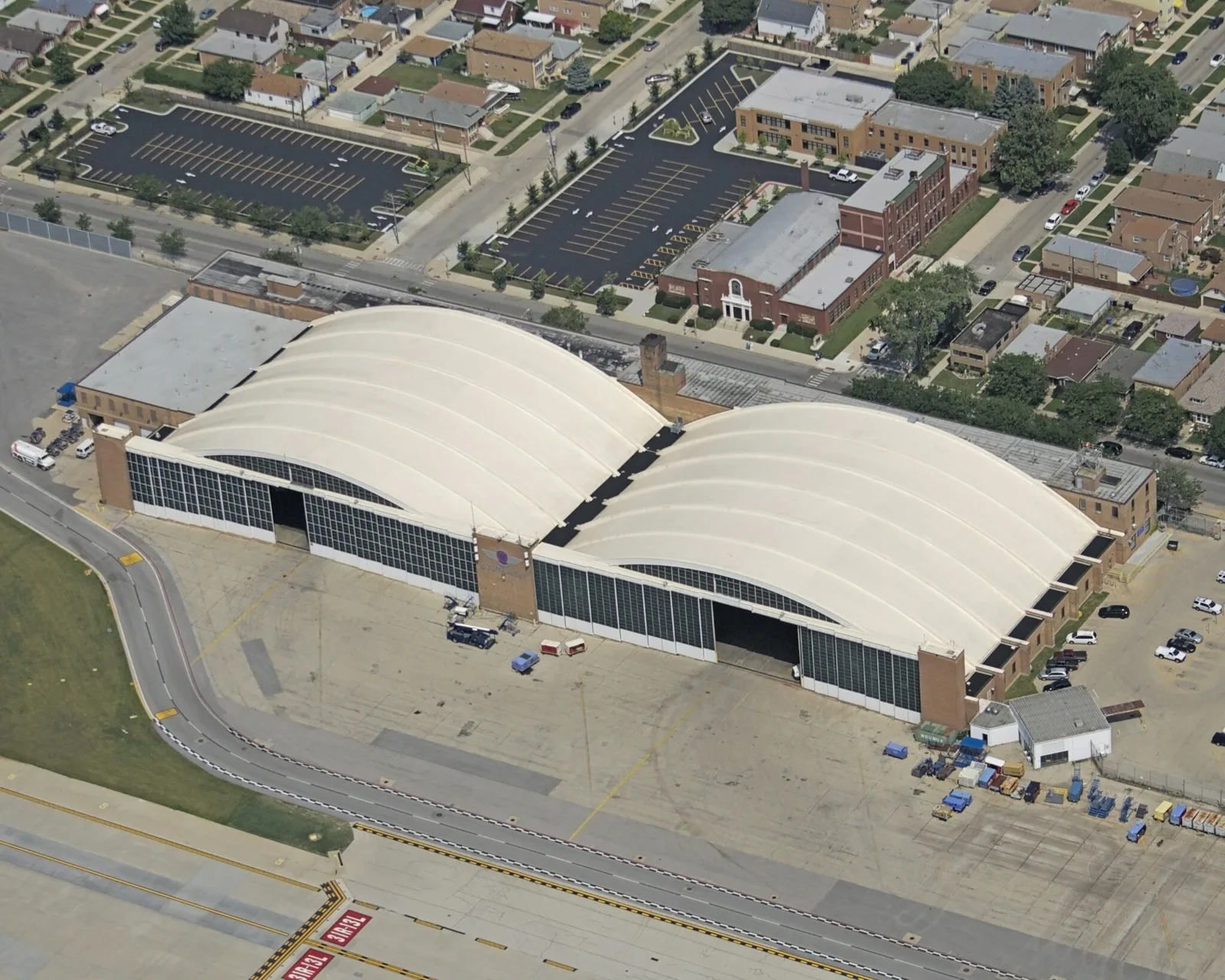
AAR's 200,000 square foot aircraft maintenance facility out at the Rockford airport and a small office building on a retail strip should never get the same roof by default. The first is a very large area to drain, flash and keep dry. The second is mostly about tenants, rooftop units and where the water goes. Some roofs can stay put as well: a metal retrofit goes over the old roof with no tear-off, and silicone or acrylic coatings can bring back a membrane that is still in sound shape.
Check what sits under the membrane before you sign
Owners tend to judge a bid by the membrane brand, yet the layers under it do most of the work against Rockford heat and moisture. Insulation thickness is no longer a free choice, because the Illinois energy code in force since January 2024 sets minimum levels for new roofing. Before you sign, have the bidder write down the insulation depth, how the sheet is attached and what a repair would cost next to a full replacement. Those answers are your protection against change orders later.
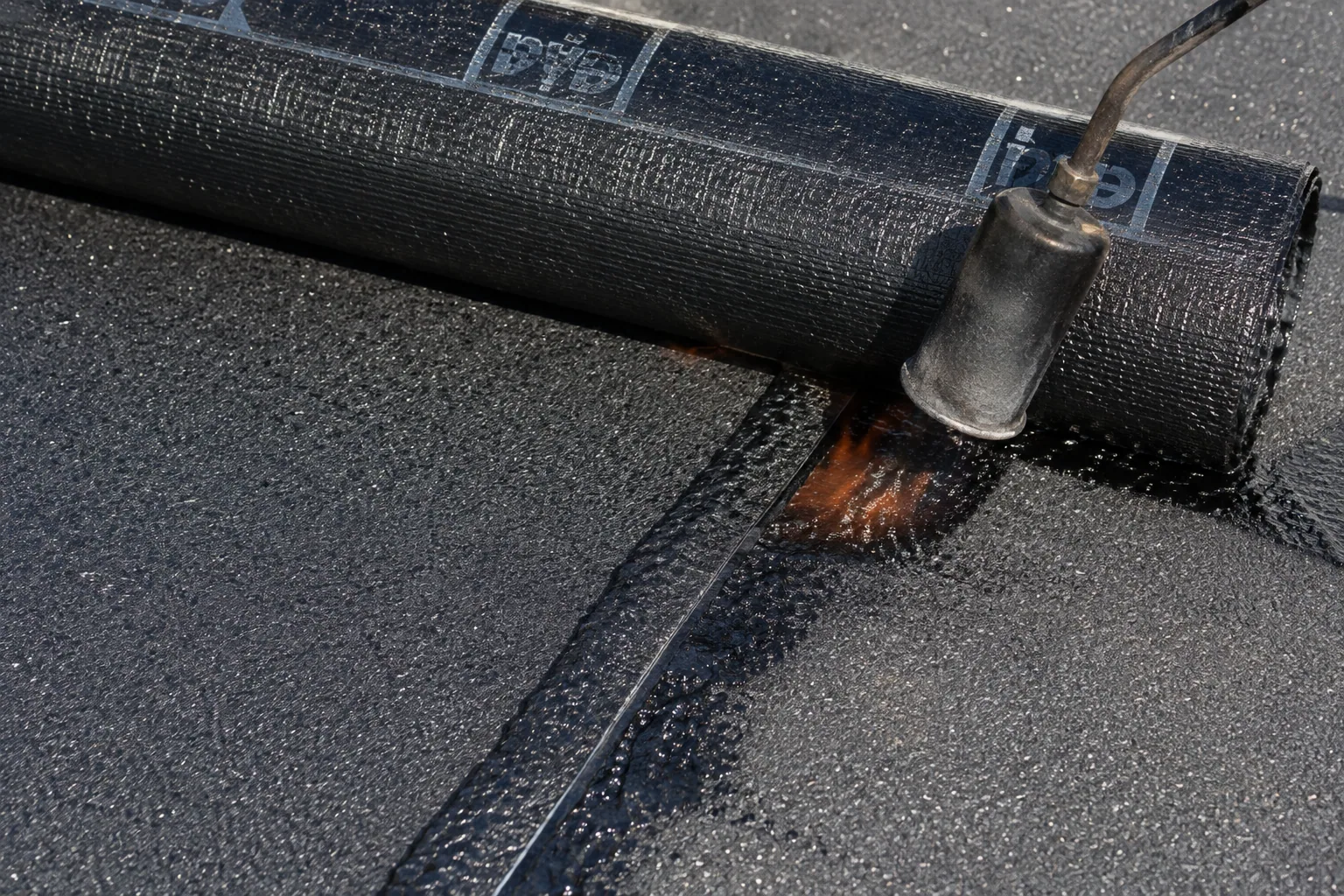
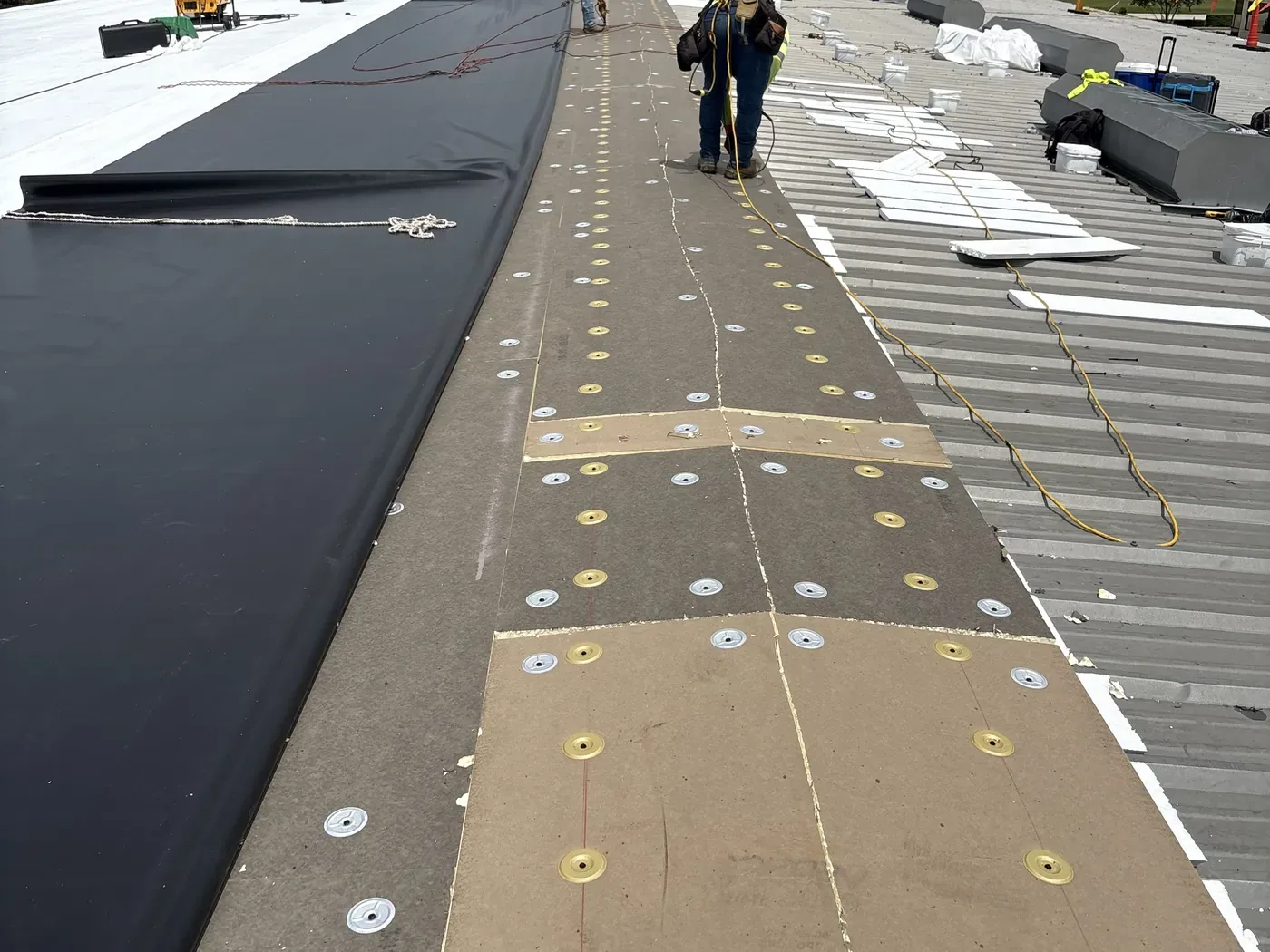
Check the layers below the sheet
Ask for test locations, deck findings, insulation depth, attachment method, and drainage limits in the written scope. A surface sample cannot describe every roof zone. The chosen system should match the verified assembly, not just the lowest material price.
Questions Owners Ask
Is a white membrane worth it in a cold market like ours?
Often, yes, for buildings with heavy summer cooling loads such as warehouses and offices, but winter performance matters more here. Ask how the seams and flashings behave through freeze-thaw before you let color drive the decision.
Can I coat my roof instead of replacing it?
Only if the membrane and the insulation below are still sound. A coating over wet insulation just hides the problem, so a moisture survey comes first.
Can a membrane brand settle the roof decision?
No. Drainage, attachment, substrate, and detail quality still determine performance.
Which warranty terms deserve a close read?
Check coverage, exclusions, inspections, transfer terms, and required repair records.