Wind Damage Roof Repair in Rockford, IL
Commercial wind damage roof repair in Rockford, IL: lifted edges, peeled membrane and loose coping found, documented and fixed before the next freeze.
Wind Damage Roof Repair
Wind Damage Roof Repair
Rockford, IL
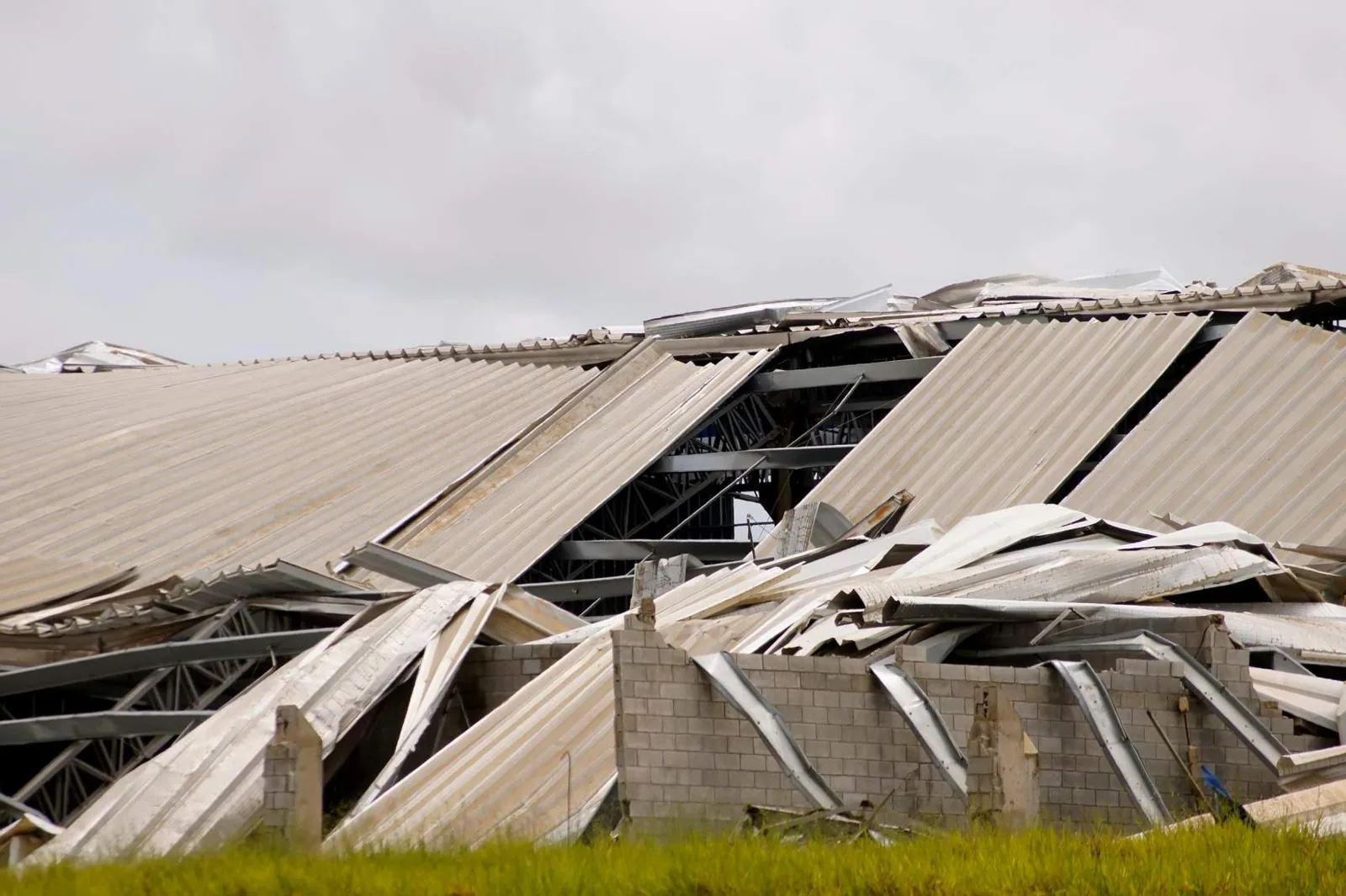
A 73 mph gust at Winnebago on November 10, 2020, in a storm that did widespread damage across Winnebago County, shows how little wind a roof needs to start costing you real money. It only has to get under the first few feet of the perimeter. A membrane lifted at the edge flaps with every gust after that, working the fasteners and the adhesive a little looser each time, and by the first thaw in Rockford, IL that small lift has become a long tear with wet insulation behind it. Most of what wind does to a commercial roof looks minor from the parking lot and turns out expensive from the inside.
If a big wind has gone through, get the edges checked before the next hard freeze. A short repair now is the cheapest repair you will ever buy on that roof.
Trace where the wind got under the sheet
Wind does not push down on a flat roof so much as pull up on it. Air racing over the parapet drops the pressure across the roof surface, and the strongest suction lands at the corners and along the edges, which is why the perimeter fails first. A mechanically fastened membrane billows and tugs against its plates. A fully adhered sheet peels where the bond was weak or dusty. A ballasted roof loses stone, and then the sheet underneath it. Edge metal and coping that were set with too few screws or bedded in tired sealant lift next, and once the edge metal goes, the membrane has nothing holding its last few inches down. Big low buildings with long, unbroken edges, such as the cargo and maintenance buildings around Chicago Rockford International Airport, give the wind a long run at the perimeter, so those edges carry the heaviest load.
That is why a wind assessment starts at the corners and not at the leak.
Read the pattern before you pick a repair
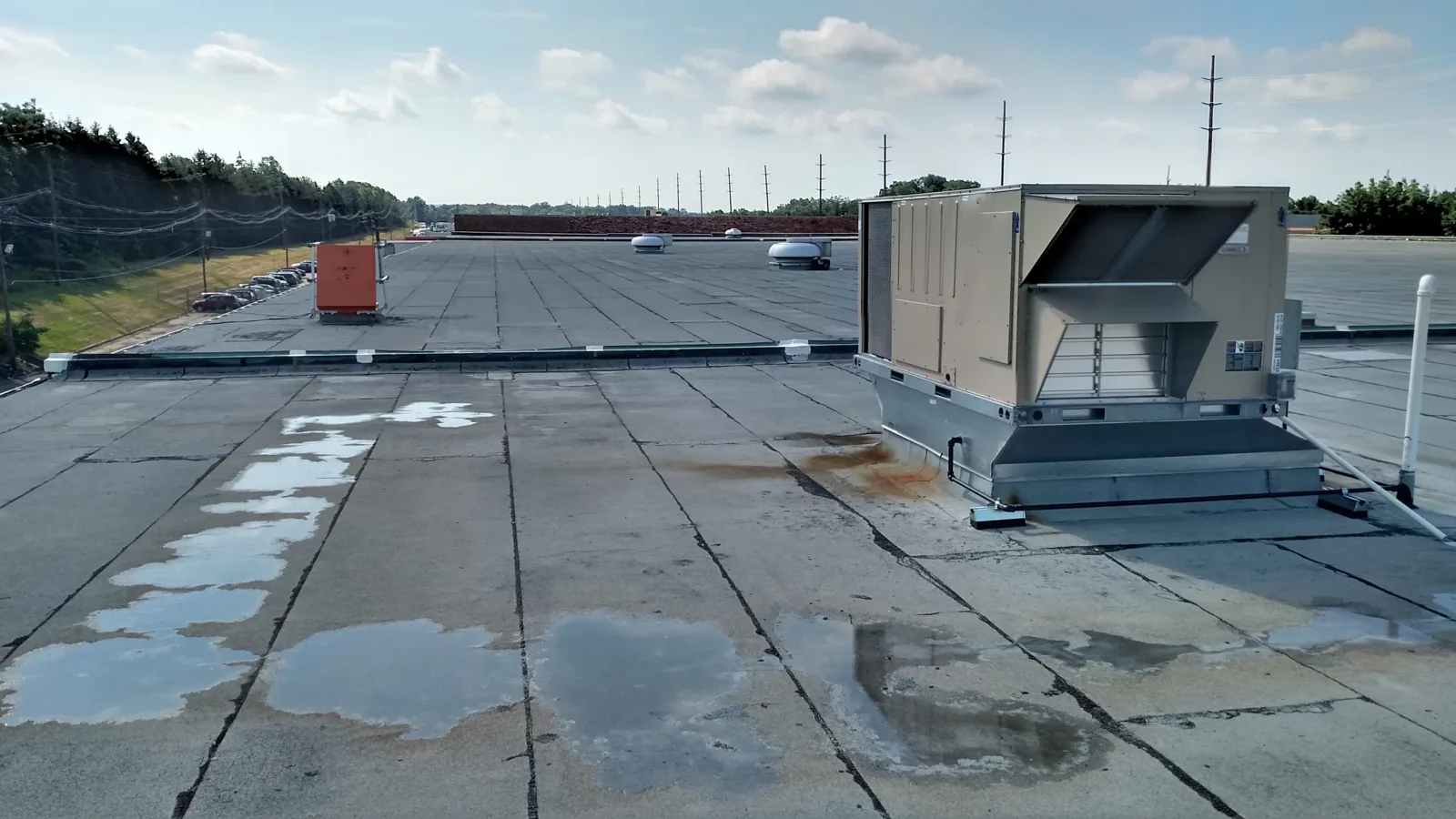
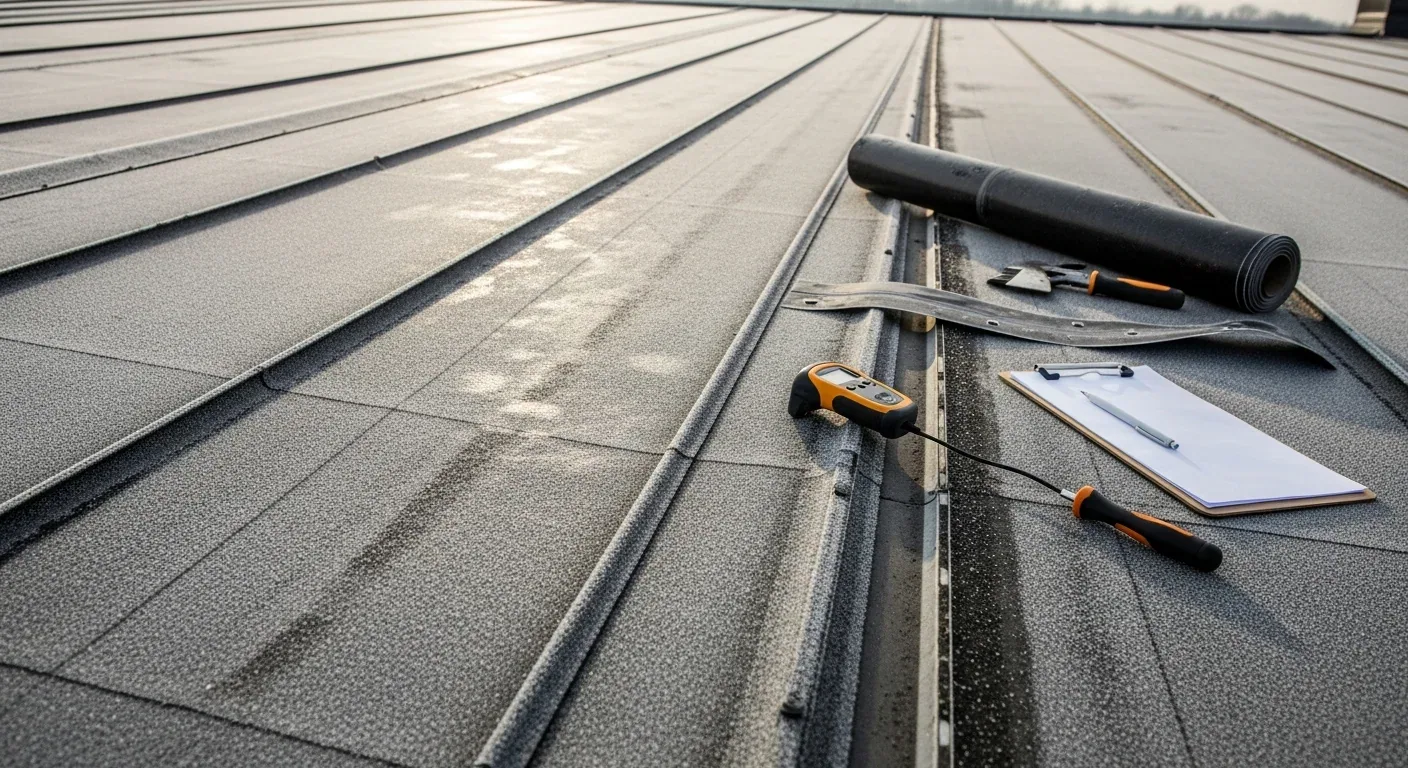
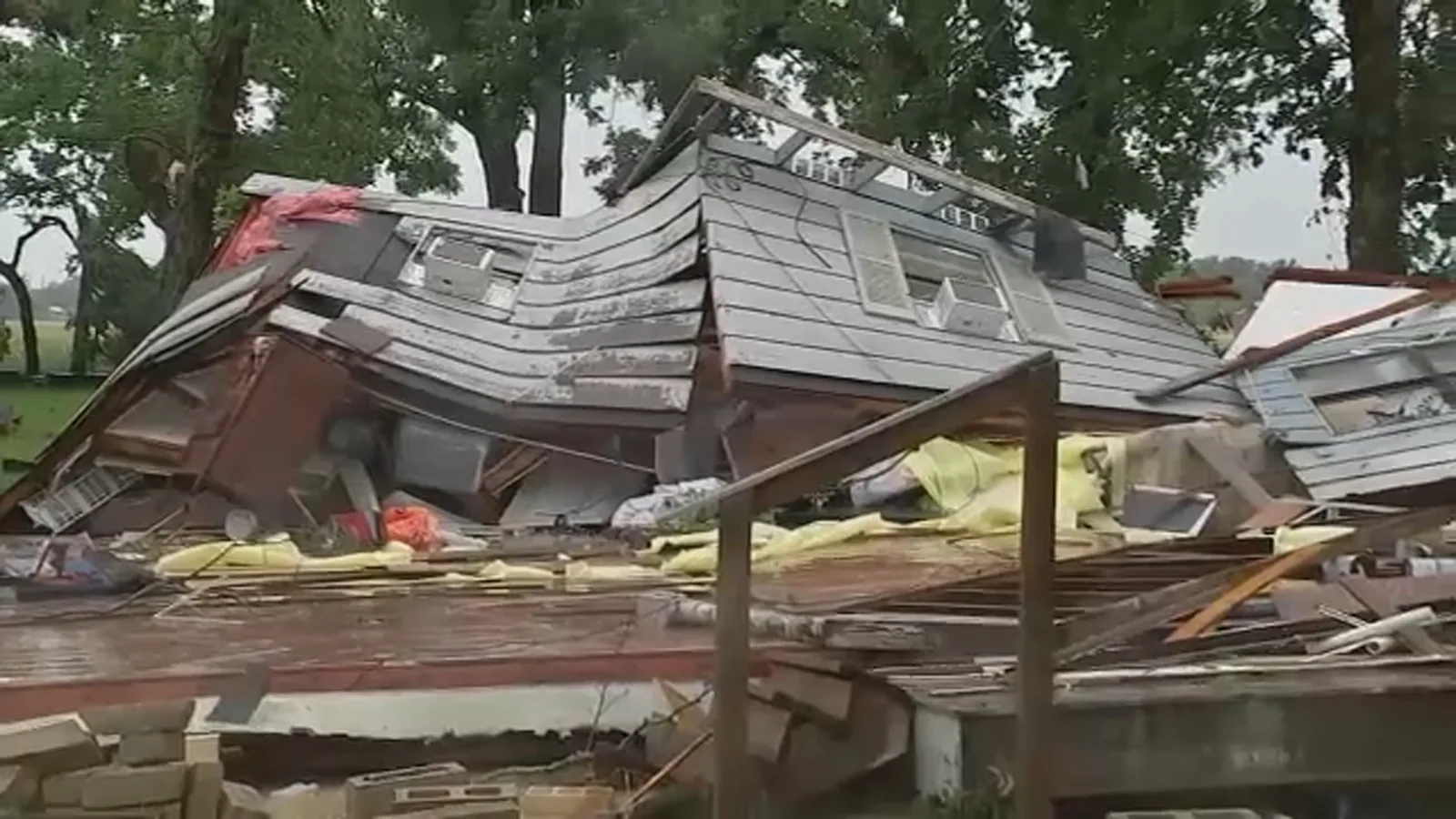
Wind leaves a direction. Torn or lifted membrane on one side of a roof, ballast piled against a parapet, units shifted off their curbs the same way and coping loose on the windward wall tell us which gust did the work and how far the damage runs. Fasteners pulled through the sheet look different from fasteners that backed out over years of freezing and thawing, and that difference matters when an insurer asks what is storm and what is age. A system that is mechanically attached, like many TPO roofs, shows fluttering as a line of stressed plates, while a bonded sheet shows a blistered, peeled patch. We also check what the wind carried: a rooftop unit panel, a sign, a piece of someone else's roof, anything that landed hard enough to bruise or puncture the membrane, and a punctured membrane is repaired differently from a lifted one.
- Lifted or rolled membrane along the windward edge
- Loose, bent or missing coping and edge metal
- Fasteners and plates pulled up through the sheet
- Ballast scattered or banked against a wall
- Rooftop equipment, vents and skylight curbs shifted
Keep one bad corner from becoming a full replacement
A contractor who walks onto a wind-damaged roof and sees a replacement is not always wrong, but you should insist on proof before you sign. Scale matters here. On a roof the scale of the Belvidere Assembly Plant, which runs to roughly 5.3 million square feet, a torn corner is a small repair against a very large area. The same logic applies to a distribution building in a new logistics park, where one wind-lifted perimeter does not make the other three sides bad. Repair price and replacement price belong side by side, with moisture testing that shows whether the insulation under the damage is dry. If it is dry, the repair is worth doing. If it is wet, the scope grows, and you want to know exactly how far before anyone issues a change order. When the wind is the leading edge of a tornado, a structural check comes before any roofing, as it does after tornado damage.
Do not accept a pitch that treats wind damage as a reason to replace roof area the wind never touched. Dated photographs and a scope that separates fresh wind marks from old wear, the record an insurance claim needs, keep that line clear.
Rebuild the edge so the next gust finds nothing to grab
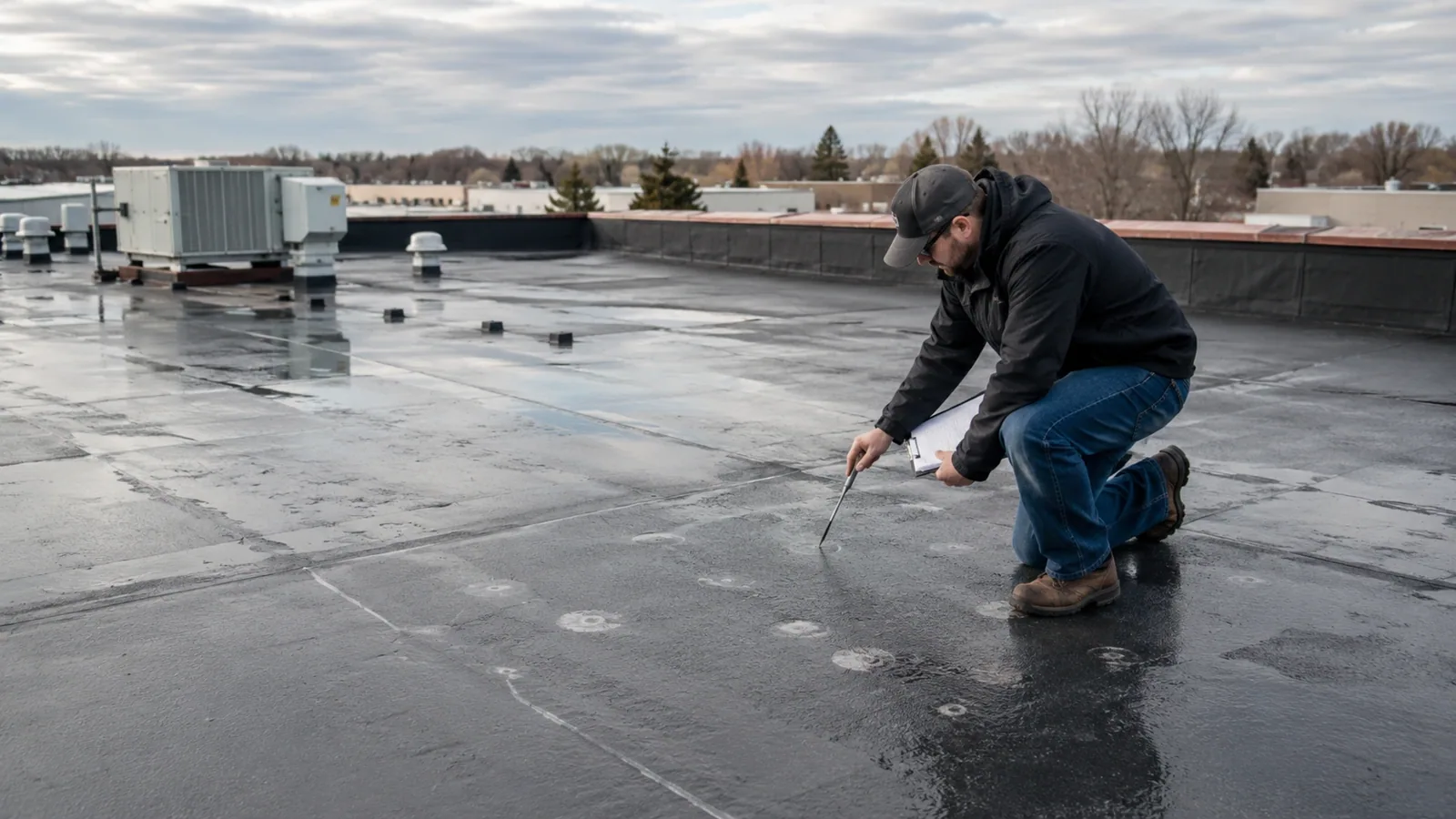
The repair itself is simple to describe and easy to cut short. Torn membrane is cut back to sound material, the deck and insulation underneath are checked, and new sheet is welded or bonded in with a proper lap. Loose fasteners are replaced, not just tightened into the same stripped holes. Edge metal and coping come off and go back on with the right cleats and sealed joints, because the edge metal, coping and gutters are what hold the last inches of membrane down. If an edge failed once, it is fair to ask whether the original attachment matched what the building needed, and to add securement along the perimeter while the crew is there. The City of Rockford follows the 2021 International Building Code and the 2021 Existing Building Code, so the extent of the repair can raise the question of upgrades, and we say so before the work starts. When the flashing around the damaged area has failed too, it needs a proper flashing failure repair, not a bead of sealant.
Schedule the permanent work around freezing weather
In a typical year Rockford spends roughly 134 days at freezing or colder, and many welds, adhesives and sealants will not cure properly in that cold. A wind loss in November or February often leaves a gap between the emergency fix and the permanent one. During that gap, the temporary cover has to hold against more wind and a snow load, so it needs battens, ballast and checking after every storm, the same stopgap discipline as any emergency roof repair. Our crews respond around the clock, holidays included, to stop the water and re-secure what is loose. Then we put a date on the permanent repair, even if it is a few months out, so a temporary cover does not become the roof by default.
Ask for that date in writing. A tarp without a plan is your money slowly going up in the wind.
Ask these questions before you sign anything
After a windstorm, you will hear from more than one contractor, and the quotes may not look alike. A fair wind repair comes with a written scope, photographs of each item, a clear split between storm damage and older wear, and a price you can compare. Ask how they will protect the roof between visits. Ask for a second opinion if the number looks high for the damage you can see. We are glad to give one, and it is yours whether or not you hire us.
- What exactly is torn, lifted or missing, and where is the photograph?
- Is the insulation under it dry, and how was that tested?
- What is the repair price next to the replacement price?
- What holds the edge down when the next wind comes?
Questions Owners Ask
How soon should a roof be checked after a windstorm?
Before the next rain, and certainly before the next freeze. A lifted edge keeps working in every gust, and meltwater that gets under it will freeze and pry it up further.
Can wind damage hide on a roof that looks fine from the ground?
Often. Loose coping, a lifted seam or shifted flashing usually shows only up close, and a flapping membrane can look flat again once the wind drops.
Does a torn corner mean the whole roof has to go?
Not by itself. Cut back to sound membrane, confirm the insulation is dry and compare that repair with a full replacement price before you let anyone push the bigger number.
Will my insurer treat lifted edges as storm damage or as wear?
That is the insurer's call, so give it good evidence. Dated photographs, the direction of the damage and a written scope that separates fresh wind marks from old fastener wear all help your case.
What can be done in January to hold a wind-damaged roof?
We re-secure loose membrane and metal, cover open areas and keep the water out. Welded repairs wait for weather that lets them cure, unless the damage leaves no other choice.