Cold Storage Roofing in Rockford, IL
Roof repair and replacement for cold storage and freezer buildings in Rockford, IL, with vapor control, dry insulation and fair pricing from the owner's side.
Cold Storage Roofing
Cold Storage Roofing
Rockford, IL
A freezer building pushes cold up into its roof from below, and a Rockford winter pushes cold down from above, so a cold storage roof gets squeezed from both directions with a layer of insulation in the middle. In January that layer stays frozen. In July, when the outdoors is warm and humid and the interior is still well below freezing, the vapor drive reverses, and any moisture that has found its way in becomes ice inside the insulation, where it cannot dry out. Rockford sees about 134 days at or below freezing, and a roof that has been wet once in a building like this tends to stay wet for good.
If your freezer roof has stained a ceiling, dripped frost onto product or iced over a sprinkler line, do not just patch it. Find where the moisture is coming from first, because a patch over wet insulation only hides the problem.
Follow the moisture, not the stain
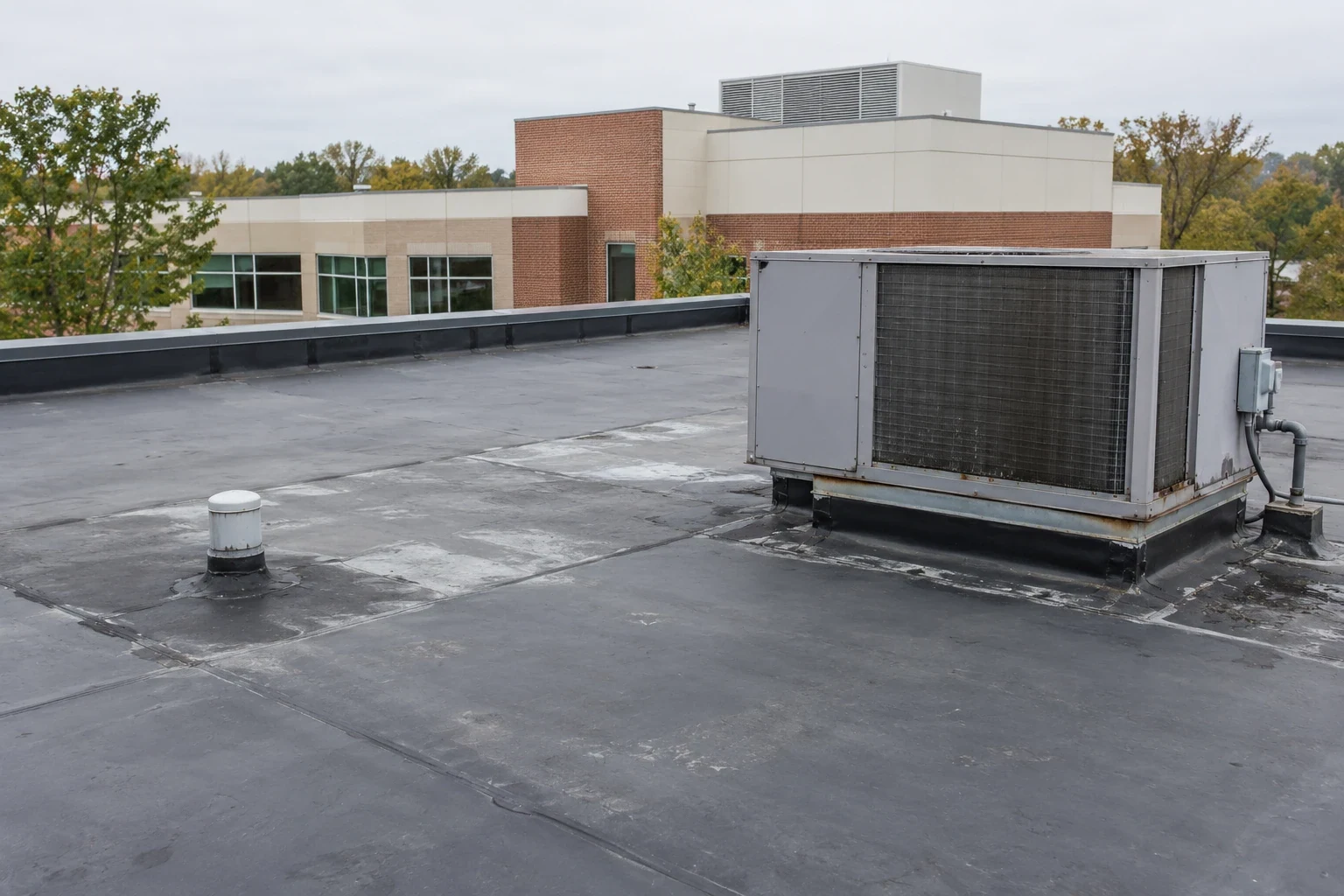
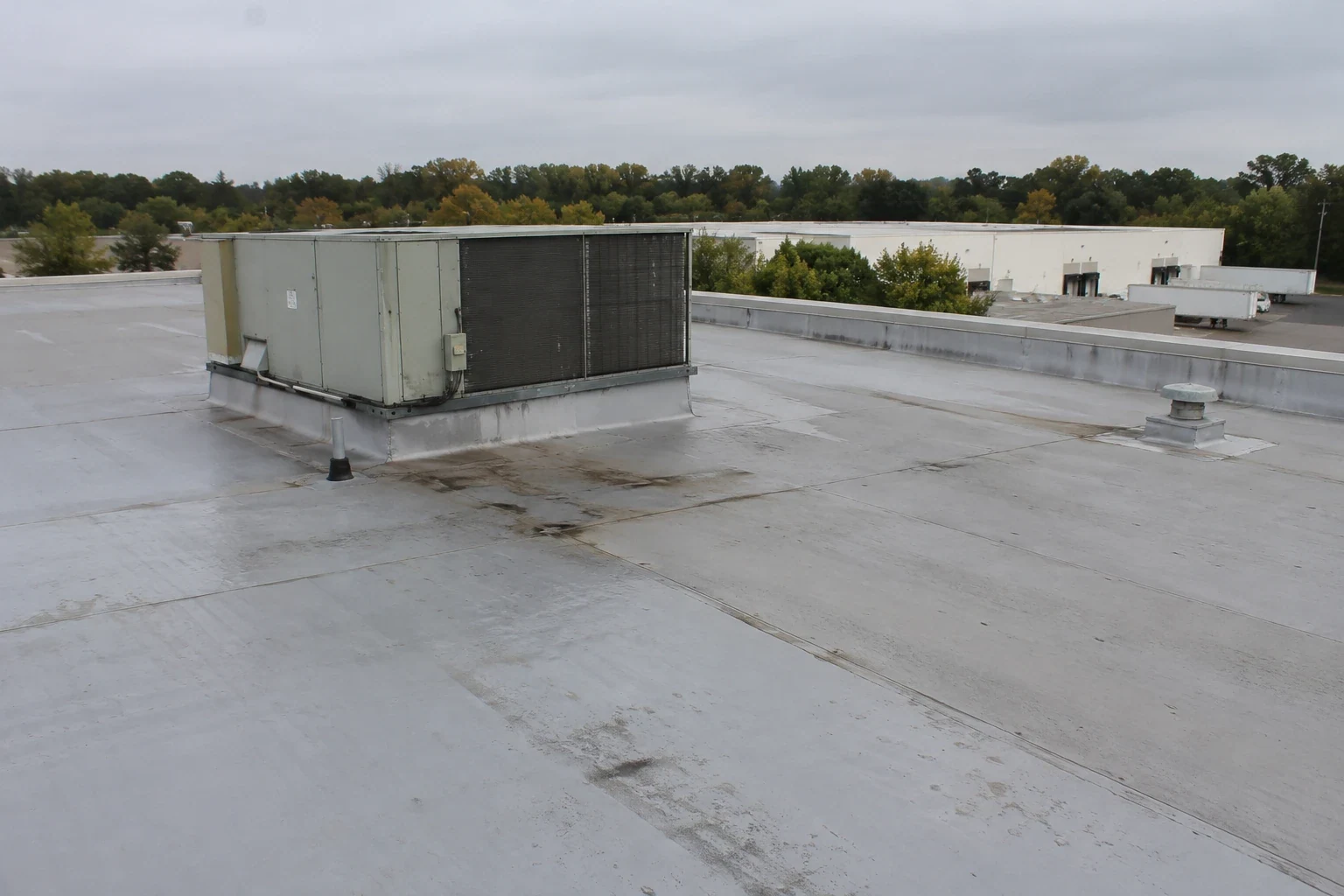
In a cold storage building, water behaves differently than it does in an ordinary warehouse. A tiny pinhole at a pipe boot lets in a little moisture, the insulation below holds it, and the cold interior freezes it into the board. Each season that ice grows a little, pushes on the membrane from underneath and breaks the adhesive bond to the deck. By the time frost shows at a seam inside or a drain clogs with ice, the wet area may be many times the size of the original leak. Warm moist interior air rising through gaps at penetrations, conduit and refrigeration lines adds condensation from below.
The same patterns matter in Belvidere, where Walmart is reported to run a cold storage facility of over 1.2 million square feet. At that scale, even a slow leak has a lot of insulation to soak. Careful roof testing, including an infrared moisture scan paired with core cuts, is how you find that water before it spreads.
Pick a roof system that holds up in the cold
A freezer roof needs a continuous, well-sealed vapor retarder on the warm side of the insulation, thick insulation with staggered joints, and a membrane that stays flexible at low temperatures. Welded sheets like TPO and PVC weld at the seams and do well on large cold storage roofs when the insulation and vapor retarder are right. Closed-cell spray foam is another option where its continuous, adhesive-bonded layer helps stop air movement through the deck, though it needs a proper coating on top. We will tell you which is better on your building after we see what is in it.
Ask the contractor to explain the vapor path in plain terms. If they cannot say where the vapor retarder sits and how it gets sealed at the walls and penetrations, they have not thought about the freezer under the roof.
Spend on vapor control and dry insulation first
The membrane is the visible part, but in a freezer roof the money that matters is under it. Insulation thickness drives both the energy bill and the cost of the job, and the statewide energy code that took effect in 2024 sets the insulation floor for a replacement, and a freezer roof usually needs more than that floor. The vapor retarder, the cover board, the insulation joints and the seal at every penetration are where a freezer roof lives or dies. A cheap roof with a poor vapor layer costs more every winter in refrigeration load.
Get every item priced separately: wet-insulation removal, vapor retarder, new insulation, cover board, penetrations and drains. Ask for a roof insulation and cover board specification you can read and compare. If one bid is much lower than the rest, check which layers it left out.

Ask how the bidder handles a freezer roof
Not every roofing crew has worked over a freezer, and the difference shows up in the details. Put these questions in writing before you sign:
- Where does the vapor retarder sit, and how is it sealed at walls, curbs and pipes?
- How will moisture in the existing insulation be found and removed?
- What happens to the refrigeration lines and rooftop condensers during tear-off?
- How are tie-ins closed up each evening so snow and rain stay out of the building?
- Who rechecks the roof the first winter after installation?
Pay attention to how fast the answers come. A contractor who has thought about a freezer roof will talk about vapor drive, dew point and sealed penetrations without being prompted, and one who has not will talk about the membrane brand. A clear answer to each one shows the contractor is planning for the cold, not just the weather. A written condition report is worth having from any contractor you are considering.
Schedule the work around the compressors and the calendar
Freezer roofs are best replaced in the warm, dry months, because adhesives, welds and sealants need the heat and a dry deck. That is also when refrigeration works hardest, so your maintenance manager should be at the planning meeting. Winter repairs are limited to stabilizing leaks and protecting product until the weather turns. If a storm opens the roof or a drain freezes shut at night, our emergency line answers around the clock, all week.
Build the timing around supply too. Distribution growth is moving along the U.S. 20 and South Main Street corridor, where Hillwood broke ground on Rockford Logistics Park 20 in 2026, and the three-year I-39 reconstruction that started in March 2026 will affect trucking on that stretch. A roof plan that accounts for the same trucks that bring your freight keeps the work from closing a dock at the wrong time. A freezer roof is not a warehouse roof or a distribution center roof: the vapor drive and the insulation change both the testing and the cost.
Cold storage places a special burden on air and vapor control. A small discontinuity at a curb or wall can let warm, moist air migrate toward a cold surface and create condensation that resembles a leak. Confirm the position and continuity of the vapor retarder before choosing a repair. For food and distribution buildings near the South Rockford Logistics Corridor, coordinate roof access with refrigeration alarms and product-protection procedures, and keep each day's exposed area small enough to close before weather moves in.
Questions Owners Ask
Why does frost form on the underside of my cold storage roof?
Warm, moist air is reaching the cold surface through gaps at penetrations or seams, then freezing. It means air or vapor is moving where it should not. We trace it to the gap and seal it, not just scrape the frost.
Can wet insulation in a freezer roof be dried out?
Rarely. Cold temperatures freeze the water in place, so it stays and gets worse each season. Wet insulation almost always needs to be removed and replaced before the new membrane goes on.
Does a white roof help a cold storage building?
Yes, in summer. A reflective membrane keeps the roof surface cooler and reduces the load on the refrigeration system. The vapor retarder and insulation are still what protect the freezer.
Is spray foam better than a membrane for a freezer?
Sometimes. Foam seals air leaks and bonds to the deck, but it needs correct thickness and a protective coating. A well-detailed membrane can be the better fit on a very large roof. We compare both on your building.
How do I keep product safe during a roof replacement?
We schedule work in sections, close every tie-in each evening and protect rooftop refrigeration lines. Tell us where your most sensitive product sits and we sequence the work away from it.