Commercial Roofing in North Main Corridor, Rockford, IL
North Main corridor roof repairs in Rockford address the roofs, access routes and project decisions across the city-planned commercial area.
North Main Corridor
North Main Corridor
Rockford, IL
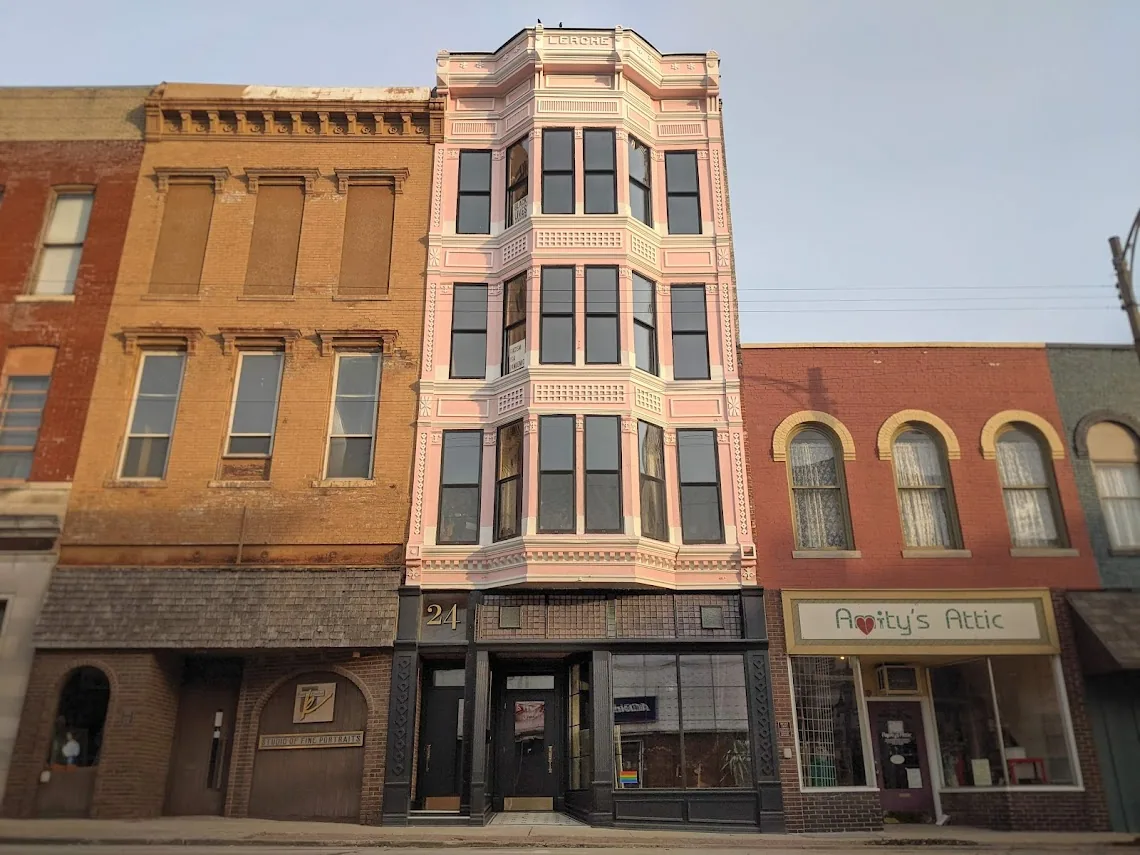
North Main is a working commercial corridor where freight facilities, industrial properties and neighborhood businesses share the same Rockford winter. The city's plan follows the corridor from south of Auburn Street to north of West Riverside Boulevard, a long stretch with roofs exposed to snow, wind and freeze-thaw movement. Chicago Rockford International Airport is one major employer and freight node along this broader area, with cargo buildings and aircraft maintenance space; surrounding commercial properties have their own roof assemblies, service routes and access rules. A year-round roof program starts by mapping each building separately, then checking drains, perimeter metal, penetrations and prior repairs before water reaches a tenant or loading area.
If you manage a property along North Main, plan an inspection around your own operations and confirm whether moisture testing is needed before anyone prices a recover or replacement.
Read the long spans and the dock walls first
A cargo building has an enormous roof and a dock side, and winter treats the two differently. On the open field of the roof, snow sits, melts a little at midday and refreezes overnight, so a seam that holds in November can be tired by March. Along the dock side, any wall return or edge above the doors can catch drifting snow and then shed meltwater straight onto the thin spots in the flashing. Water that gets in at an edge often travels along the deck before it drips, which is why the stain inside a bay is rarely under the opening.
Summer adds its own wear. Rockford sees roughly 15 afternoons a year above 90 F, and on those days a dark sheet expands in the sun and shrinks again after dark. Ask whoever walks your roof to photograph every dock-side edge, every drain and every rooftop unit curb, and to hand you the pictures in writing. A report like that is worth having even if you never hire us, and it is the base for a fair price from anybody who does.

Plan around a ramp that never closes
UPS began running its air hub here in 1994 on the airport's largest ramp, which parks up to 40 jets, and Amazon Air operates alongside it. Nothing about that schedule bends for a roofer. Work on an active cargo property means agreeing the haul route, the staging area and the working hours with the building operator before a single panel is lifted, and it means asking the airport itself about crane and lift heights before a crane is scheduled. Loose membrane scraps, fasteners and insulation blown off a roof do not stay on the roof, and nobody wants them near aircraft or ground equipment.
Ask any bidder to explain how debris will be contained, how the crew will be badged or escorted where that applies, and who answers the phone if the wind rises in the middle of a tear-off. Those answers cost nothing to get, and a contractor who gives vague ones is telling you how the change orders will go.
Judge each building by its age, not its neighbor's
The airport did not go up in one stroke. UPS arrived in 1994, the AAR maintenance facility opened in 2016, Amazon's terminal has been expanded, and the cargo building on the south side was built as the first phase of a two-phase plan. Much of the field also sits on ground that once held the Camp Grant training camp. Buildings from different decades carry different roofs, and a fix that suits one can be wrong for the next. A newer single-ply membrane with a few failed seams may need nothing more than careful TPO repair and welding, while an older assembly with wet insulation will need a hard look at replacement.
The AAR building is where aircraft are maintained, and a roof over aircraft work has plenty underneath it that cannot get wet. The long clear spans that kind of work needs raise the same questions as any aircraft hangar roof, while the dock and cargo side behaves like a distribution center roof. Whichever applies, get the repair price next to the replacement price, in writing, before you decide.
Test the roof before you sign anything
A moisture scan tells you where the wet insulation is and where it is not, and that is the difference between replacing the whole roof and replacing a few bays. An infrared moisture survey finds the wet zones, and core cuts confirm what the scan suggests. Then you know what you are paying for. Without it, any contractor is guessing, and a guess on a roof this large becomes an upsell.
Check drainage while you are at it. The July 2024 flooding that overwhelmed Rockford's stormwater systems is a reminder that a clogged drain on a big flat roof is a storm waiting to happen, and roof drains and scuppers are cheap to clear compared with what standing water does to insulation. Rockford has also adopted the 2021 International Code Council cycle and the 2024 Illinois Energy Conservation Code, so a replacement here brings insulation requirements with it. Ask each bidder to show where that cost sits in the number so you can compare bids fairly.
Book the work for the dry months, not for February
A cargo property keeps running through the winter, and a roof job wants mild, dry weather, so the best window is the stretch between spring thaw and the first hard freeze. Seams weld cleanly and adhesives cure properly in that mild stretch, while cold mornings leave sealants stiff and bonds unreliable. A roof planned in winter and installed in summer costs less than one patched in a panic in February.
Storms do not read the calendar, though. In the November 2020 storm, hail fell near Rockton and a 73 mph gust hit Winnebago, and the March 31, 2023 storm system that brought an EF-1 tornado near Sinnissippi Golf Course carried straight-line winds up to 70 mph. If wind opens a section of roof over freight, our emergency roof repair crews work through the night to dry it in, and the permanent repair can wait for weather that suits it. Rockford Logistics Park 20, in the South Rockford logistics corridor about a mile from the airport, sees the same weather, and Hillwood's 335,000 square foot speculative building there broke ground in June 2026. A building in Downtown Rockford needs its own access and staging review.

Questions Owners Ask
How do you work near active aircraft ramps?
Slowly, and in agreement with the operator. We plan haul routes, staging and debris control with the building owner first, ask about crane and lift limits ahead of time, and cover or secure loose material at the end of every shift.
Is a cargo building roof worth repairing or should it be replaced?
Test it first. If a moisture scan and a few cores show dry insulation and only worn seams or flashings, repair is the right call. If the insulation is wet across large areas, replacing those areas is cheaper than patching them again every winter.
What does a leak along a dock wall usually mean?
Usually a failed flashing or a cracked edge where the roof meets the wall, not a bad membrane. Meltwater runs along the deck before it drips, so the stain inside rarely sits under the actual opening.
Does the 2021 energy code change a replacement bid?
Yes, because a statewide energy code built on the 2021 IECC took effect in Illinois on the first day of 2024, and a Rockford replacement permit falls under its insulation rules. Ask each bidder to price that insulation as its own line.
Who comes out after a wind storm at the airport?
We do, day or night. The first visit is about drying in the building and photographing the damage, and the full repair is scoped afterward so you can compare it with any other quote.