Commercial Roofing for Manufacturers in Rockford, IL
Roof repair, replacement and planning for Rockford, IL manufacturers, from aerospace and precision plants to supplier parks and expanding lines.
Manufacturers
Manufacturers
Rockford, IL
Every new production line adds weight, penetrations and heat to a roof that was designed before the line existed, and Rockford piles about 36 inches of snow on top of it each winter. Add freezing weather on roughly 134 days and the occasional drift that stacks against a taller bay, and a plant roof ends up working under conditions its original designers may never have pictured. Rockford's aerospace production is the largest cluster in Illinois, and Collins Aerospace and Woodward are each among the city's employers of about 2,000 people. For a plant owner in Rockford, IL, the roof is a quiet production asset. When it fails, the cost shows up as a stopped line, damaged tooling and a long conversation with the insurer.
Treat the roof like any other piece of capital equipment. Know what condition it is in, what it will cost to keep, and when to stop repairing it.
Account for the roof every time you add a line
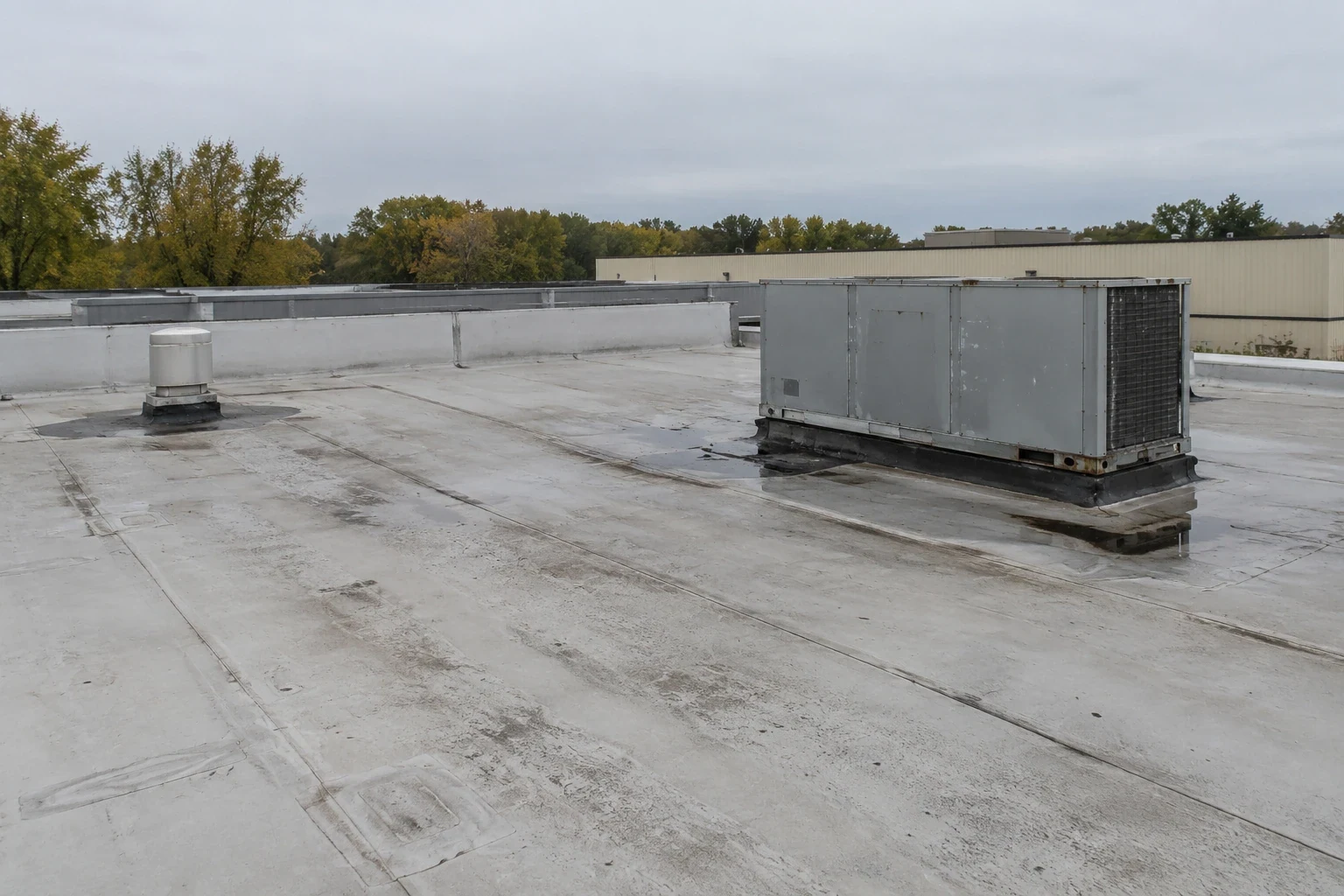
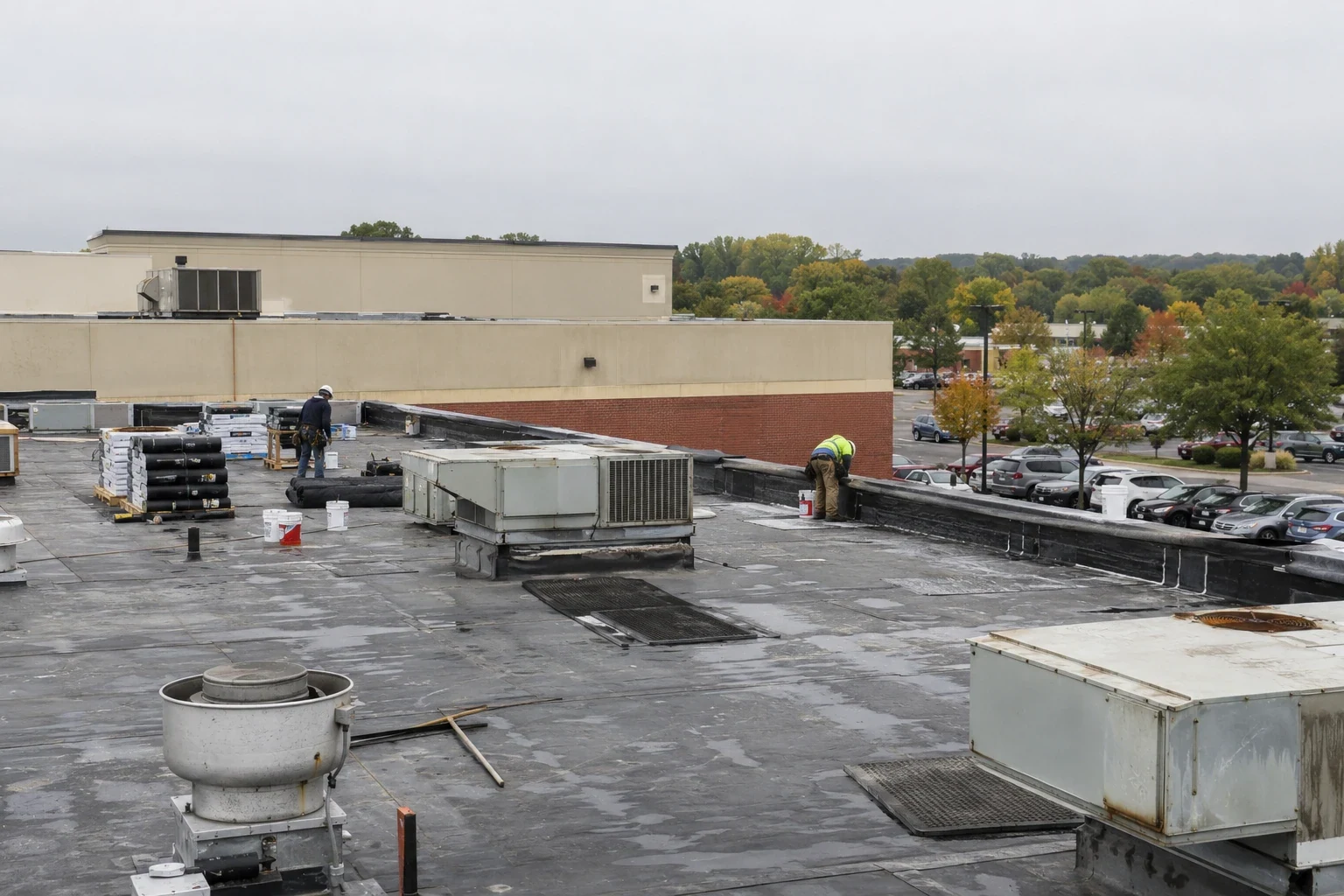
Equipment changes are the most common way a roof gets hurt on a manufacturing site. A new air handler, a larger exhaust fan or a bank of conduit arrives by crane, and the crew sets it on whatever surface is nearest. Each of those moves adds a curb, a pipe support or a walking path across a membrane that was never meant for traffic. Before you order, have the roof checked and a structural engineer confirm that the deck can carry the added load alongside winter snow. Plan the work so that curbs and supports are installed with the roofing instead of cut in after it, since patched-in curbs are among the most common leak points on any plant roof.
A short walk before and after every equipment install costs little and protects the warranty. Photograph the roof both times.
Tie roof spending to production, not to the calendar
A roof that has to be replaced in a plant that runs several shifts is a different project from the same roof on a building that sits quiet at night. The right time to reroof is when the cost of delay passes the cost of the work, and that point arrives sooner on a roof that covers a sensitive process. Rank each roof by what sits beneath it: machining, paint, assembly, clean rooms, warehousing or offices. The cheapest move is often to repair the roofs that still have life in them and replace the one over the most valuable floor space. If a repair keeps failing in the same spot, do not keep paying for patches. Ask for the repair price beside the replacement price, then compare both against what a day of lost output would cost you. Where cores show the insulation is dry and the deck is sound, a plant roof can often be recovered with less disruption than a full tear-off.
Get the numbers in writing before the shutdown window is booked.
Prepare for fire, wind and the day after
Industrial buildings carry hazards that retail and office buildings do not, and the roof is part of the response. The June 14, 2021 explosion and fire at the Chemtool lubricant plant in Rockton forced a one-mile evacuation. A plant that handles process materials has to plan for fire, and after one, roof decks can be weakened, membranes can be melted and insulation can hold smoke and water, so the roof needs a proper inspection before anyone decides whether to repair or rebuild. Fire damage roof repair starts with that assessment. Wind is the other risk. A 73 mph gust at Winnebago in the November 2020 storm is a fair reminder that plant roofs with large, flat areas catch every bit of lift that comes off the edges.
Keep a current roof report on file for every building. After a loss, an insurer will ask what the roof looked like beforehand, and photos taken last spring are the best answer you can give.

Check the roofs on every plant you own, not only the busy one
Manufacturers with more than one site tend to know the flagship roof well and the secondary buildings poorly. Rockford's industrial base is spread across the metro: Loves Park, Belvidere, Rockton and across the line into Beloit, Wisconsin, where Regal Beloit and Fairbanks Morse Defense are among the manufacturers. Belvidere, with its 5.3 million square foot assembly plant, and Byron, where manufacturing employs about 21.7 percent of the Ogle County labor force, show how far plant roofs spread beyond Rockford, and the warehouse side of any site has the same roof questions that logistics operators face. A multi-site roof program puts every building on the same reporting schedule so that no roof falls through the cracks. Each building gets a condition rating, a repair history and a replacement forecast, and the totals roll up into a capital plan you can defend to the finance team.
If you inherited roofs through an acquisition, test them before you trust the seller's paperwork.
Read the roof warranty before the next crew cuts into it
A warranty is only as good as the paperwork behind it, and manufacturing sites generate more roof penetrations than most buildings. Many membrane warranties require that any work on the roof be done by an approved installer and reported to the manufacturer, and an unreported penetration can put coverage at risk. Keep each plant's warranty in one file, note what it covers, and pass the rules to your maintenance team and any outside contractors. This matters even more on new buildings. A planned supplier park of roughly 258 acres that sits between Town Hall Road and Irene Road, next to the Belvidere Assembly Plant, is the kind of site where every new roof needs a record from its first day. A roof warranty file should start on the day the roof is finished. Ask the general contractor for the full closeout set.
Manufacturing facilities often combine process exhaust, rooftop HVAC, utility lines and production-sensitive interiors. Before roof work, map air intakes and discuss whether fumes, dust or vibration could reach the floor below. In Loves Park and Belvidere, a plant may need separate plans for clean assembly space, machining and warehouse bays. Require a daily closeout that lists opened and sealed zones, temporary protection and any conditions that should be addressed before the next production shift.
Questions Owners Ask
How much extra load can my roof take before I add a new unit?
That is a structural question, and only an engineer reading the original drawings and the current deck can answer it. We can supply the roof condition, the snow drift locations and the curb details so the engineer has what is needed.
Will exhaust from my process shorten the roof's life?
It can. Oils, solvents and heat attack some membranes near the stack, so the roof should be matched to what actually leaves your vents. Ask any bidder to show the membrane's resistance to your specific exhaust.
Can the roof be replaced while the plant keeps running?
Usually, with careful sequencing. Work moves in sections, intakes and process areas are protected, and each section is sealed before the crew leaves. Heavy tear-off is best scheduled when production is lightest.
What should I do after a fire or explosion near the plant?
Have the roof inspected before anyone walks it for repairs. Heat and water can weaken the deck and insulation without leaving anything visible on the surface. Photograph everything and keep the report for your insurer.
Is it worth coating a plant roof that is still dry?
On a sound, dry membrane, a coating can add useful years at far less than the cost of replacement. On a wet or deteriorated roof it only hides the problem, which is why testing comes first.