
Hail Damage Roof Repair in Rockford, IL
Commercial hail damage roof repair in Rockford, IL: hits counted, moisture checked and a repair or replacement plan you can compare before you sign.
Hail Damage Roof Repair
Hail Damage Roof Repair
Rockford, IL
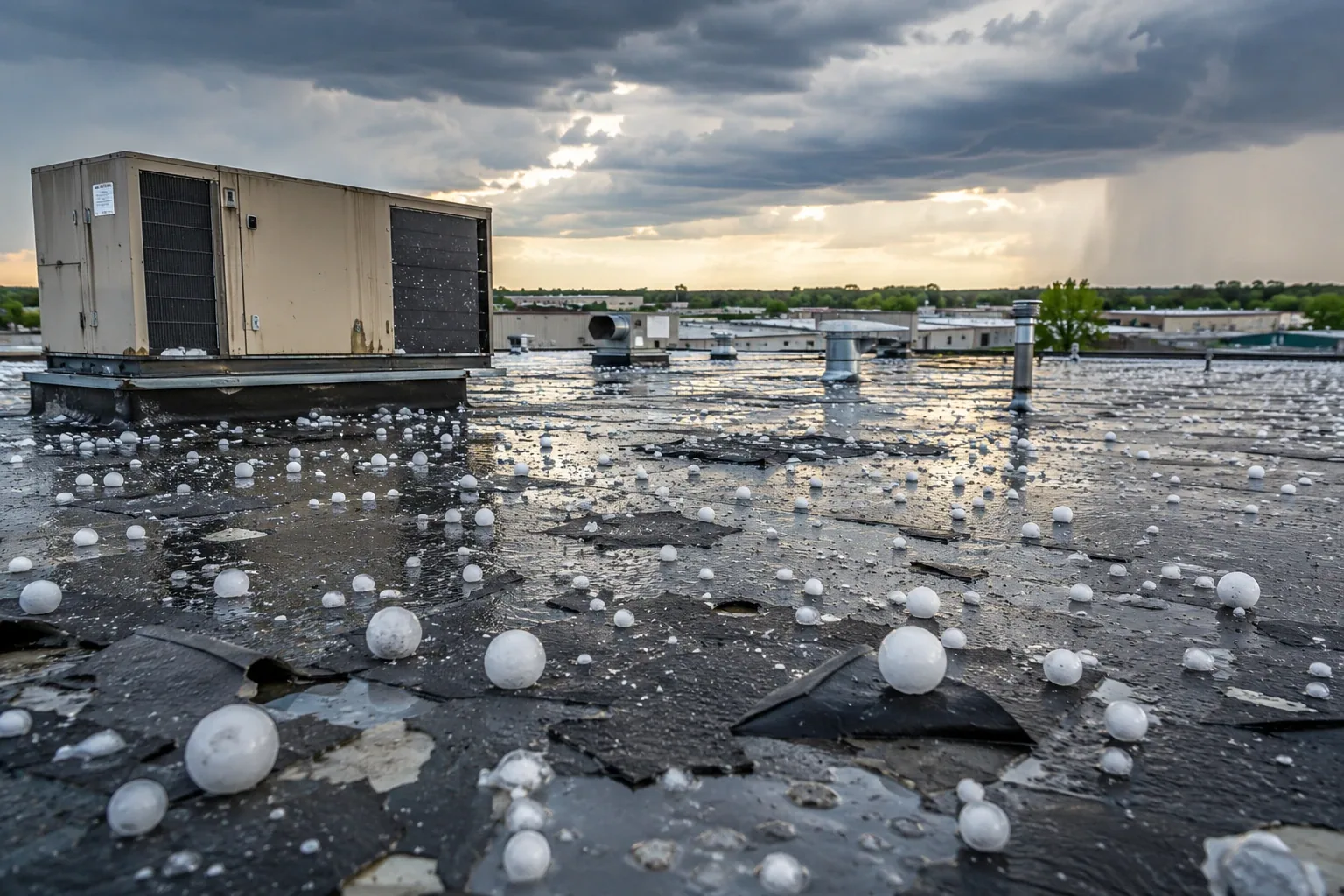
An inch of hail sounds harmless, and that is exactly why so many owners in the Rockford, IL area skip the roof walk afterward. On November 10, 2020, hail of about an inch fell on Roscoe and one to one and a quarter inches near Rockton, in the same storm that did wind damage across Winnebago County, and a roof does not need a baseball-size stone to be hurt. A hailstone that size can bruise a single-ply sheet, crack the top surface of a bonded roof or knock the granules off a cap sheet, and none of it shows from the ground. The first leak may come months later, after a winter of freezing and thawing has opened every bruise a little wider. By then the storm is forgotten and the cost lands on you instead of the insurer.
After any hailstorm, get the roof checked while the claim window is still open.
Look for bruises, fractures and soft spots
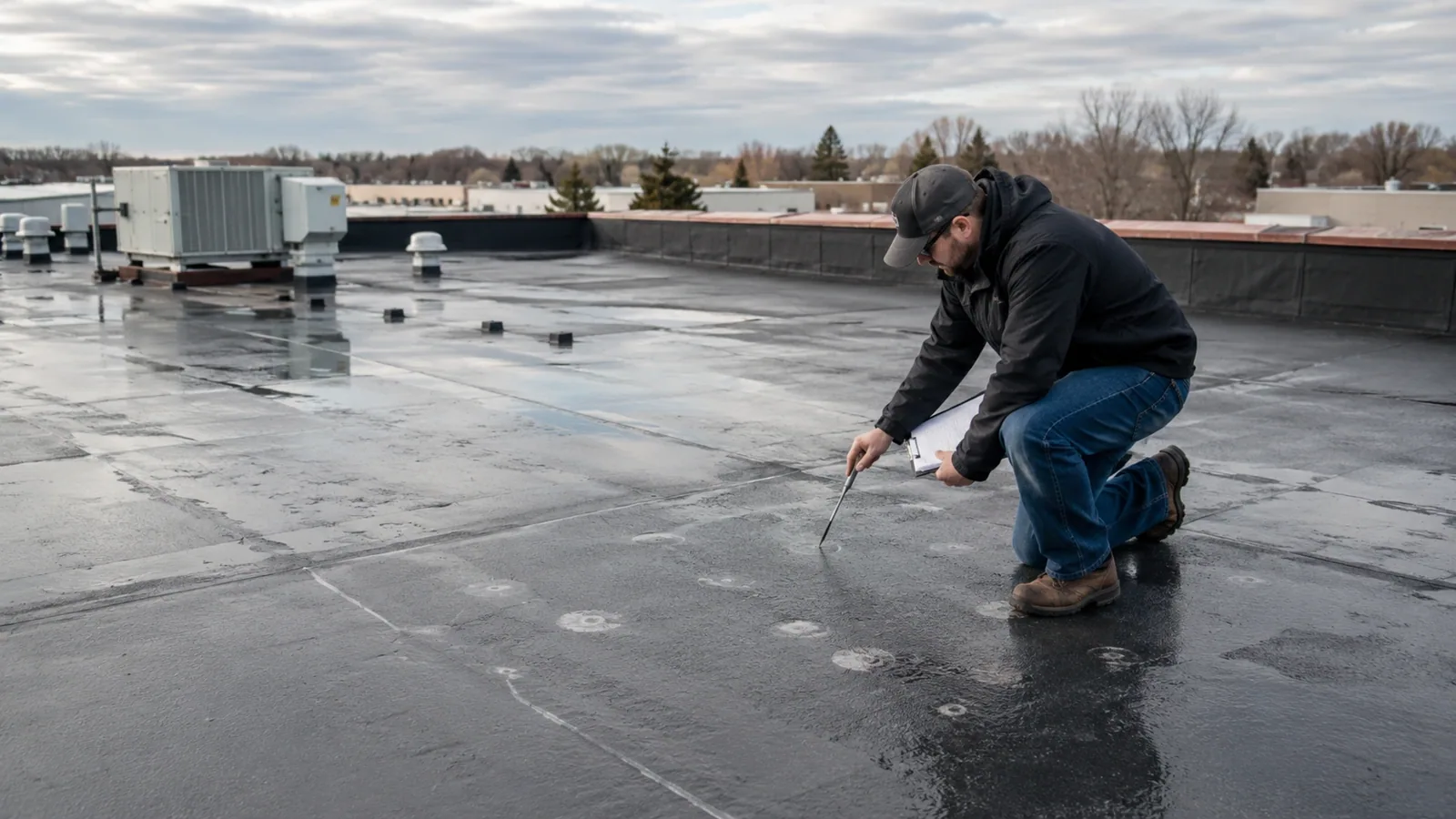
Each roof type shows hail differently, and the damage is often subtle. On a thermoplastic sheet such as TPO, a hit can fracture the reinforcement scrim under the surface and leave a round mark that looks like a smudge. EPDM may show small circular depressions or splits. On modified bitumen and built-up roofs, hail knocks off granules, cracks the surface and exposes the asphalt underneath to sunlight. Metal roofs dent, and coatings chip or crack. Skylight domes and plastic vents break outright. The soft insulation under a membrane can be crushed even where the top sheet looks fine, which is one reason we do more than look. We walk the roof, press on every suspect spot and mark each hit with a photograph and a roof-plan reference, so the evidence is specific enough to support a repair scope or a claim.
Count hits in a test area before you decide anything
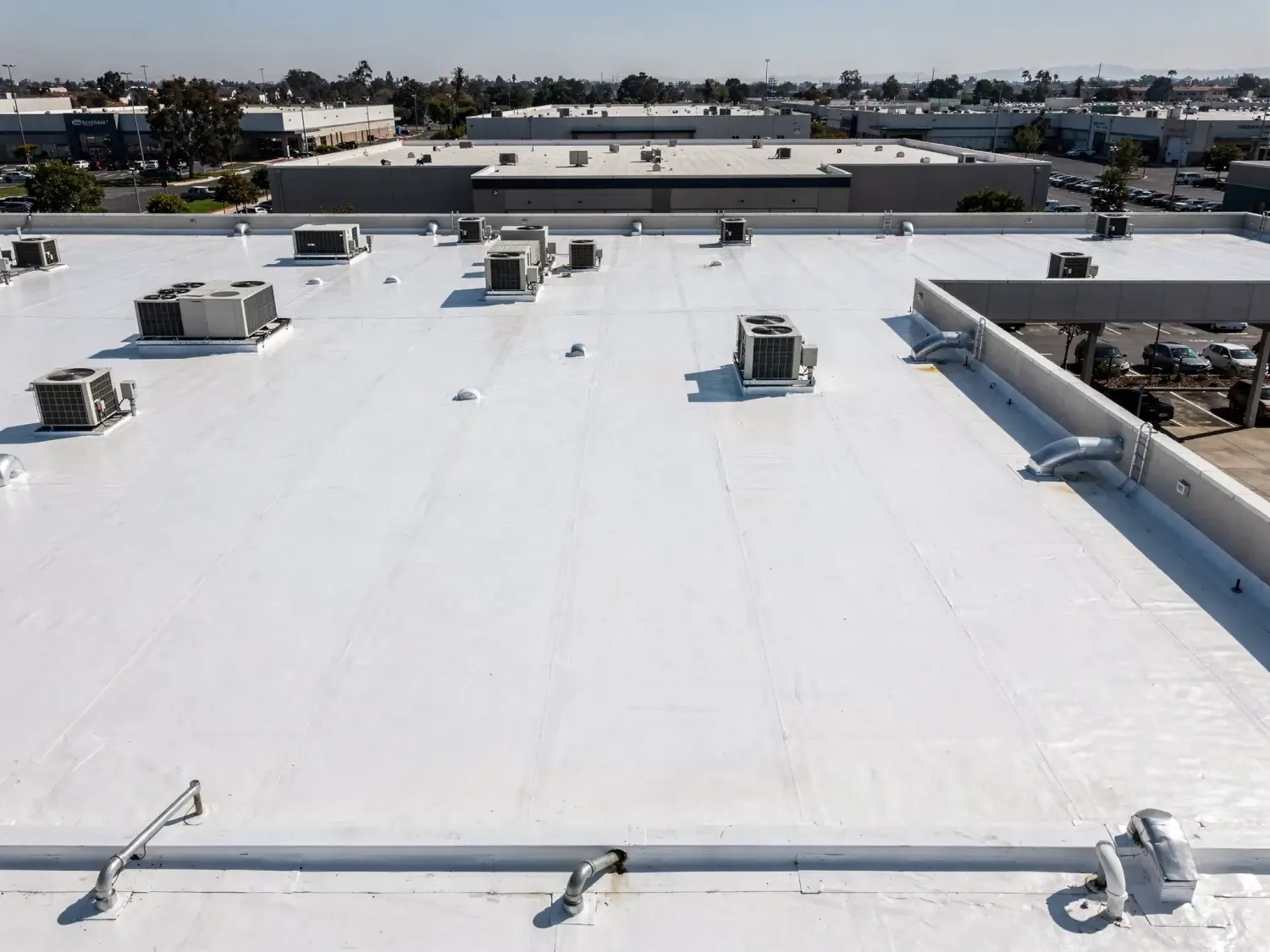
A fair hail assessment is more than a look at a few dents. Contractors and insurers commonly mark off a test area and count the hits inside it, then compare the count across different slopes and exposures, because hail does not fall evenly and the windward side of a building usually takes the worst of it. A roof with a few scattered hits is a repair. A roof with hits in every test area, across the whole membrane, may be a different matter. Size makes the count harder. The old Machesney Park Mall opened in 1978 as a single-level mall of 229,988 square feet, and on a low, wide building like that a scattered set of bruises can sit unseen for a season while the owner assumes the storm missed. A drone inspection is a fast way to survey a roof like that without adding foot traffic to a bruised sheet.
Insist on a count and a map. A statement that the roof looks fine is not a finding.
Test the insulation beneath every hit
A cracked membrane lets water into the insulation, and wet insulation is where hail damage turns expensive. The top of the roof may look repaired while the board below stays soaked, carries the water sideways and loses its insulating value for good. An infrared moisture survey shows where the water has gone, so we replace only what is wet and do not guess. This is worth doing before you accept a claim settlement, because it shows the real size of the loss. Freezing weather makes the case stronger: water trapped in damaged insulation freezes, expands and breaks the membrane from underneath, a process that continues through every winter until someone opens the roof.
Do not sign a storm contractor's paperwork on the first visit
After a hailstorm, crews knock on doors across the region offering a free look, and some ask you to sign an assignment of your insurance benefits before any damage is documented. Be careful. Read what you sign, and keep every claim document in your own hands. A fair contractor gives you a written scope, photographs, a split between hail damage and older wear, and a price you can compare, and tells you plainly when the hits do not justify a claim. Hail damage and age damage are not the same, and a roof that was already worn is not made new by a claim. You can get a claim documentation package from us whether or not we do the repair, and it is yours to use with any adjuster.
Ask for the repair price next to the replacement price. If a contractor will not provide both, get a second opinion.
Match the repair to how much of the roof was hit
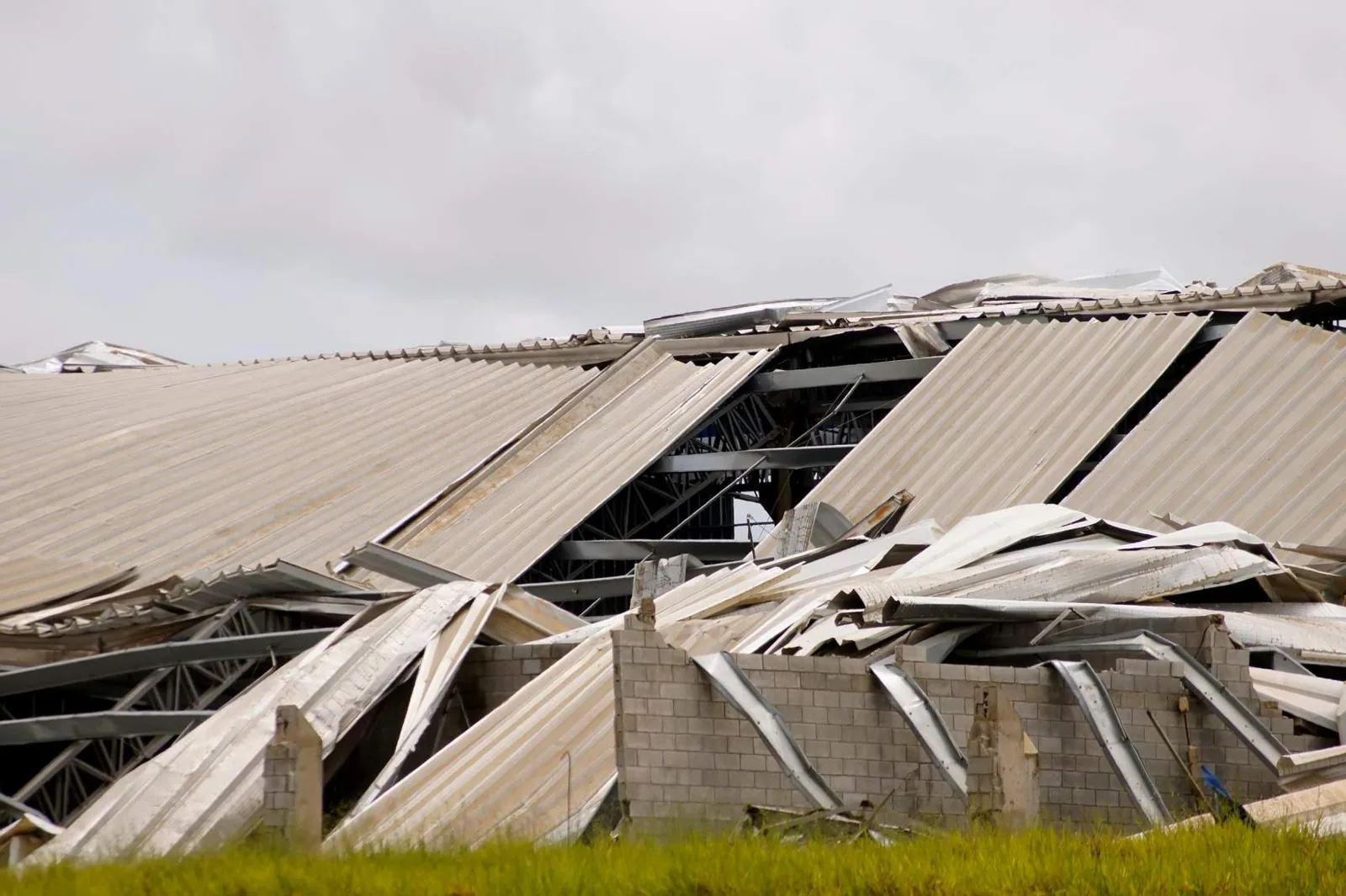
A few isolated hits are repaired with patches that extend well beyond each mark. Widespread but shallow damage on a sound roof may be a candidate for a roof coating, which can seal bruises and cracks across the surface once the insulation checks dry. When hail has bruised the whole membrane and soaked the board underneath, replacement is the right answer, and the numbers will show it. Holes made by hail look a lot like those made by foot traffic, and the patch method is the same one used for any membrane puncture. If wind came with the hail, the edges and the attachment need a check as well, the same way they do on any wind-damaged roof.
Set the repair date before the first deep freeze
Hail comes with spring and summer storms and, as 2020 showed, it can arrive in November, too. Whatever the date, the sequence is the same: temporary repairs to stop leaks, documentation for the claim, then permanent work when the temperature allows adhesives to bond and welds to fuse. With about 134 freezing days a year, a fall hailstorm often means a long wait between the first patch and the finished roof, and that wait should have a date on it. Do not let a temporary fix stand through a second winter on the assumption that nothing else will happen.
Hail review should identify the roof material and age before interpreting surface marks. On metal, document dents and coating breaks; on single-ply, look for punctures, split seams and damage at exposed edges; on built-up systems, note displaced aggregate and any cuts through the cap sheet. Check rooftop equipment and flashings too, since the roof field may look intact while a curb or edge detail has opened. Preserve representative photographs and measurements so the owner can compare the affected areas with undamaged zones.
Questions Owners Ask
How big does hail have to be to damage a commercial roof?
Smaller than you would think. An inch of hail can bruise single-ply sheet and strip granules, and the damage depends on the roof type and age as much as the stone.
Can I tell from the parking lot whether hail hurt my roof?
Rarely. Dented rooftop units and broken skylights are clues, but membrane bruises show only up close, so a walk or a drone survey is the way to know.
How long do I have to file a hail claim?
Policies set their own deadlines, so read yours. Get the roof documented soon after the storm, because the evidence fades and the deadline does not move.
Does hail always mean a new roof?
No. Scattered damage is repaired, and a new roof makes sense only when most of the surface is hit or the insulation is wet. We show you the count so the decision is yours.
Is it worth coating a roof that took hail?
Sometimes, if the sheet is sound and the insulation is dry. A coating cannot fix wet insulation or a split membrane, so the survey comes first.