Roof Coating and Restoration in Rockford, IL
Commercial roof coating and restoration in Rockford, IL for sound roofs, with moisture testing first and honest advice on silicone, acrylic and foam.
Roof Coating and Restoration
Roof Coating and Restoration
Rockford, IL
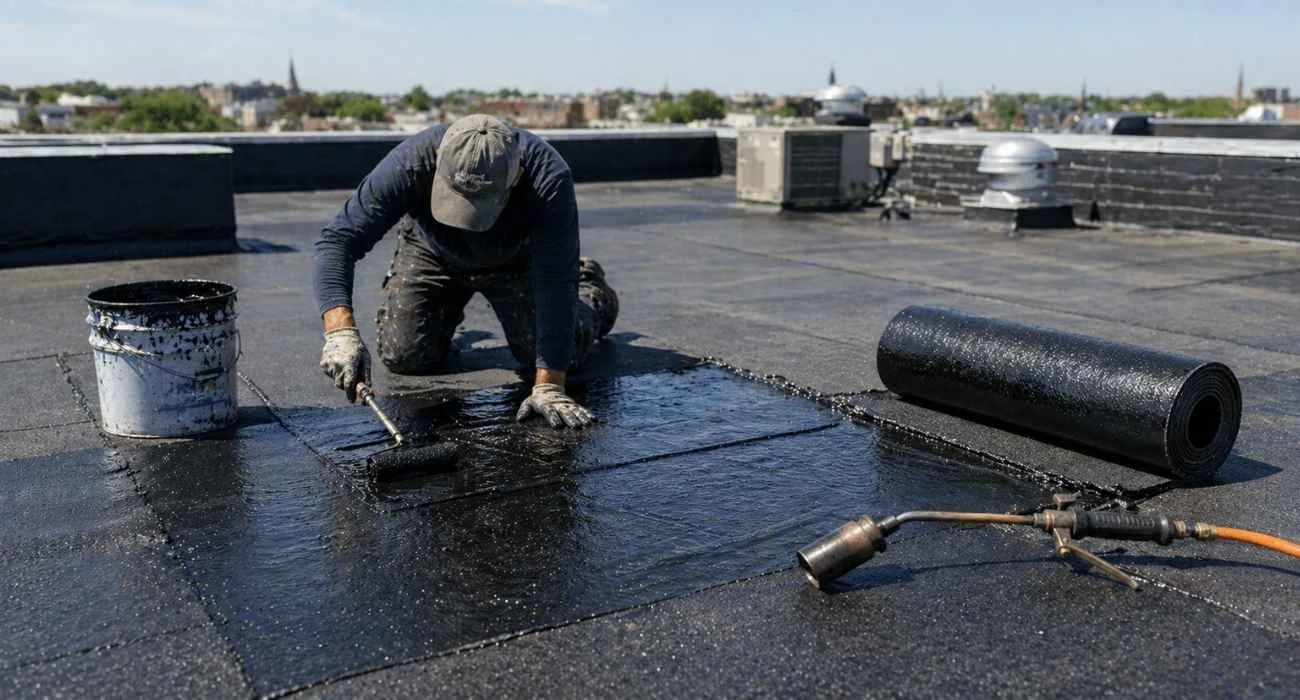
Sunlight does slow work on a Rockford, IL roof that no winter inspection catches. The surface chalks, plasticizers leave the membrane, seams dry out, and a sheet that survived about 134 freezing days a year starts to lose the stretch it needs to ride out the next thaw. Add a dark membrane heating through the roughly 15 days a year above 90 degrees, and a roof here works hard in both directions. A coating system is the one fix that goes after that surface wear across the whole roof at once. When the roof underneath is still dry and sound, a coating can add real service life for far less than a tear-off, and that is a fair deal worth pricing.
When the roof underneath is wet, it is not a fair deal. We will say so before you spend anything.
Prove the roof is dry before anyone quotes a coating
Every coating job begins with a test, and the test is the part owners skip when a salesperson shows up with a price. A coating is a skin. If water is already sitting in the insulation, the skin seals it in, and the next warm week turns that moisture into vapor that pushes up blisters from underneath. So we start with an infrared moisture survey, confirm the suspect areas with core cuts, and look at how much good membrane is left to hold the coating. We also run adhesion test patches, because the maker of the coating will want proof it bonds to what is on your roof now.
If a contractor offers a coating quote without touching the roof, treat that number as a guess. Ask them how they know it is dry.
Know what a coating fixes and what it cannot
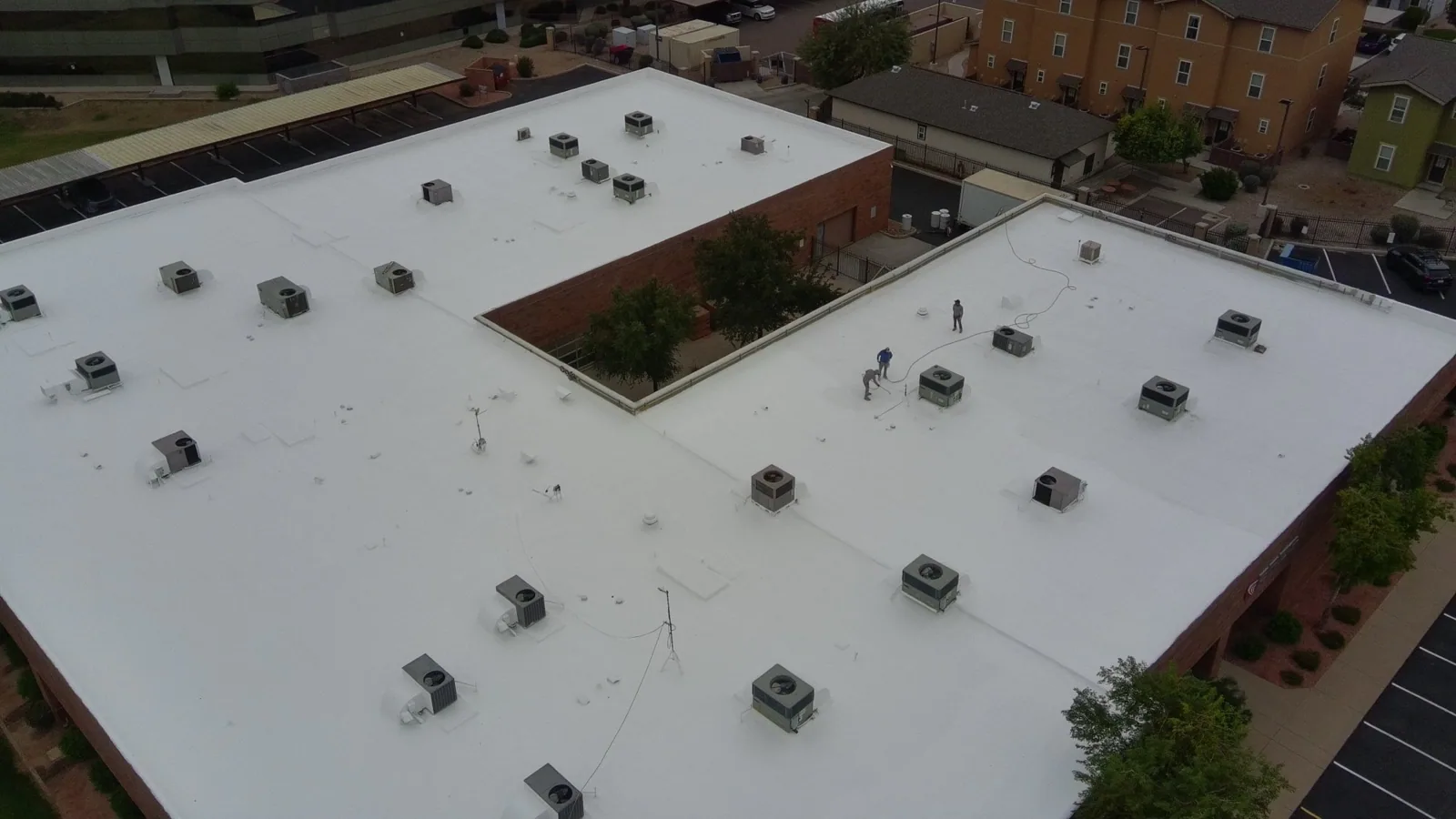
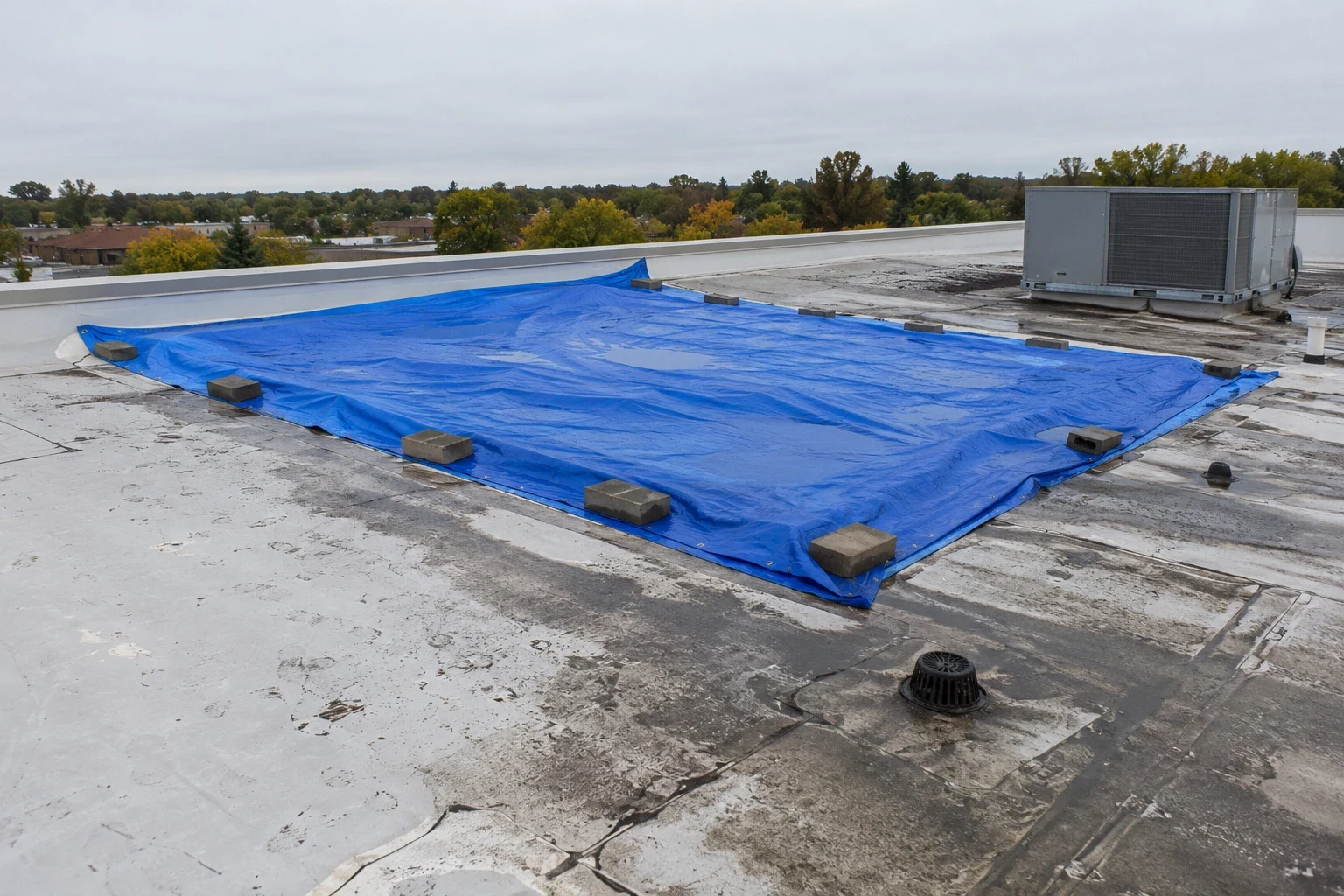
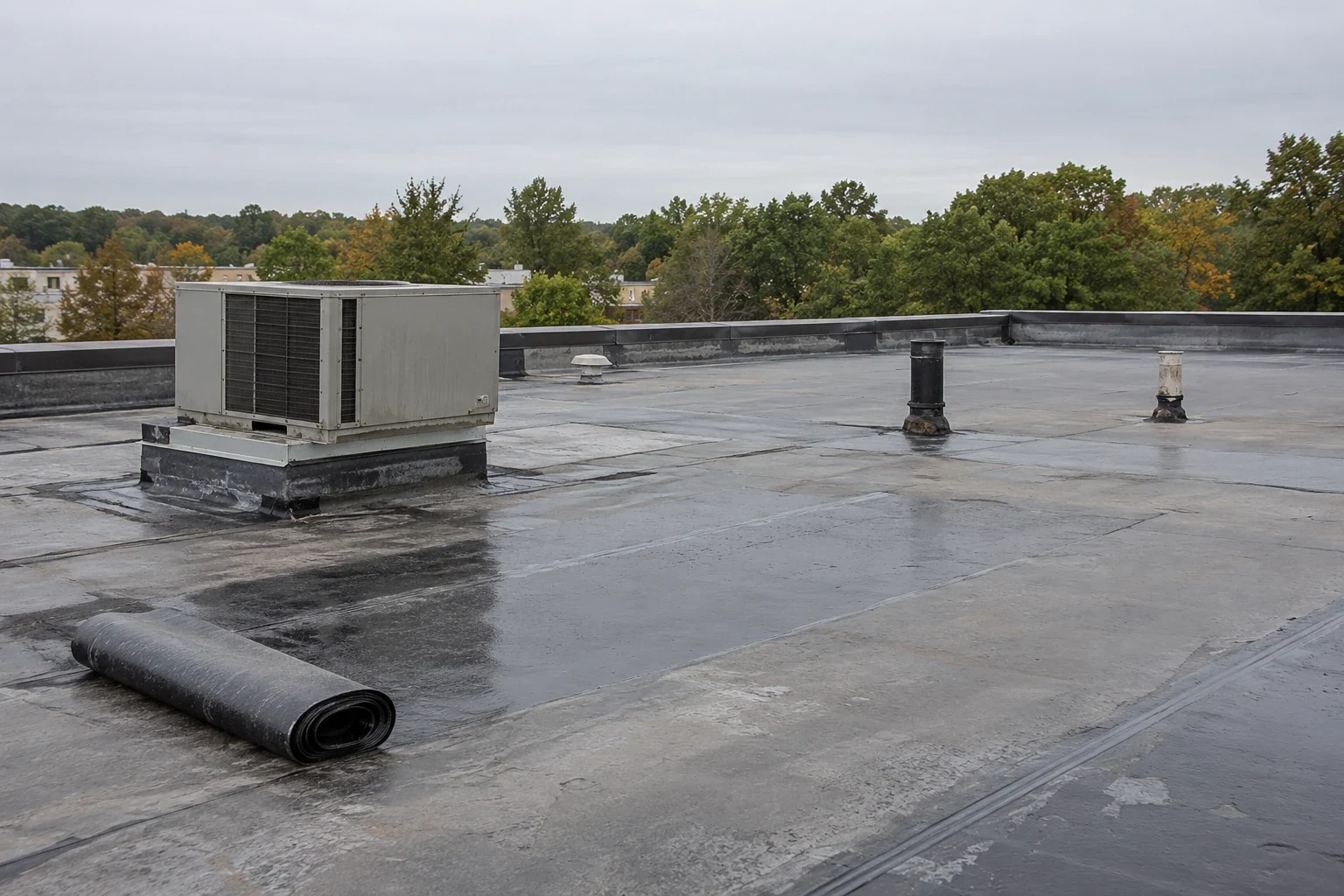
A coating seals pinholes and hairline cracks, restores a reflective surface and cools the roof, which cuts the expansion and contraction the membrane goes through every summer day. It lays a continuous layer over seams and fasteners that were starting to weep. What it does not do is repair an open lap, replace a failed flashing, dry out wet insulation or fix a drain that holds water. Those get repaired first, and then the coating goes over a roof that is actually ready for it. Scale changes the math. The Belvidere Assembly Plant covers about 5.3 million square feet in Belvidere, and on a roof anything like that size, a modest difference per square foot decides the budget, which is why restoring a sound roof in phases can beat replacing it all at once.
Do not buy a coating to solve a leak you have not located. Find the leak first.
Pick silicone, acrylic or foam on the roof's merits
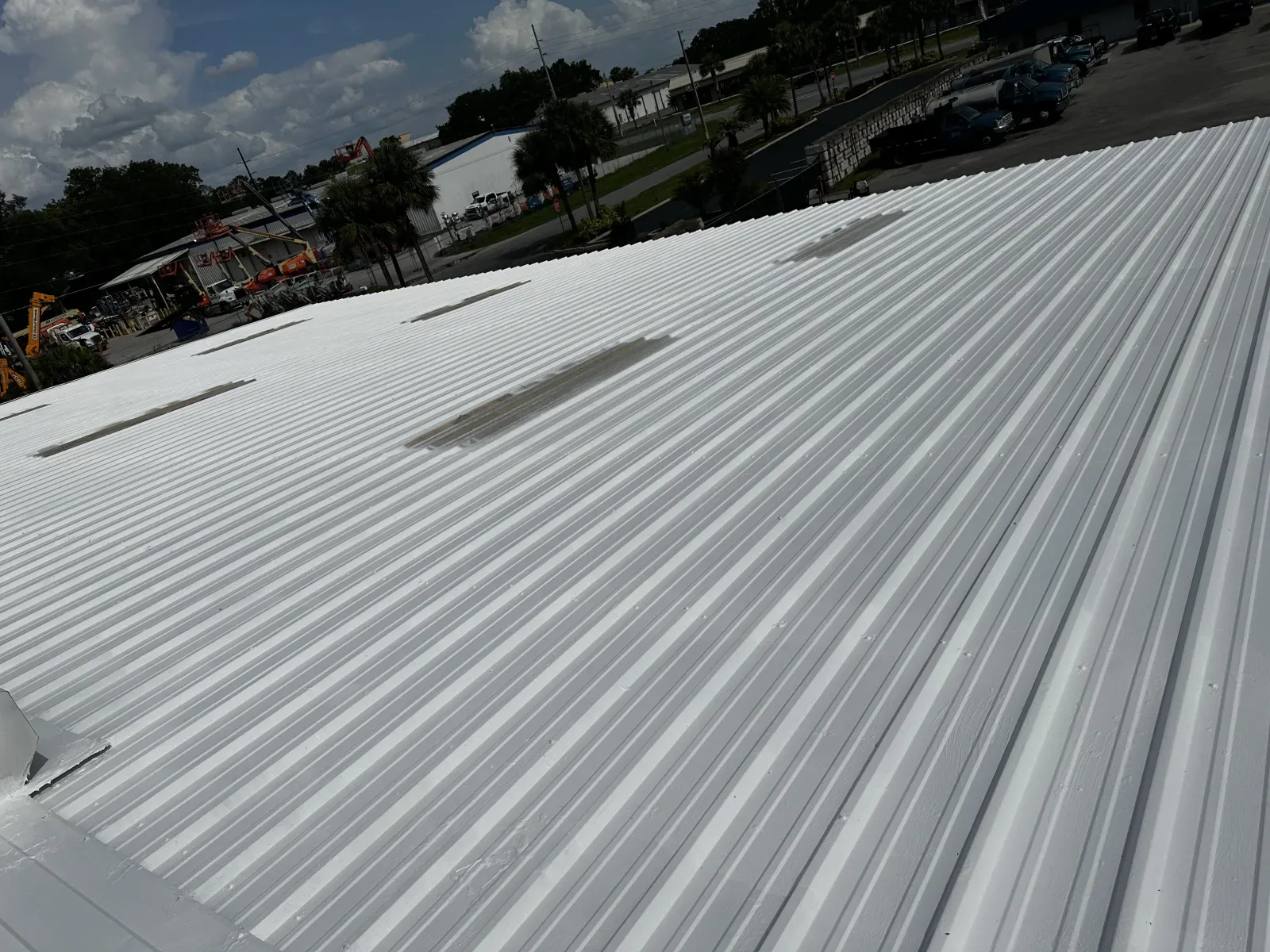
Each product has a job. Silicone coatings tolerate standing water and hold up under sun, so they suit roofs that pond after rain, though dirt clings to them and later recoating is harder. Acrylic coatings cost less, flex well and work on roofs that drain properly, but they do not like to sit in water. Roofs that need a little extra insulation or a smoothed-out surface can take spray polyurethane foam with a protective coating on top, which is a different animal and a bigger job.
- Roof ponds after rain: lean toward silicone
- Roof drains well and budget is tight: acrylic is often enough
- Roof is tired and thin on insulation: look at foam and coating together
- Roof was coated before: test adhesion first, then choose
A contractor who recommends the same product for every roof is selling a product, not advice.

Prepare the surface or pay for it twice
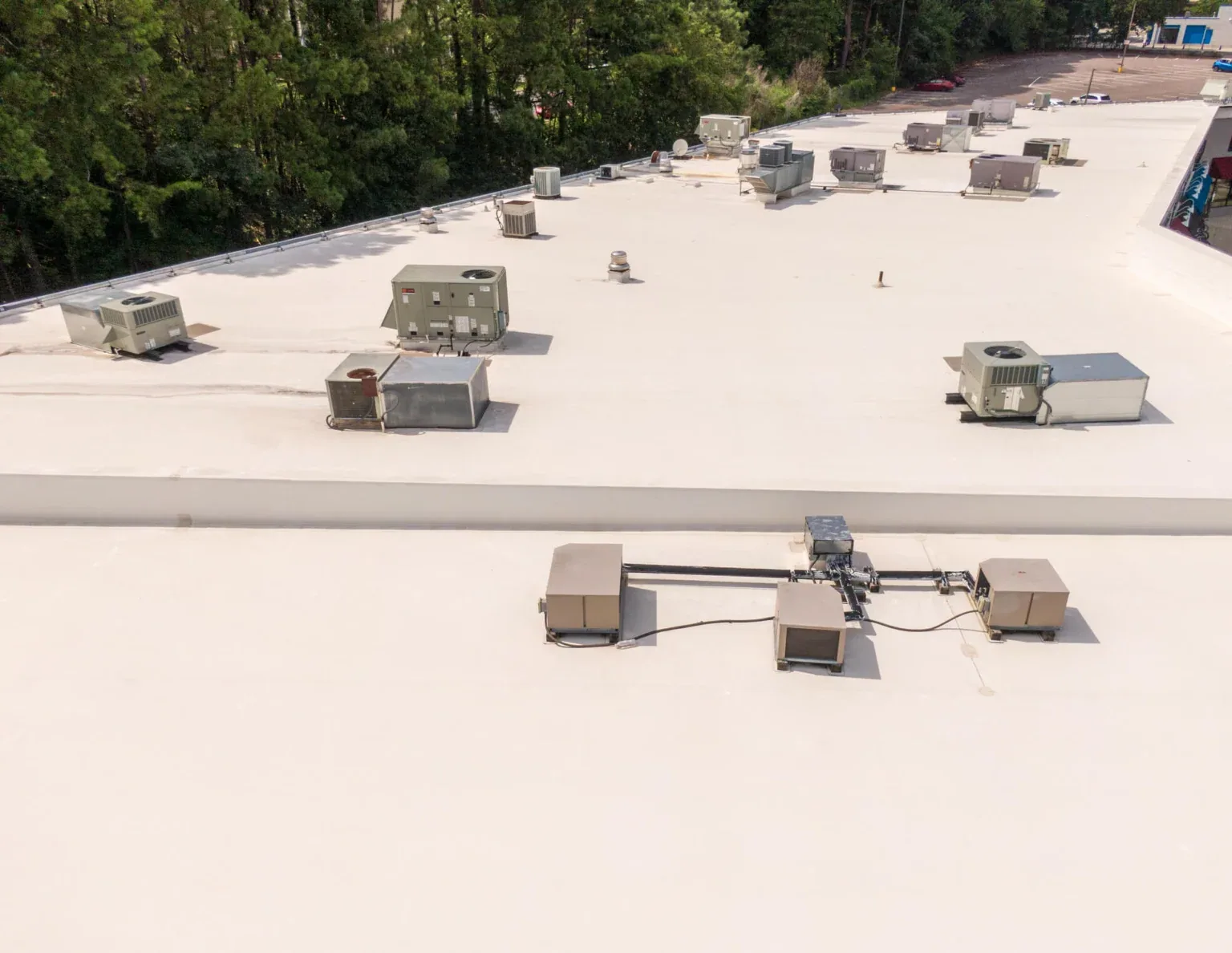
Most coating failures trace back to preparation. The roof has to be washed until clean, every loose seam and flashing repaired, wet insulation cut out and replaced, and primers or reinforcing fabric put in where the maker requires them, especially at seams, curbs and penetrations. Skip the washing and the coating peels. Skip the seam work and the coating bridges a gap that keeps moving. Vacant buildings make the point. The former Kmart along the East State Street corridor, a nearly 106,000 square foot big-box building on the East State Street retail corridor, closed in 2018 and has sat vacant, and a roof in that position needs a moisture survey and a careful prep scope before anyone prices a coating. With the building now proposed for a global market and food hall, what that survey finds will shape the budget.
Ask what the prep line says. If it is one sentence, expect the roof to show it in two winters.
Price the coating against the roof it replaces
The honest comparison is a coating next to a replacement, with the repairs included in both. Ask for the thickness of each coat and the number of coats, the primer and seam treatment, who inspects the finished work and what the manufacturer warranty actually covers. Ask what the roof needs in ten years: another recoat, and at what cost. A coating that reflects sunlight also brings some of the benefits of a cool roof, though it adds no insulation, so ask the city building department whether your project triggers the 2021 IECC based insulation rules that Rockford applies to roof replacements. A tear-off usually does. A coating usually does not.
Get both numbers in writing, side by side. If someone will not price the alternative, ask why.
Schedule the work for warm, dry weeks
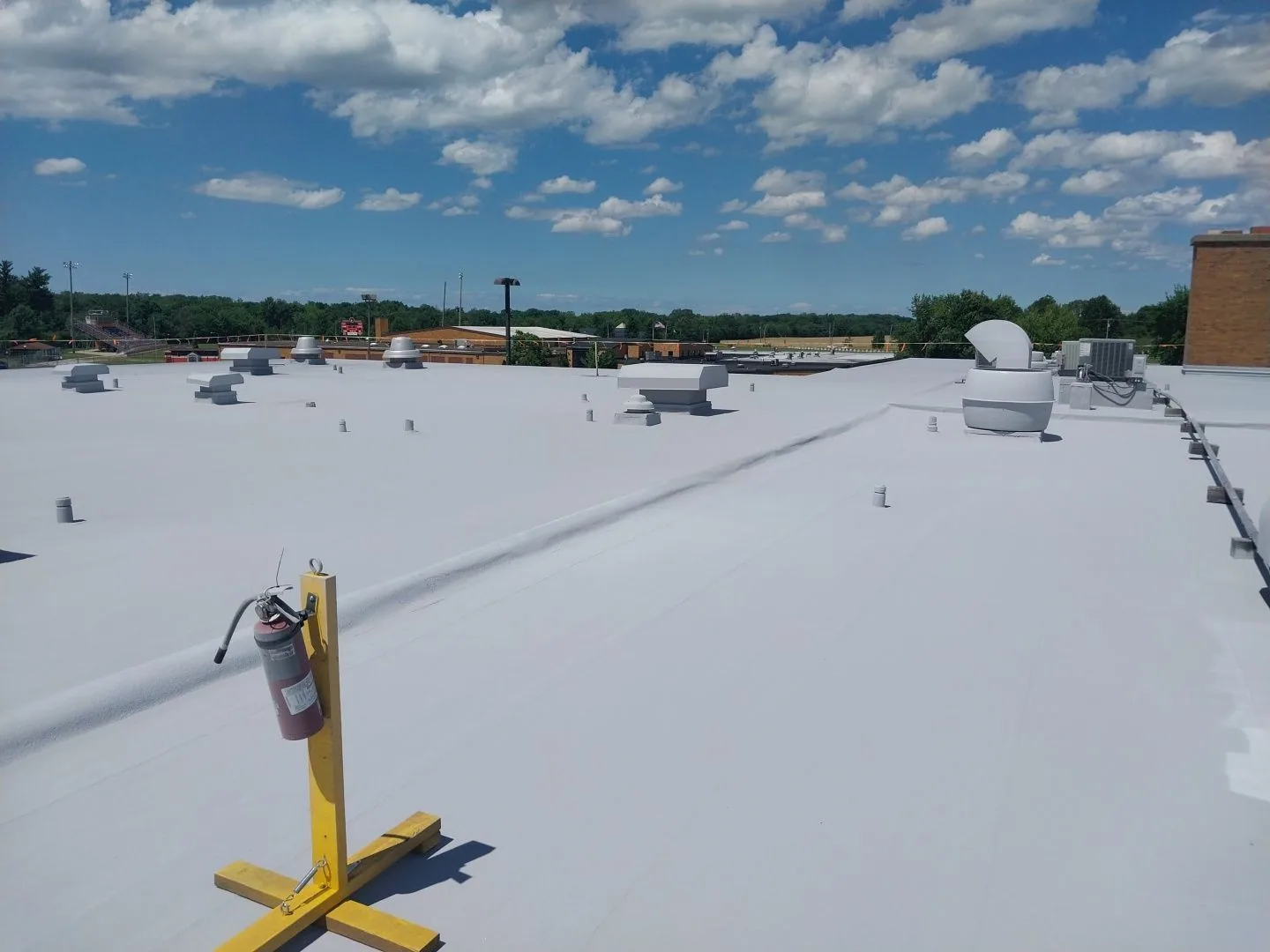
Coatings need a clean, dry surface and enough warm, dry hours to cure before rain or dew arrives. In northern Illinois that points to late spring through early fall, with the best stretches in June and September when nights stay mild. A coating applied on a cold morning or ahead of an afternoon storm can fail to bond, and that failure will not show until the first winter. If the roof needs repairs before it can be coated, book the repair work in the cooler months and the coating for the first reliable warm spell.
Do not let a crew talk you into starting in marginal weather because their schedule is full. Waiting two weeks costs less than coating a roof twice.
A coating scope should state the substrate condition it assumes and the preparation included in the price. Walk test areas for adhesion, check for trapped moisture, and confirm that the existing membrane is compatible with the primer and coating. Detail work at drains, seams, curbs and edges often determines whether the field application performs as expected. Ask for wet-film or dry-film thickness checks, cure conditions, and a written plan for correcting areas that fail the specified test.
Questions Owners Ask
Will a coating stop my roof from leaking?
Only if the leaks come from surface wear, pinholes or small cracks. Open seams, bad flashings and wet insulation have to be repaired first, then coated.
How do I know the roof under a coating is still dry?
Ask for an infrared scan followed by core cuts at the suspect spots. A coating over wet insulation traps the water, and the roof blisters from the inside.
Is silicone better than acrylic?
Neither wins everywhere. Silicone shrugs off standing water, while acrylic costs less and holds up on roofs that drain well. We match the product to your roof, then explain why.
Can I coat over an old coating?
Sometimes, after a cleaning and an adhesion test. Silicone is the tricky one, since little sticks to it later, so pick a product with the next recoat in mind.
What does the manufacturer warranty on a coating cover?
Usually the material, and sometimes the labor, for a term the maker sets, and only when the prep and thickness meet its rules. Get the document before you sign, not after.
Does a coating lower my cooling bill?
A reflective white coating keeps the surface cooler in summer, which helps a sun-exposed building. It adds no insulation, and winter heating barely changes.