Infrared Moisture Survey in Rockford, IL
Infrared and core-cut roof moisture surveys in Rockford, IL that show where insulation is wet, so you can repair, recover or replace with real numbers.
Infrared Moisture Survey
Infrared Moisture Survey
Rockford, IL
Meltwater that slips under a membrane in a January thaw does not leave in the spring. It sits in the insulation, refreezes the next week, thaws again, and spreads a little each time while the surface of the roof still looks fine. Rockford sees about 134 freezing days a year, so that cycle has plenty of chances to repeat. By the time a stain shows on a ceiling, the wet area is often many times larger than the leak. An infrared and core-cut moisture survey finds that hidden water before you commit money to a recover, a replacement or a purchase, and it tells you where the roof is still dry enough to keep.
If anyone proposes a recover or a major repair without checking for moisture first, ask them why not.
Scan when the roof gives the answer away
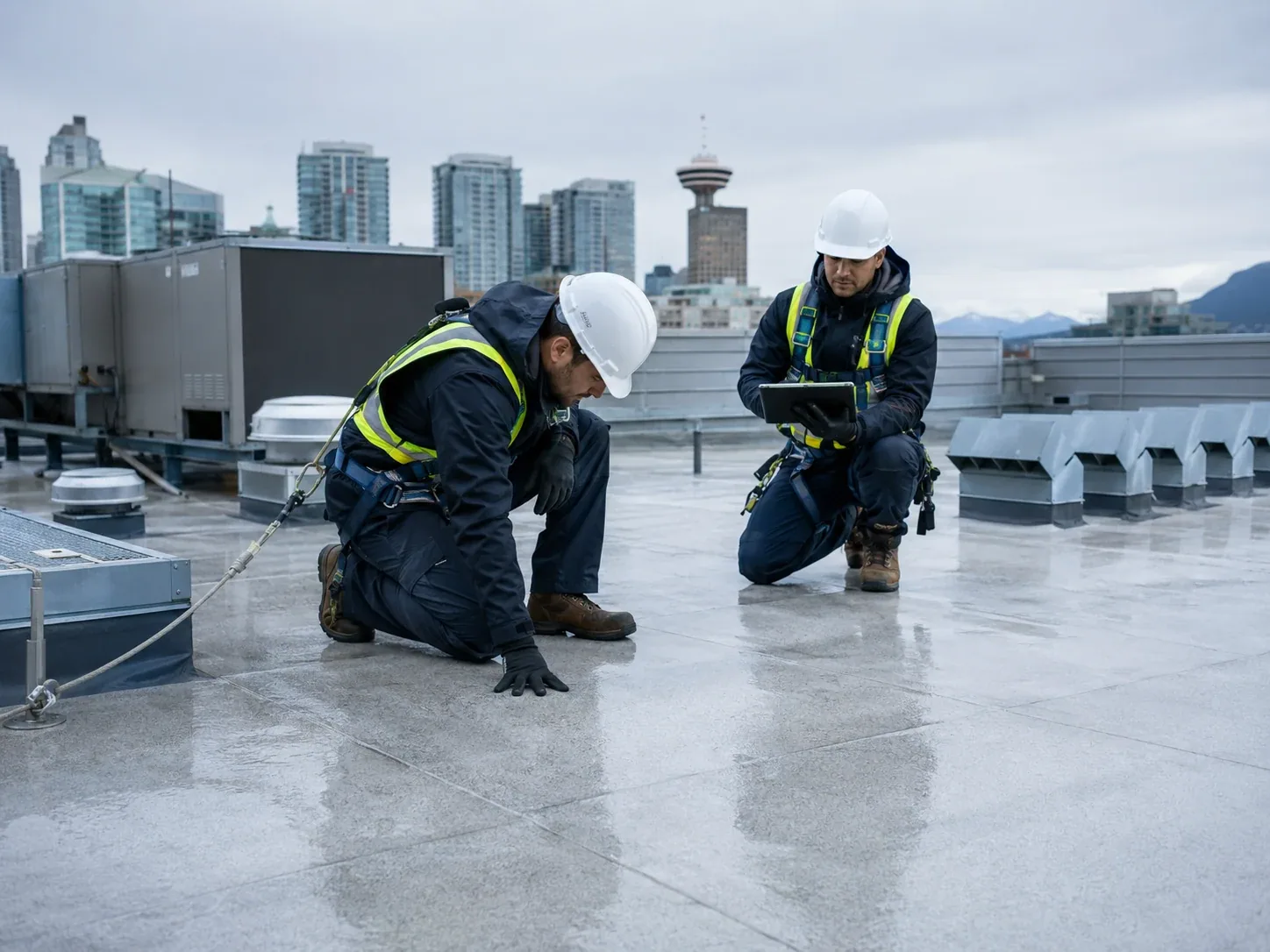
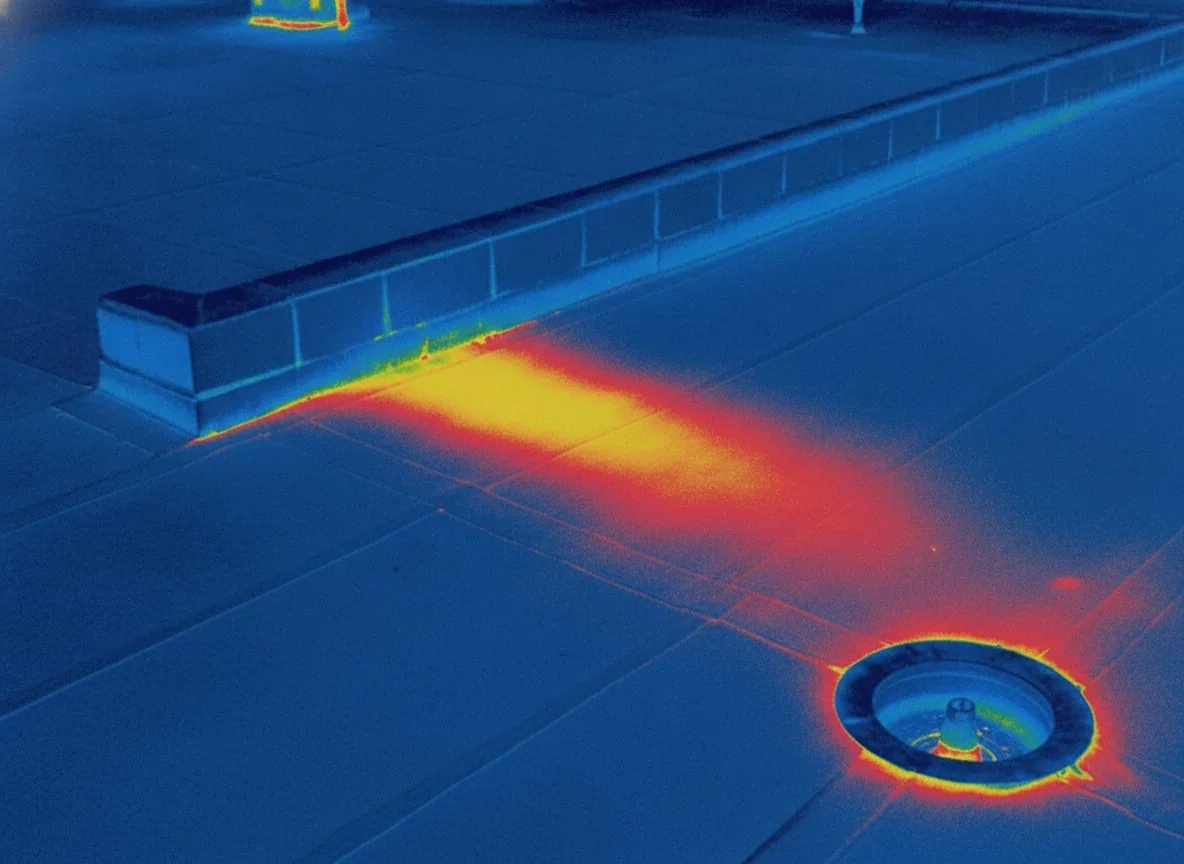
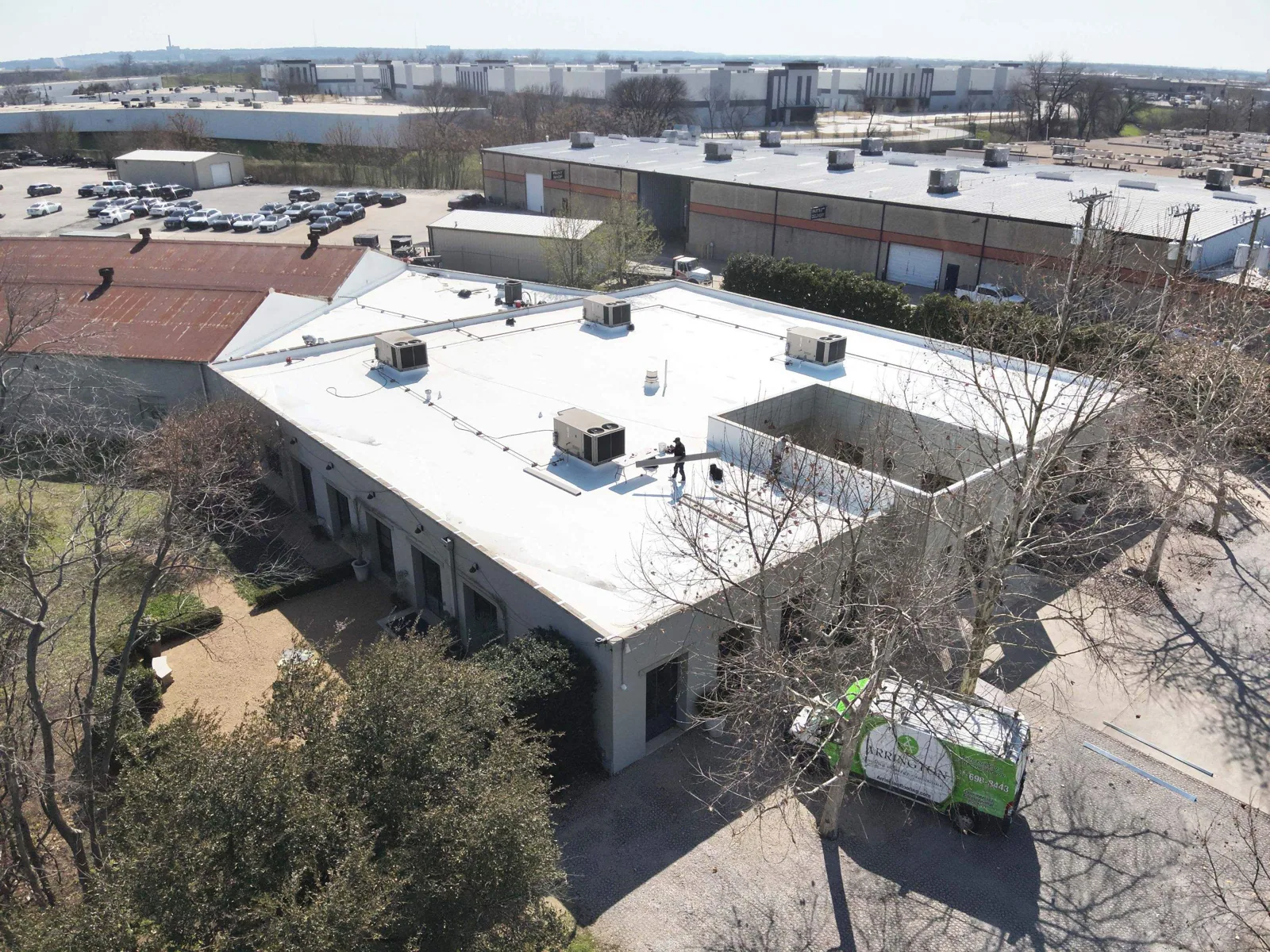
Infrared moisture scanning relies on a simple fact: wet insulation holds heat longer than dry insulation. After a sunny day, as the roof cools toward evening, the wet areas stay warmer than the dry ones, and a thermal camera sees the difference. We scan on a clear day with dry roof surfaces and good temperature swings, and we walk the roof or fly it to cover the full area. The camera does not measure moisture directly. It finds suspicious patterns, which we mark on the roof with paint and on a drawing so that the results can be compared with later cores.
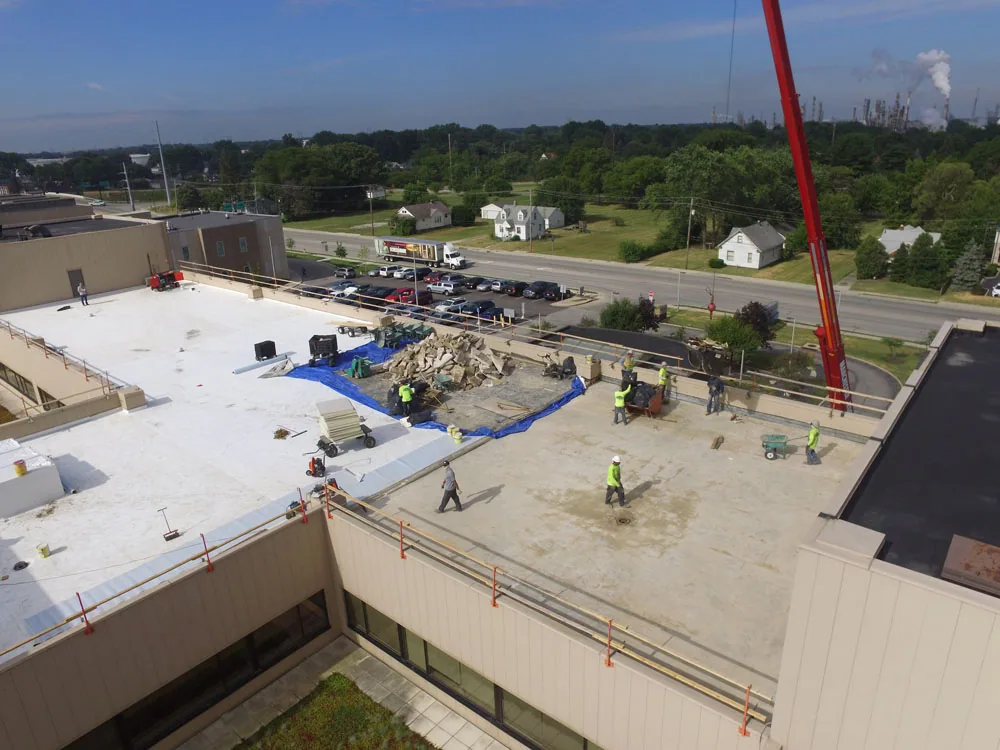
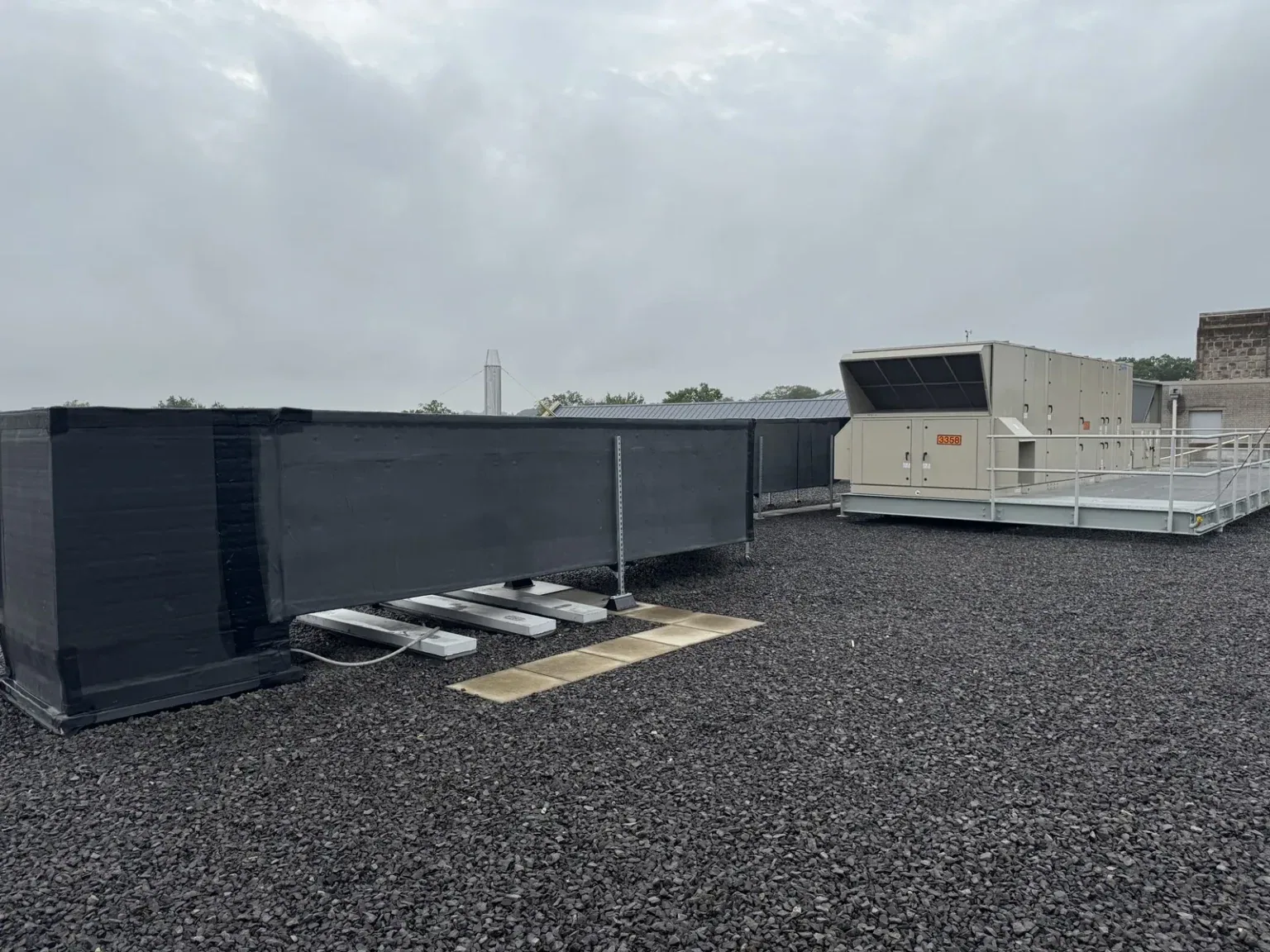
The same method works for the whole range of building types, from a small office to an aircraft maintenance building to a hospital wing. Dark membranes, light membranes and ballasted roofs each behave a little differently under a thermal camera, so the person reading the scan has to know the roof system, not just the camera. That is part of why we pair the scan with cores and a walk of the roof. Timing matters too. A cold, wet or overcast day will not give a useful scan, and a snow-covered roof cannot be scanned at all.
Confirm the scan with core cuts
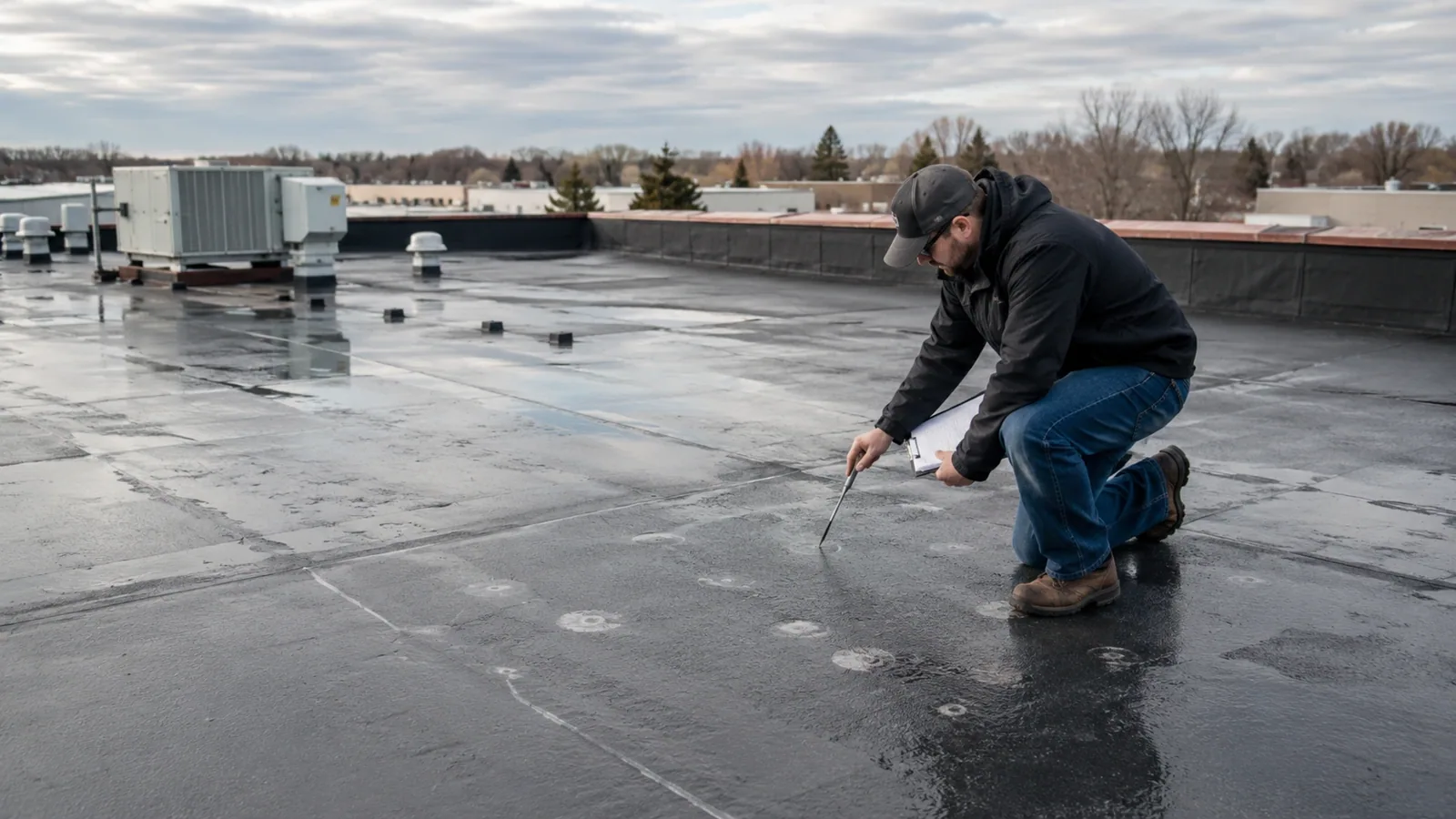
A thermal image is a lead, not a verdict. A core cut is the verdict. We take small samples at marked locations, usually where the scan showed a pattern and at a few spots where it showed none, then examine the layers: membrane, insulation, cover board and deck. We check for wet, crushed, rotted or delaminated material, and for the number of layers. The cut is then patched and sealed so that testing does not create a new leak. With cores and scan results together, you get a map of roof that is wet, roof that is questionable and roof that is dry.
That map drives the choice between a recover, a replacement or a repair of the wet sections only.
Turn the survey into a fair price
The survey is the cheapest way to find out what a roof project should cost. Wet insulation is the biggest swing factor in replacement bids, and a bidder who has not measured it is guessing, then padding the guess. With a moisture map in hand, you can ask every contractor to price the same work and compare real numbers. Repair of a limited wet section may be a reasonable choice, while a widely soaked roof is not worth repairing. Ask for a unit price on replacing wet insulation so that a surprise during demolition does not turn into a change order.
- A marked roof plan showing wet, suspect and dry areas.
- Core logs and photographs for each cut.
- A recommendation: repair, recover or replace.
- Unit pricing for wet insulation removal.
Ask who benefits from the survey
Moisture surveys matter most to people who buy, sell, lease or redevelop commercial property. A roof is among the most expensive components of a building, and its condition is rarely visible to a buyer. The former Kmart along the East State Street corridor, a building of nearly 106,000 square feet that sat vacant after closing in 2018 and is now proposed for a food hall, is the kind of property where a survey belongs before a number goes into the budget. The same goes for older buildings in the East State Street and CherryVale area and across the Rockford region. A due diligence roof survey pairs the scan with a full written report.
Ask what the report will include and whether the scan, cores and photographs are all yours to keep.
Roof size also changes the answer. A small roof may need only a handful of cores, while a plant roof of many acres needs a planned grid of cuts and a longer scan. Either way, ask for the number of cores in the quote, since a survey with too few cuts cannot back up its own conclusions, and one with too many costs you more roof repairs than it should.
Test before you insulate or recover
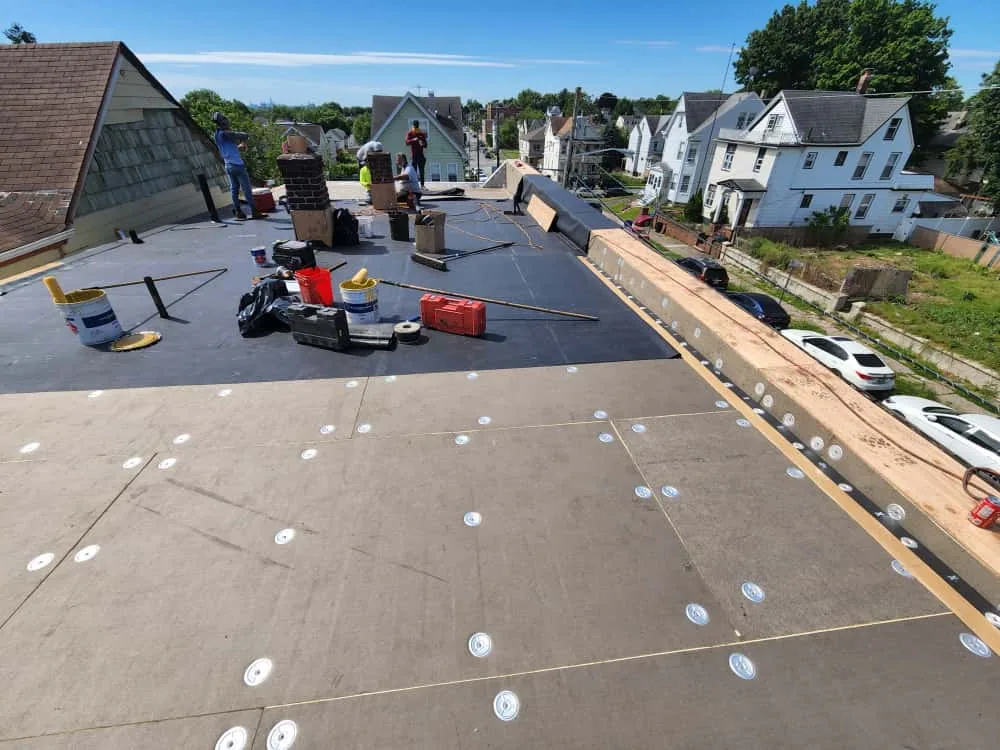
Run the survey before a roof project, not during it. Once new insulation or a recover goes over wet material, the moisture is sealed in and the problem is much harder to fix. Illinois put a new energy code into force on January 1, 2024, tied to the 2021 IECC, which means replacement jobs in Rockford often call for added insulation. Learn what is wet and what is dry first, then decide how much of the old insulation and cover board can stay. Buildings like cold storage and hospitals are especially unforgiving, because moisture in the assembly raises energy use and complicates operations.
On a large flat warehouse roof, the survey becomes the first page of a long-range plan. A survey done now becomes the baseline for every comparison later, so keep the drawing and the core photographs with your building records.
Plan a thermal scan around the roof's construction and the conditions on the day. A dry roof after a sunny afternoon can show a different pattern from a roof scanned after a cool evening, and ballast, shading or equipment can mask temperature differences. Mark the scan limits, record the weather, and select core locations from the pattern rather than treating every color change as wet insulation. The final report should identify confirmed moisture separately from areas that need another test.
Questions Owners Ask
How accurate is an infrared moisture scan?
It is good at finding patterns, and weaker at proving the cause. That is why we confirm the findings with core cuts before we recommend anything.
Does the survey damage the roof?
The scan does not. Core cuts make small holes that we patch and seal the same day. A properly repaired core is a minor, controlled opening.
What is the best weather for a scan?
A clear, dry day with a good temperature swing, with the scan done toward evening. Snow, rain and heavy overcast make results unreliable.
Can you scan a roof covered in gravel or ballast?
Sometimes. Ballast and gravel hide heat patterns, so cores become more important. We will tell you in advance how much the scan can tell us.
Will the survey tell me how many years the roof has left?
It tells you how much of the roof is wet or sound, which is the biggest input to remaining life. We give a plain estimate, not a promise.
Who should order a survey before a purchase?
Any buyer or lender of a building with a low-slope roof. It costs little next to the price of discovering wet insulation after closing.