

Roof Warranty Management in Rockford, IL
Keep manufacturer roof warranties valid in Rockford, IL with maintenance records, notice rules and a clear plan for storms, rooftop trades and building sales.
Roof Warranty Management

Roof Warranty Management
Rockford, IL
A roof warranty is a piece of paper that a Rockford winter tests every year. About 134 days at or below freezing pull at the seams the paper promises to cover, and about 12 days below zero stiffen membranes so a foot or a dropped tool does more harm than it would in July. Then hail, wind and the occasional tornado arrive, and owners find out what the document actually says. The November 10, 2020 storm put hail as large as 1.25 inches near Rockton and a 73 mph gust at Winnebago, and wind and hail are exactly where many warranties carry their exclusions.
Warranty management is the ordinary work of keeping that paper alive, so the day you need it you can use it. It is mostly records, notices and discipline about who steps on the roof. We will tell you plainly what protects the coverage and what quietly cancels it.
Read the paper before the first leak
Most owners file a warranty in a drawer and read it for the first time with a bucket under a drip. Read it now. Find out who stands behind it, whether it covers materials, labor or both, and what the roofing contractor's own promise adds to the manufacturer's. Check the length of any limit on coverage, the notice period for reporting a problem, and whether the paper names the maintenance you must keep up.
Every manufacturer writes its own terms, and the terms differ by system. The warranty on a Carlisle Syntec membrane will not read like the one on a GAF system. We install and repair these systems, and for a final answer on coverage you go to the paper and to the manufacturer that wrote it.
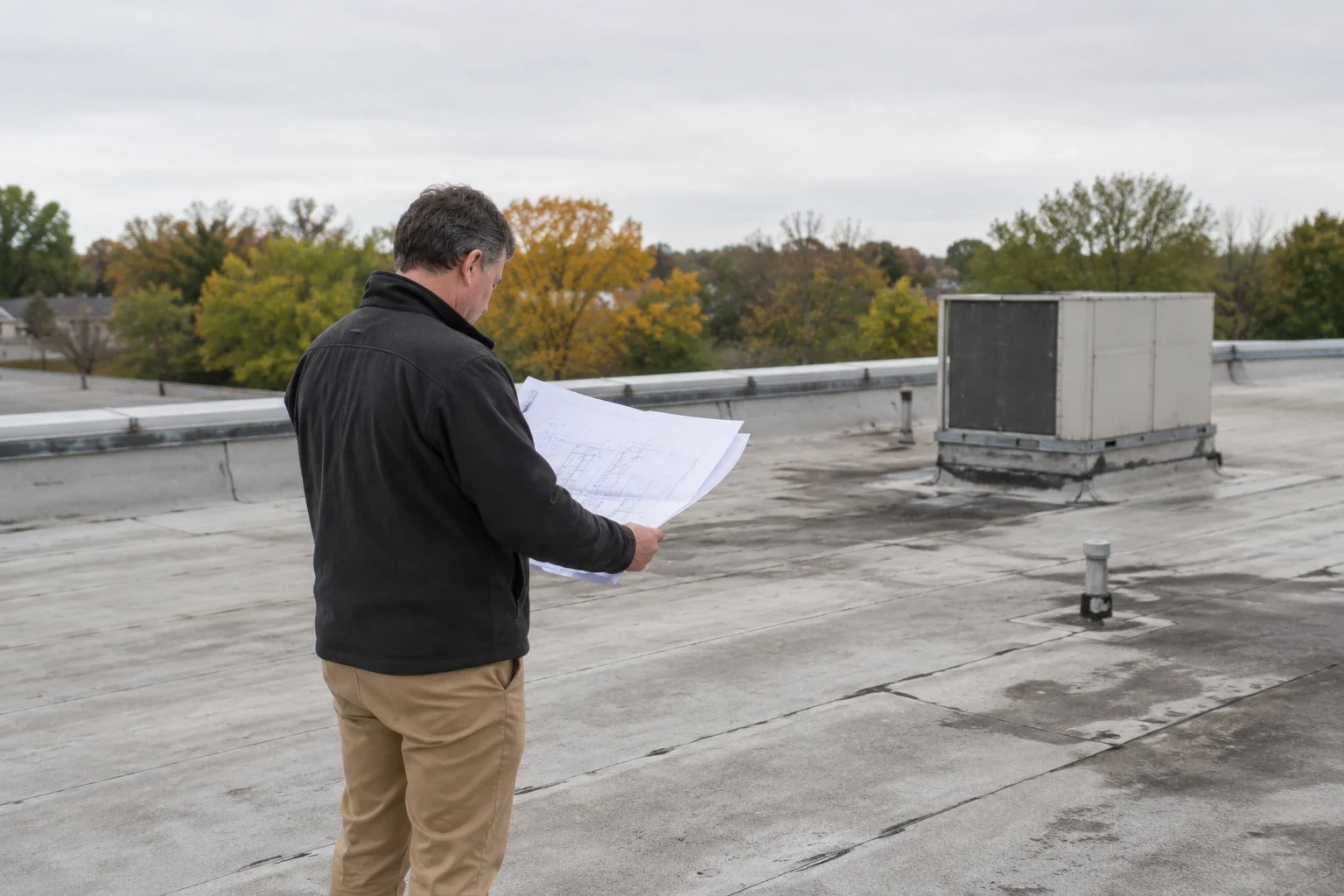

Keep the maintenance the paper demands
Many warranties expect regular inspection, debris removal and prompt repair of small defects, and a claim can be denied if a roof was neglected. A written preventive maintenance program is the easiest way to prove you did your part. Two visits a year, one after the thaw and one before the first hard freeze, with dated photographs and a list of what was cleared or fixed, builds a file that answers the question before anyone asks it.
Keep every invoice and every report. If the manufacturer's representative asks for the maintenance history in the middle of a dispute, a stack of dated records is worth far more than a promise that things were looked after. The file also feeds your roof asset records, so one set of paperwork does two jobs.
Check what weather the warranty leaves out
Warranties are written for ordinary aging, not for violent weather. Many limit or exclude wind above a stated speed and hail above a stated size, and some exclude ponding water or damage from other trades. The 1928 F4 tornado that tracked about 25.8 miles through Rockford's factory districts and the 1967 F4 that killed 24 people in Belvidere are reminders that this region sees storms no membrane warranty is written to meet.
When the damage is storm damage, the money usually comes from insurance, not from the manufacturer. Keep your wind and hail repairs documented and tell the manufacturer about them if the paper requires notice. Do not assume that a repair by a crew the manufacturer never heard of leaves the coverage intact.
Stop other trades from voiding your coverage
Roofs fail most often where another trade has been. An HVAC crew replaces a unit and drags a ladder across the seams, a solar installer drills through the sheet, a technician sets a heavy panel on a thin spot, and the warranty may now be in question. A plant like the Comer Industries hub on Windsor Road in Loves Park, with machining, assembly, painting and warehousing under one owner, is the kind of industrial building where process and ventilation equipment can keep adding roof penetrations.
Set a rule for your property: nobody goes on the roof without a sign-in, and anyone cutting a penetration calls the roofing contractor first. A proper curb and support costs less than a voided warranty. We will inspect the work afterward and flash what was disturbed, and we will write down the date.
Carry the coverage through a sale or a phase
Coverage often does not move with the building unless the paper allows it. Transfer terms may require written notice within a set time, a transfer fee or a fresh inspection, and a buyer will want to see them. If you are selling a plant, a retail center or a redeveloped property such as the former Barber-Colman buildings at Colman Yards, find out before the closing what your warranty says about transfer.
Treat new construction the same way. On a new building such as the one Hillwood is putting up at Rockford Logistics Park 20, a 335,000 square foot speculative build, any roof warranty starts its clock at closeout, so record the final walkthrough and the closeout papers. A roof survey at the time of sale will show the buyer what the paper covers and what the roof looks like beneath it.
Store the warranty with the drawings, product submittals, installer closeout, maintenance log and every repair authorization. Before a crew cuts into a warranted assembly, confirm who must approve the work and how the completed detail should be documented. The warranty may require periodic inspection, clear drains or specific repair materials; missing those steps can create an avoidable dispute. A consistent record is especially helpful when a property in Rockton or Cherry Valley changes hands and the new manager inherits years of roof history.
If a warranty inspection identifies work outside its coverage, keep that recommendation separate from any repair the manufacturer requires. A clear record helps the owner preserve coverage while still addressing unrelated maintenance.
When a building is sold, transfer the warranty contact, maintenance log and service history together so the next manager can meet notice and inspection requirements.

Questions Owners Ask
Will a repair by someone else void my warranty?
It might. Many warranties require repairs by an approved party or a notice to the manufacturer first. Read your paper, and call the manufacturer before work begins. We will document what we do so you can show a repair was done properly.
My roof leaked in year three. Who do I call first?
Start with whoever the warranty names, usually the manufacturer and the installing contractor, and give notice in writing within the period stated. Take dated photographs of the leak and the area around it. Then ask for an independent look at the roof before anyone patches it.
Does hail damage fall under the warranty?
Hail is commonly carved out of the paper, since many warranties exclude it above a stated size or treat it as an insured event. Look for the exact language in your paper and check your property policy as well. A dated report from right after the storm helps with either path.
What records should I keep for a warranty claim?
The warranty itself, the installation closeout papers, every maintenance report with photographs, repair invoices and a log of who has worked on the roof. Keep them where more than one person can find them, in case the manager who filed them moves on.
Can a roof coating extend a warranty?
A coating can carry its own warranty, but it may also change what an existing one covers. Ask the original manufacturer before anything is applied over a covered roof. We will check the membrane and the insulation first, then explain the options in writing.