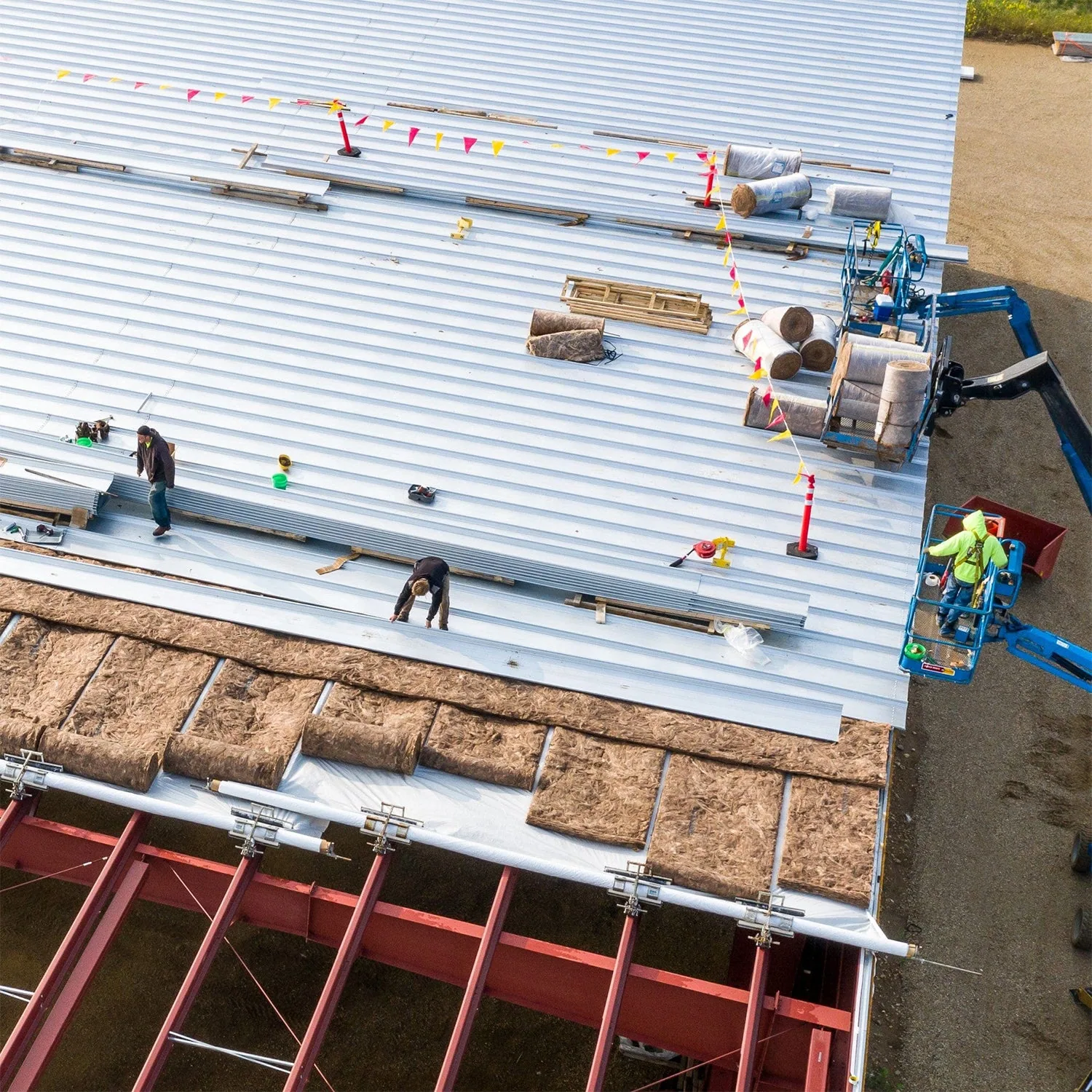
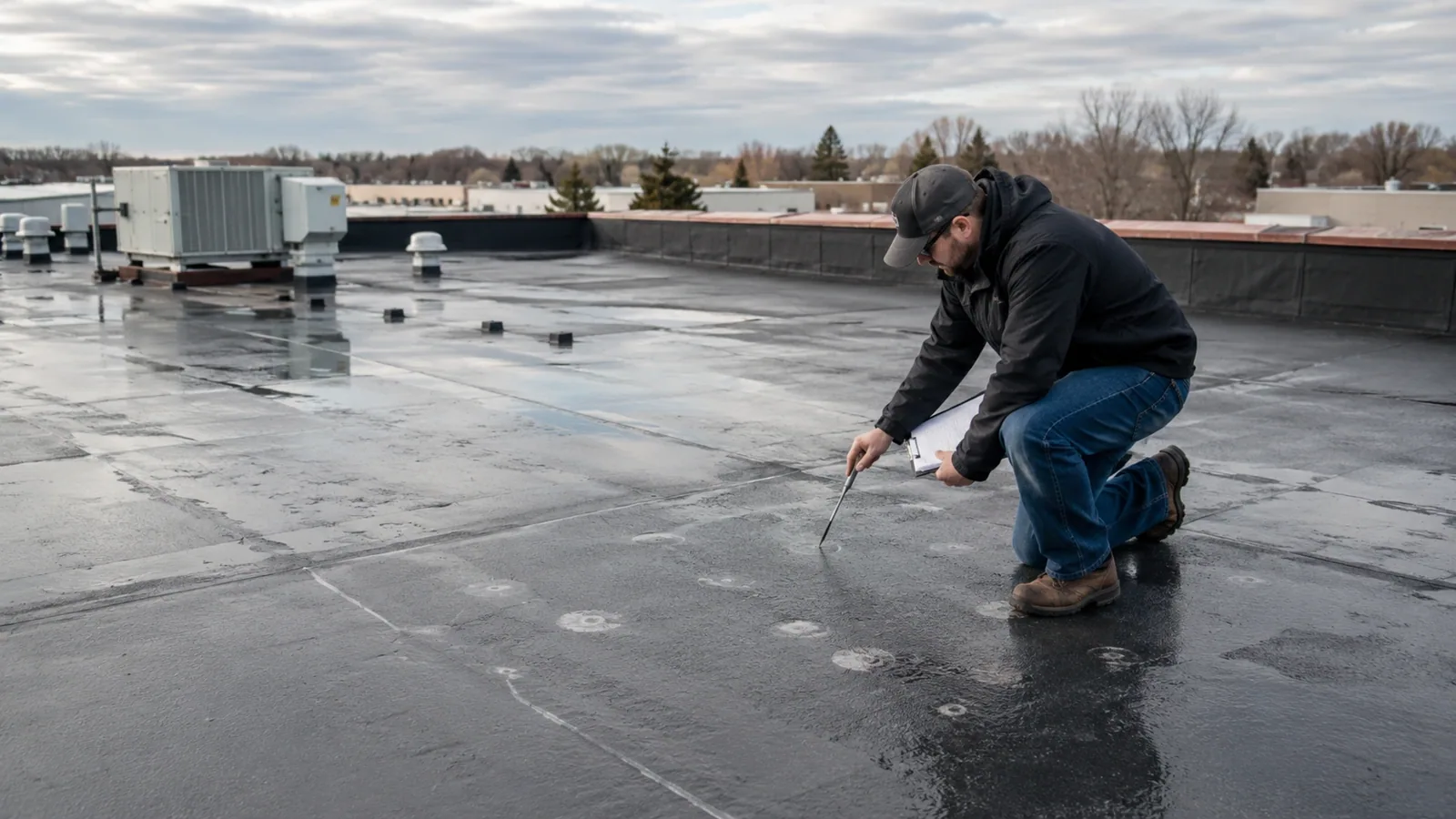
Storm Damage Roof Repair in Rockford, IL
Commercial storm damage roof assessment and repair in Rockford, IL: wind, hail and debris damage found, photographed and fixed in the right order.
Storm Damage Roof Repair
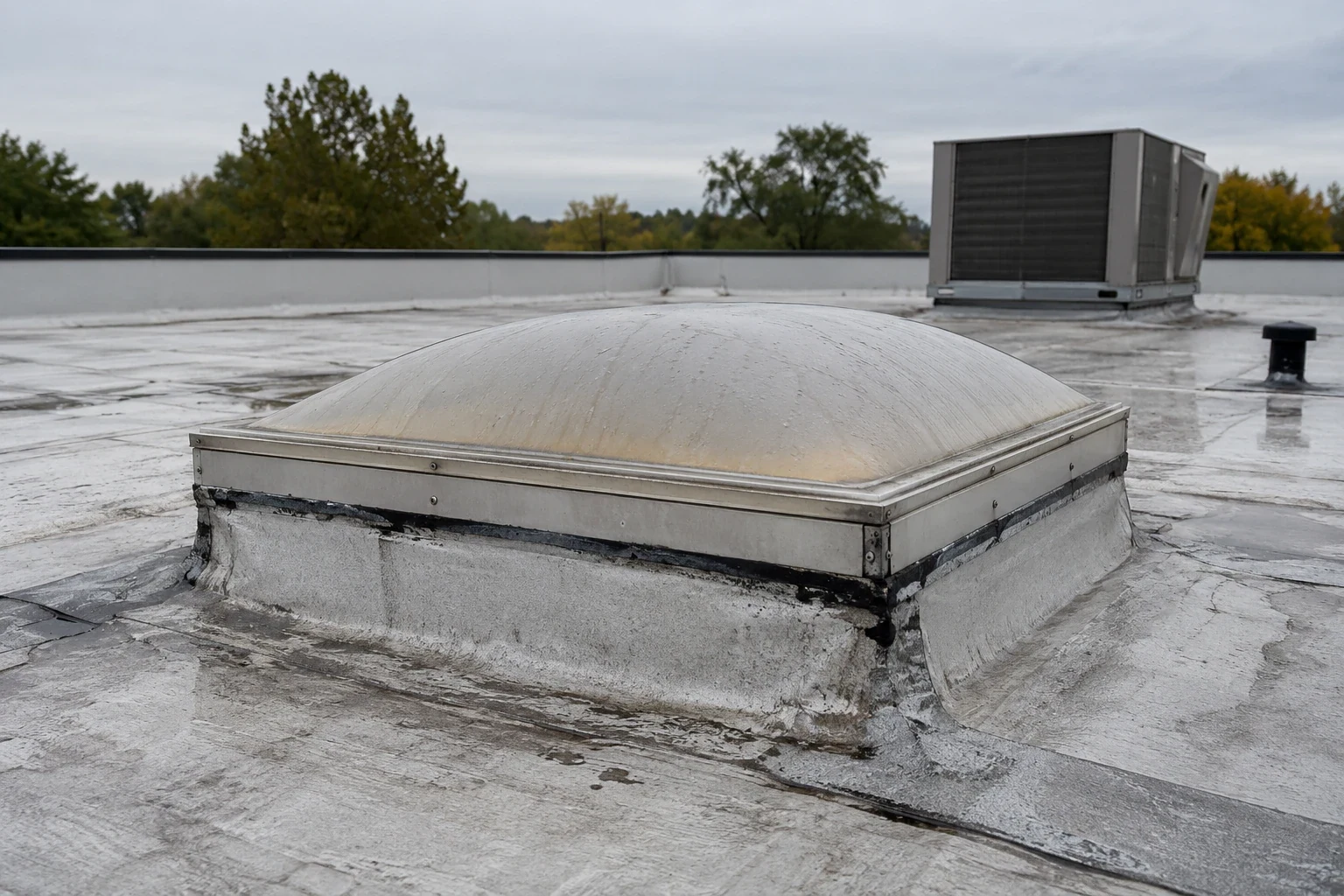
Storm Damage Roof Repair
Rockford, IL
On March 31, 2023, a storm system with straight-line winds up to 70 mph hit the Rockford area, and the National Weather Service confirmed an EF-1 tornado in Rockford, IL, with damage near Sinnissippi Golf Course. Storms like that rarely look dramatic from the parking lot. The membrane is still on the roof, the building is still dry and the owner goes back to work. Then the next hard rain finds the edge that lifted, the flashing that shifted or the hail bruise that split a sheet, and the water goes where nobody is looking: into the insulation, which in this climate then freezes and thaws all winter. The storm is only part of what the storm costs you.
After any severe weather, get someone on the roof before you decide there is nothing to fix. If the answer is nothing, you will have it in writing.
Sort the damage into wind, hail, water and debris
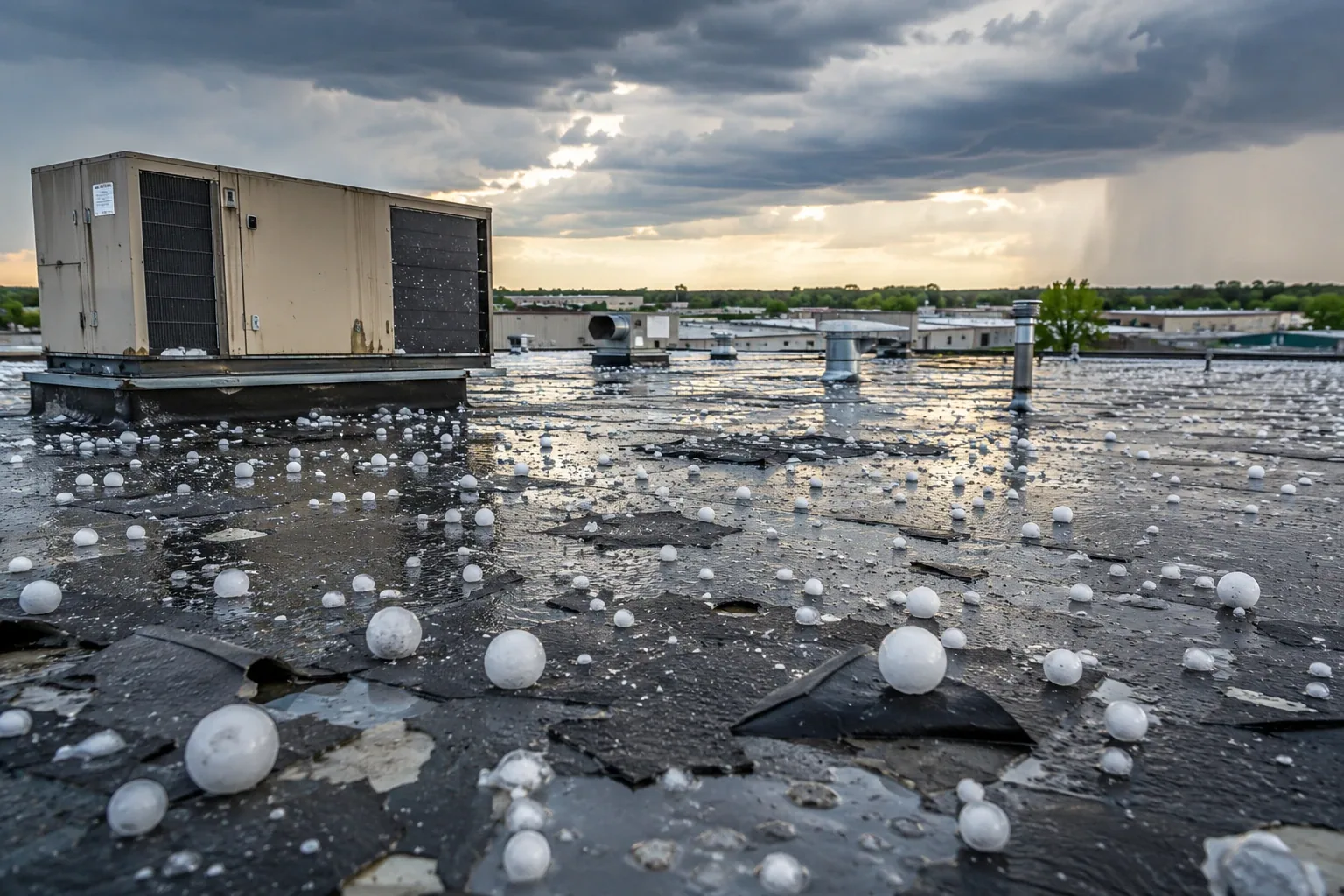
Storm damage comes in four kinds, and each leaves its own evidence. Wind lifts roof edges, peels membrane back from the perimeter inward, shoves rooftop units off their curbs and pries up coping and edge metal. Hail bruises the membrane, cracks the top surface of built-up and modified bitumen roofs, dimples metal and breaks skylight domes. Water that came in during the storm leaves wet insulation behind, and it can sit there for months. Debris, whether a tree limb or a sheet of metal from the next building over, punches through the sheet or crushes a drain. A roof that took the November 10, 2020 storm, when 1 inch hail fell in Roscoe and a 73 mph gust hit Winnebago, can show all four.
Sorting the damage matters because each kind has a different repair, a different timeline and a different conversation with an insurer. Write down what you think you see before you call anyone.
Walk the whole roof, not just the corner that blew open
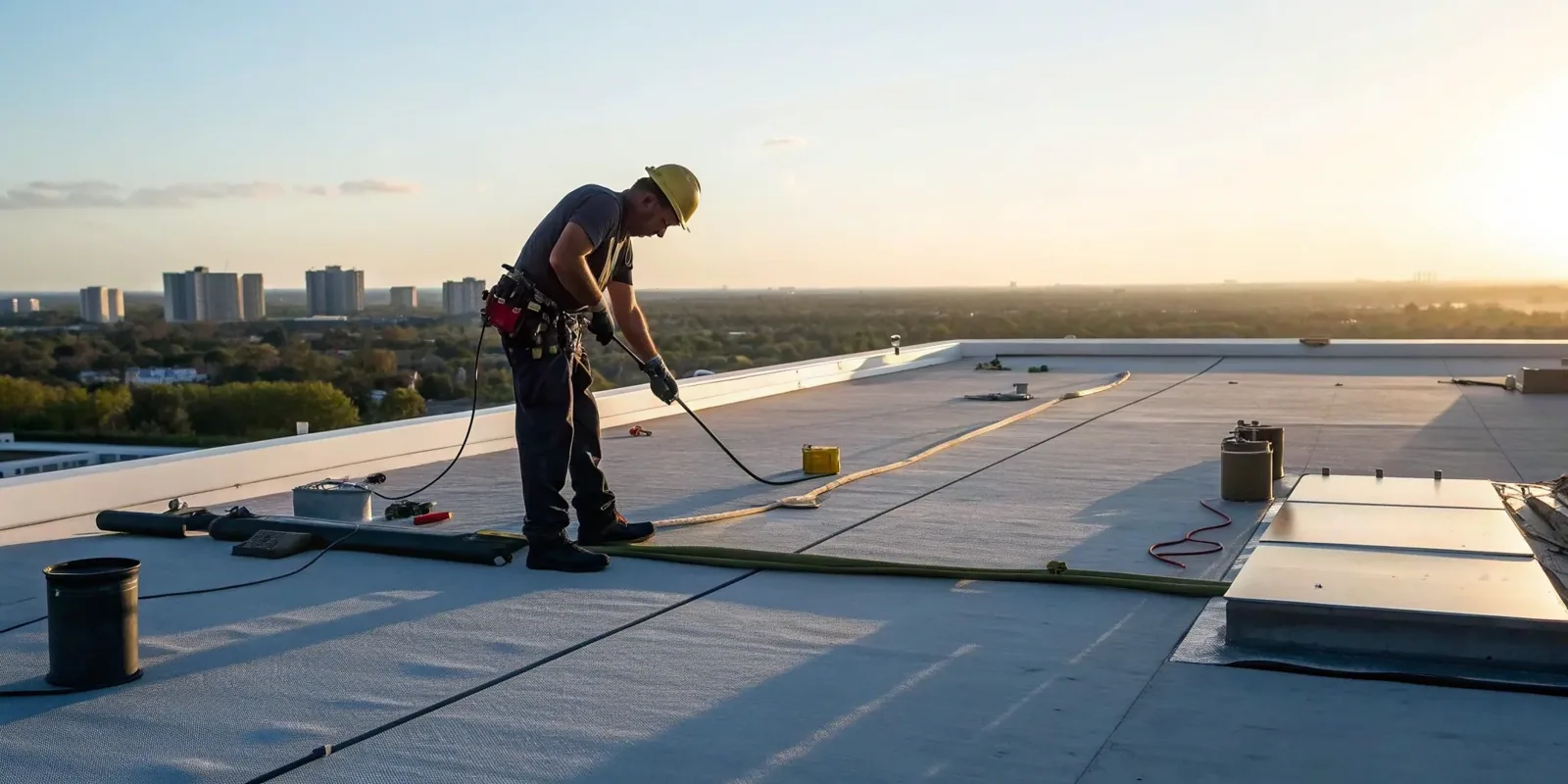
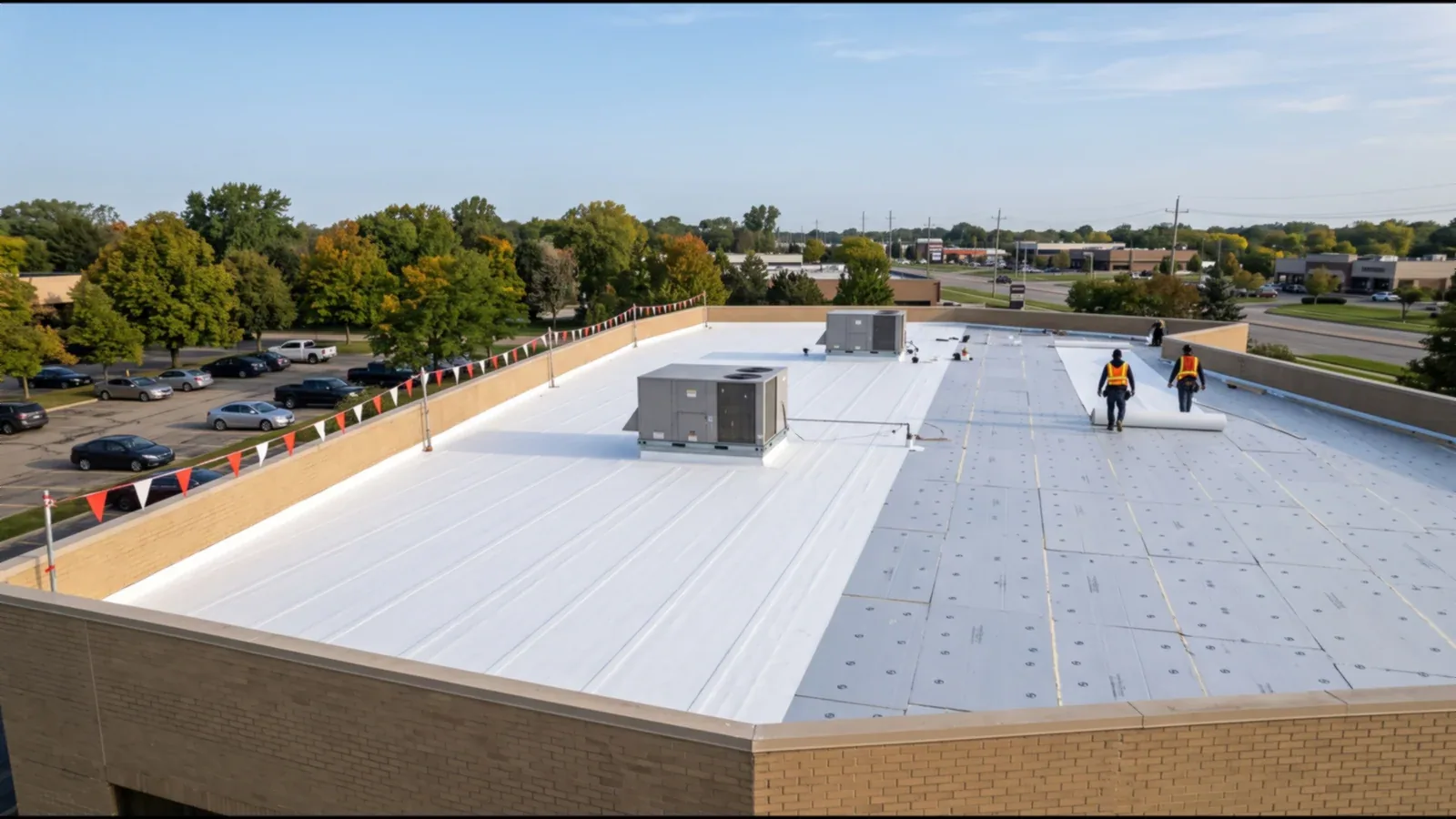
The visible damage is the least of it. We walk the perimeter first, because wind starts there, then the field, then every penetration, curb and unit. We check seams for lifting, flashings for movement, coping for loose joints and the deck edge for any sign that the sheet has been pulled off its attachment. On big or unsafe roofs a drone inspection shows the pattern from above before anyone steps on a weakened membrane. Then we confirm where water got in with moisture testing, because a bruise that looks minor on top can sit over a soaked board. Every finding gets a photograph and a spot on a roof plan, so the repair scope and any claim are tied to something you can point to.
Be wary of a quote based on a look from the ground. Storm damage hides where you cannot see it from there.
Question the contractor who knocks on your door after a storm
Every serious storm in northern Illinois brings out crews who knock on doors, offer a free look and ask you to sign something on the spot. Be careful with any paper that hands your insurance benefits to a contractor or commits you to a replacement before the damage is documented. A fair storm contractor gives you a written scope, photographs, an honest split between storm damage and wear that was already there, and a price you can compare. Wear is not storm damage, and a roof that was tired before the wind arrived is not made new by a claim. We say that up front because it protects you from both a denial and a bad repair.
- Ask for a photograph of every item on the scope.
- Ask which items are storm damage and which are age.
- Ask for the repair price next to the replacement price.
- Ask to keep every claim document in your own hands until you have read it.
Claim paperwork should be built from your photographs and scope, and roof insurance claim assistance never needs a signature on the first visit.
Repair in the order that saves the most money
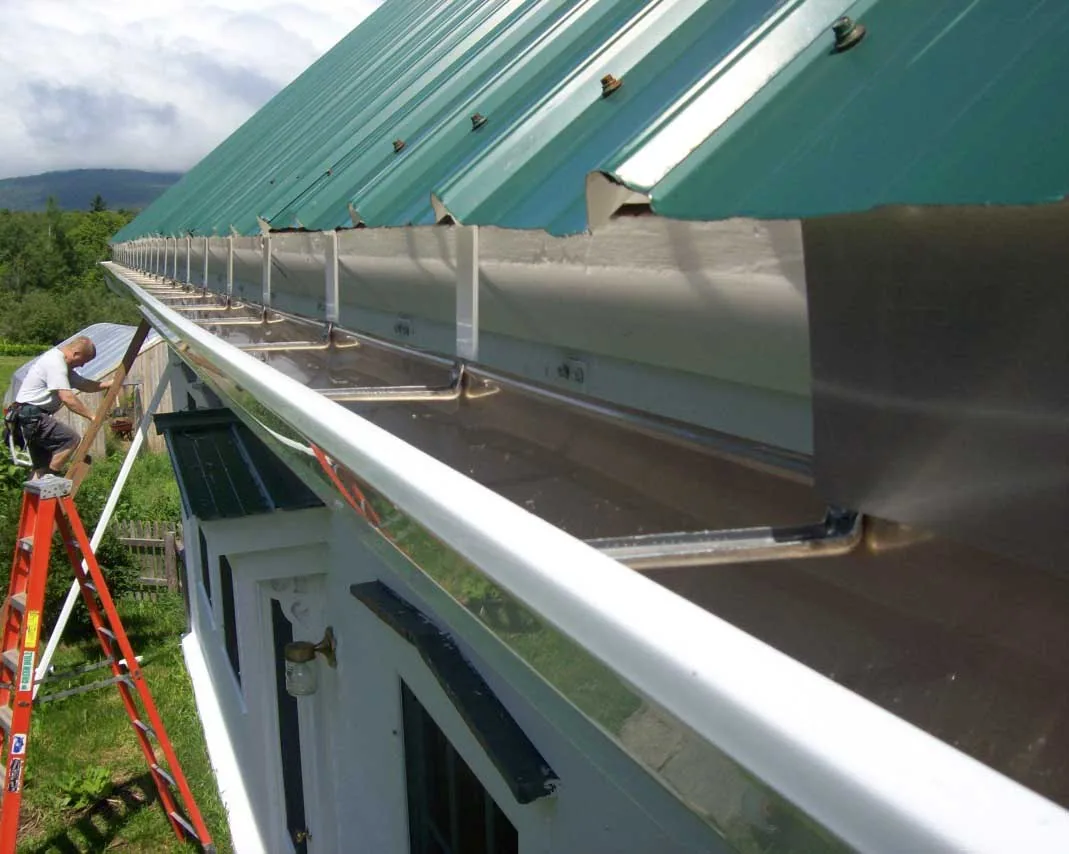
Order matters. First, stop the water with a dry-in, the first job of emergency roof repair. Second, remove anything that is wet, because wet insulation does not dry on its own under a membrane. Third, reattach, replace and reseal what the storm took, then reset the details that moved. Peeled edges and lost coping are wind damage roof repair, and bruised membranes are hail damage roof repair. The worst storms belong to a different class, such as the F4 that cut about 25.8 miles through Rockford's factory districts on September 14, 1928, and when a roof is lost outright the question becomes tornado damage repair and a structural check before anything else.
If a repair plan skips the wet insulation, ask why. That is where the second bill comes from.
Plan the permanent fix around the cold
A storm in November does not give you a repair window in November. Welds, adhesives and many sealants need temperatures above freezing to cure, so the permanent work may wait for a mild week or for spring while a temporary dry-in carries the building. That temporary cover has to survive snow load and wind, and it has to be checked after every storm and every heavy snowfall. Before the permanent repair, ask the City of Rockford building department whether the extent of the damage triggers upgrades under the 2021 Existing Building Code that the city follows. A repair of a small area rarely does. A repair of most of the roof can.
Do not leave a tarp on a roof and forget it. Put a date on the permanent repair, even if it is months away.
After a storm, document the whole roof before moving debris or making permanent repairs. Note displaced edge metal, lifted membrane, punctures from branches, blocked drains and interior water paths. Separate storm-created openings from older deterioration in the work record so the owner can make a clear maintenance and claim decision. If rain is forecast, install a temporary protection system that can be inspected and removed without damaging the roof, then schedule a permanent repair when the assembly is dry enough to work.

Questions Owners Ask
How long can I wait after a hailstorm before it costs me more?
Not long. Water that reaches the insulation spreads and freezes, so a few weeks can turn a small repair into a big one. Get the roof checked before the next rain or snow, and photograph it first.
Can wind damage be seen from the ground?
Rarely. Lifted edges, shifted flashing and loose coping usually show only on the roof, so a ground check misses most of it.
Will a hailstorm get me a new roof?
Sometimes, when enough of the roof was broken that repair no longer makes sense. We document it, you decide, and your insurer makes its own call on coverage.
Who pays for the temporary dry-in if the insurer covers the repair?
Many policies expect you to protect the building and may reimburse reasonable costs, so read yours. Keep receipts and photographs of the work from the first day.
How do I tell storm damage from old age?
Look for damage that is fresh, local and directional: torn sheets on one side, hail hits in a pattern, debris marks. Age shows evenly everywhere. We mark which is which in the photographs.
Do you repair storm damage in the middle of winter?
Water gets stopped right away. Permanent work waits for temperatures that let seams weld and adhesives cure, unless the damage leaves no other choice.