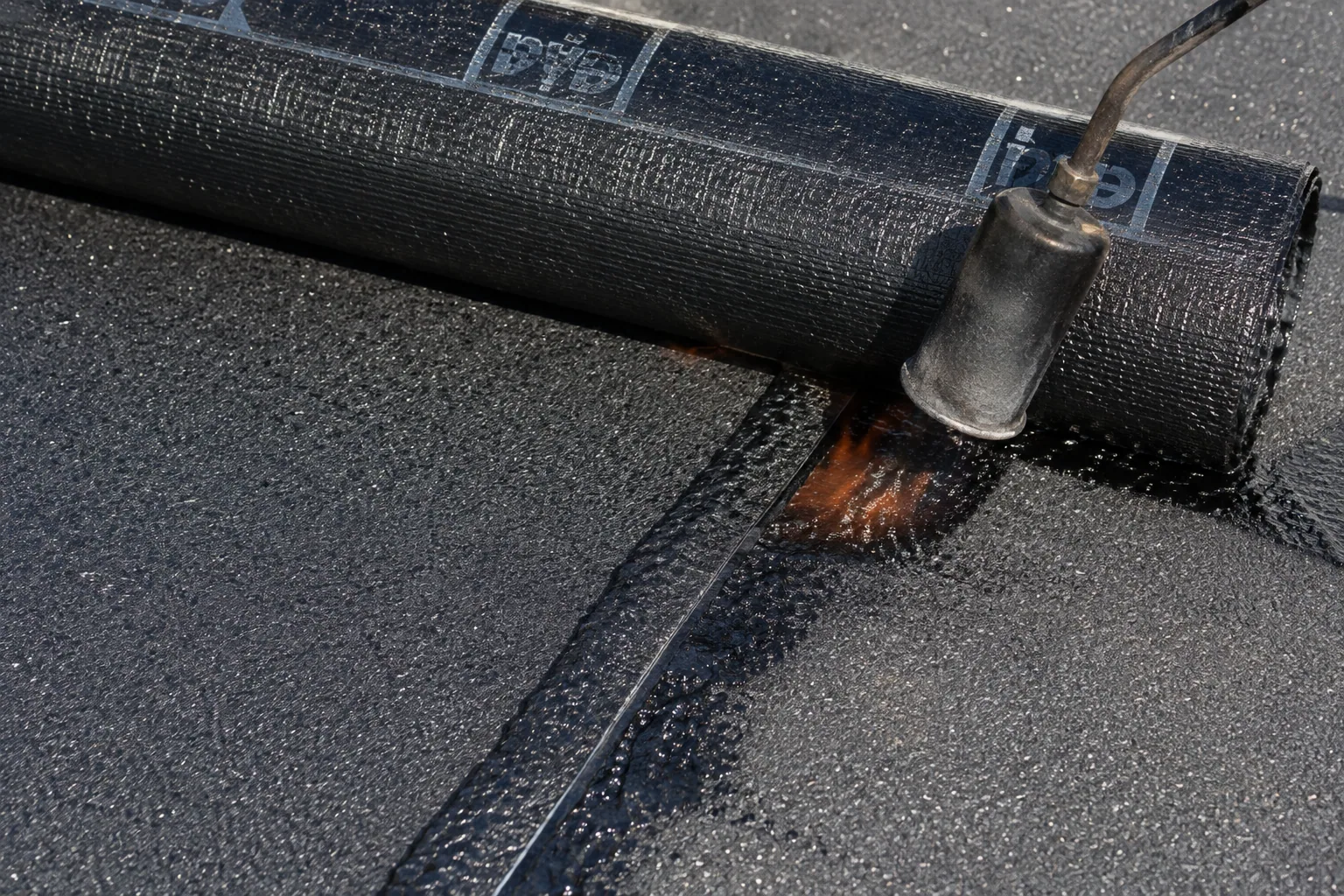
Spray Polyurethane Foam (SPF) Roofing in Rockford, IL
Spray polyurethane foam roofing in Rockford, IL: where an insulated roof with no seams pays off, what hail and winter do to it, and how to price it fairly.
Spray Polyurethane Foam (SPF) Roofing

Spray Polyurethane Foam (SPF) Roofing
Rockford, IL
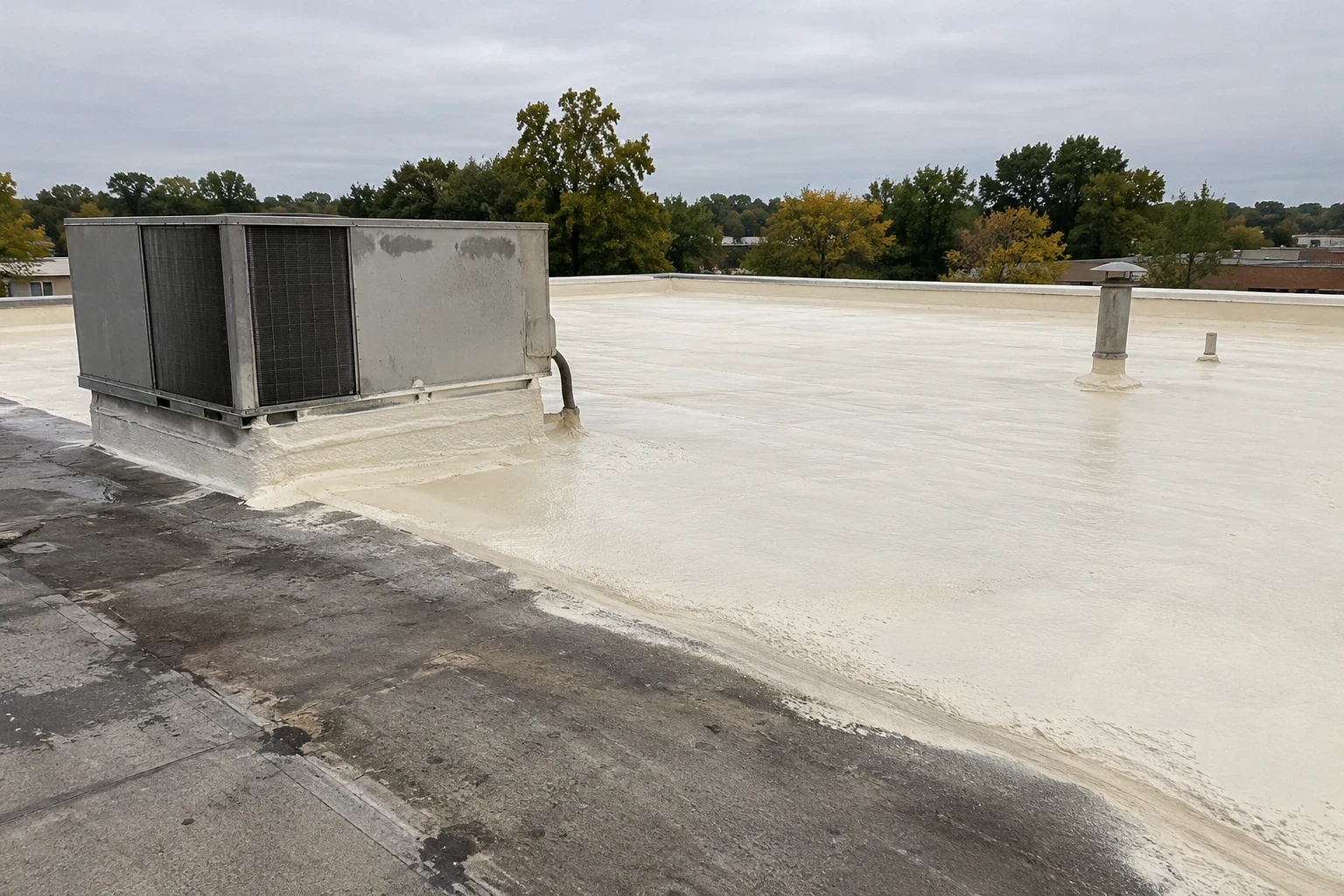
A foam roof has no seams to open, and in a city that logs about 134 days a year at or below freezing, that is the whole argument for it. Many membrane failures in Rockford, IL start at a lap, a flashing or a fastener that the cold pulled loose and a thaw filled with water. Spray polyurethane foam goes on as a liquid, rises into a continuous insulating slab that wraps curbs, pipes and drains, and is then sealed under a protective coating. There is also a cost: foam is a specialty system with a short list of good installation days, and it asks more of an owner up front than a rolled membrane does.
Before you sign for foam, ask what the old roof is made of and whether it is dry. If the answer is a guess, keep your money in your pocket.
Weigh a roof with no seams against a Rockford winter
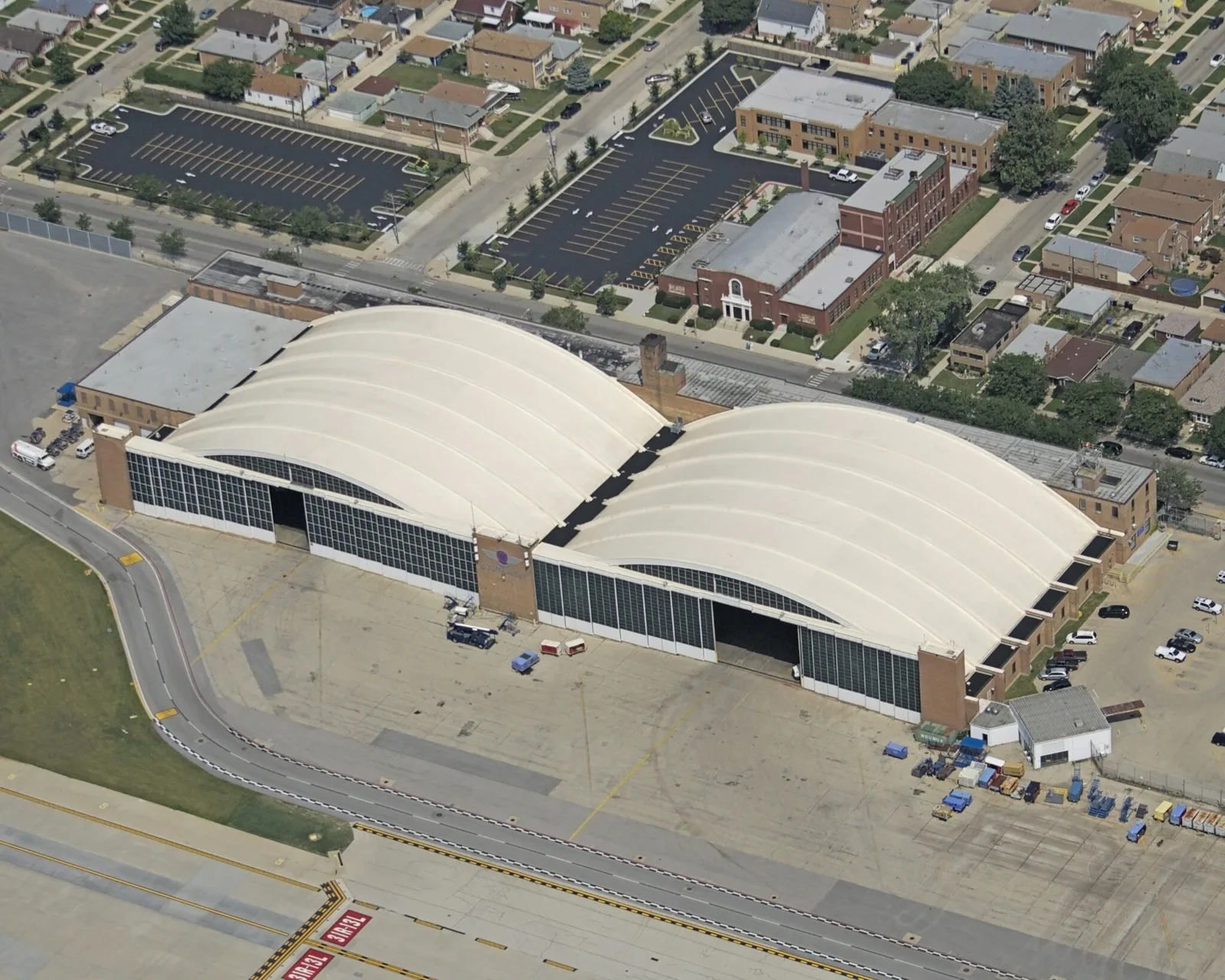
The strength of foam is that the insulation and the waterproofing are one layer. The material expands and cures in place, bonds to the deck or the old roof, fills the low spots and leaves no gap for meltwater to creep under. When freeze-thaw cycling works on a building, the foam moves with whatever it is stuck to instead of tugging against a seam. It has a good record on curved metal roofs and on roofs crowded with pipes and curbs, where a sheet membrane needs dozens of hand-cut flashings. The weak point is the skin. Foam left bare breaks down in sunlight, and hail is a real test: the November 10, 2020 storm dropped hail up to about 1.25 inches near Rockton, and a thin coating over soft foam can bruise where a tougher system would shrug the hit off.
A foam roof that is checked after every big storm and recoated on schedule lasts. One that gets ignored loses its skin first and its insulation second.
Test what is under the foam before the rig arrives
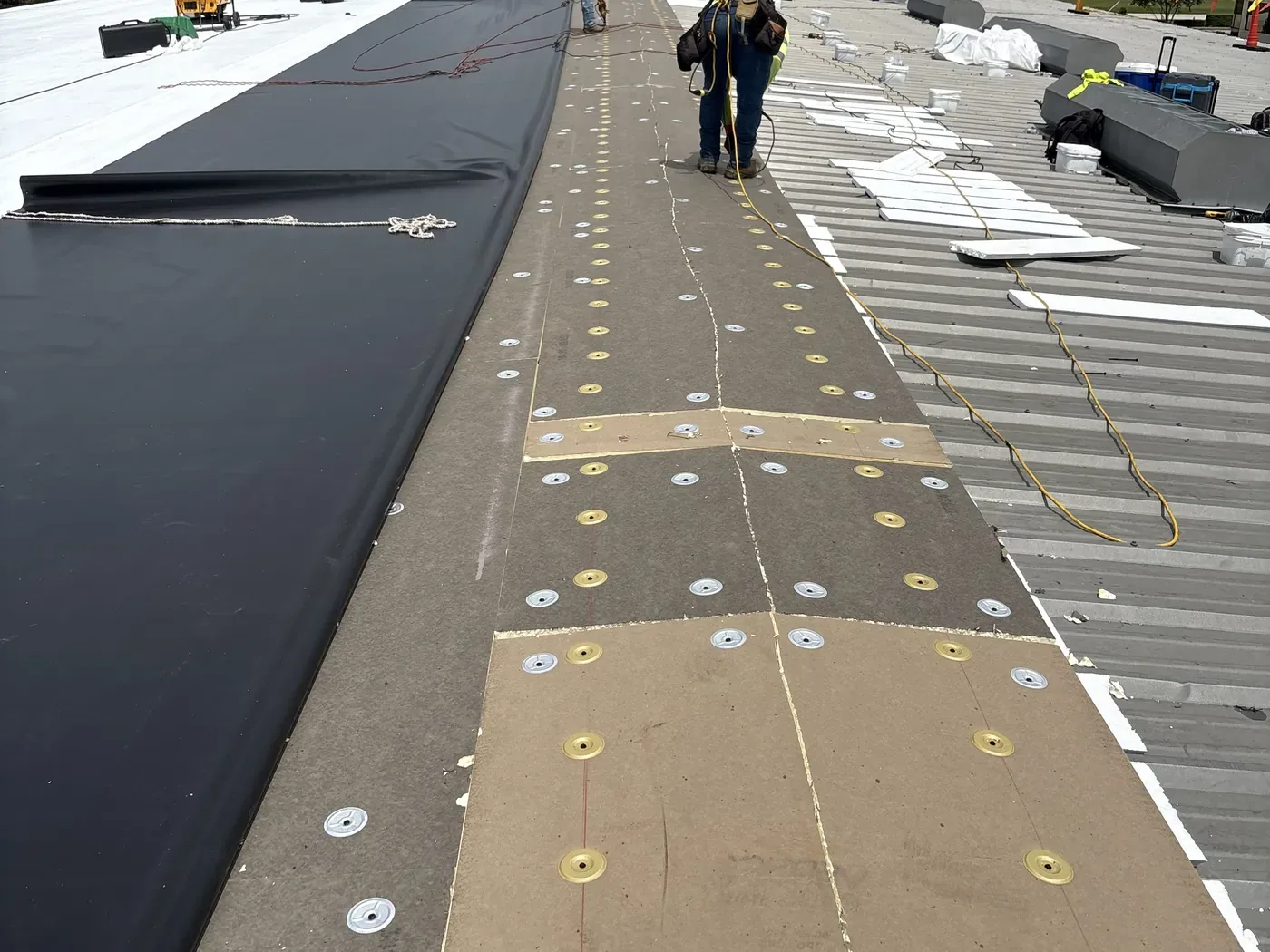
Foam bonds well to dry built-up roofs, modified bitumen, metal, concrete and wood. It does not bond well to some single-ply membranes, and it never works over wet insulation, because the foam seals the water in and the next warm week turns it to vapor. Snow sits on a roof through a freezing stretch, melts in a thaw and refreezes, and the insulation takes on moisture a little at a time. So the first line item should be an infrared moisture survey, followed by core cuts at every suspect area and a pull test to prove adhesion. If a bidder quotes foam from the ground, treat the number as a guess.
Wet insulation comes out before anything goes on. A contractor who leaves it out is only pushing the cost onto you later.
Price the foam, the coating and the prep as one number
Foam is sold by the thickness sprayed, so thickness drives the price, and it also drives the insulation value. Illinois adopted a new energy code effective January 1, 2024, based on the 2021 IECC, and that code governs insulation on roof replacements in Rockford. Foam can supply much of that insulation in one pass, which can save you from buying separate boards, so ask the city building department what your project triggers before comparing against a rolled membrane with tapered insulation and cover board. Then get the rest in writing: minimum thickness, coating type and number of coats, edge treatment, the price to remove wet insulation, and the recoat cycle.
A change order for wet insulation is fair if the cores prove it. A change order with no core data is not. Ask for the proof before you approve the money.
Choose foam where it earns its place
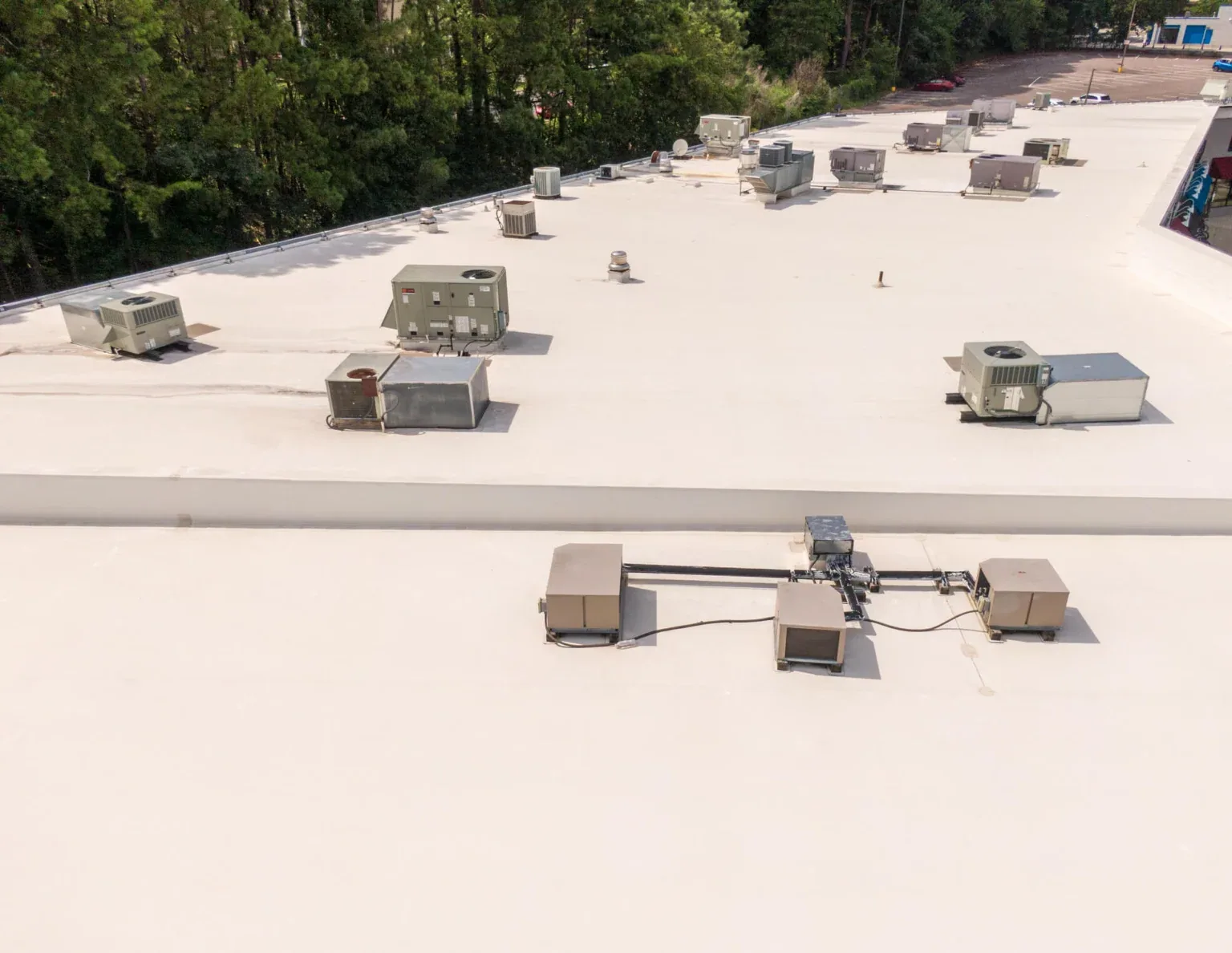
Foam is not the right answer for every low-slope roof, and a contractor who pitches it for every building is selling the product, not the fix. It pays off on buildings where the roof shape or the clutter on top makes other systems expensive, and on roofs where a dry, sound substrate is already in place. A plant like the roughly 600,000 square foot Comer Industries hub in Loves Park, with machining, assembly, painting and warehousing, is the kind of building where rooftop exhaust and process equipment can crowd a roof, and a continuous foam layer can wrap that equipment in place of dozens of boots.
- Dry built-up or modified bitumen roof with a failing surface: foam recover is worth pricing
- Metal roof with leaking fasteners and open seams: foam can seal and insulate it, after the fasteners are tightened
- Roof crowded with curbs, pipes and units: foam wraps them without fabricated flashings
- Roof with wet insulation: cut it out first, then decide
For a plain, flat, well-drained roof, a silicone coating or an acrylic coating on the existing membrane may do the job for less.
Ask about overspray, fire and the neighbors
Foam is sprayed, and wind carries it. Overspray lands on cars, glass, rooftop units and anything else downwind, and on an active site that means a crew with wind monitors, masking and a shutdown plan for air intakes. At Chicago Rockford International Airport, where UPS and Amazon Air run cargo ramps and AAR operates a 200,000 square foot maintenance facility, a stray cloud of foam is not a nuisance, it is a stop-work problem. Ask exactly how the contractor controls drift, who closes the building air intakes, and what the weather cutoff is. Foam is also combustible until it cures and is covered, so ask to see the listed fire assembly the building department will accept, and how hot work near the roof is controlled.
Vague answers tell you how the job will go. Ask for the same drift control, intake plan and weather cutoff that a job beside the ramps at Chicago Rockford International Airport would demand.

Spray in the weeks the weather allows
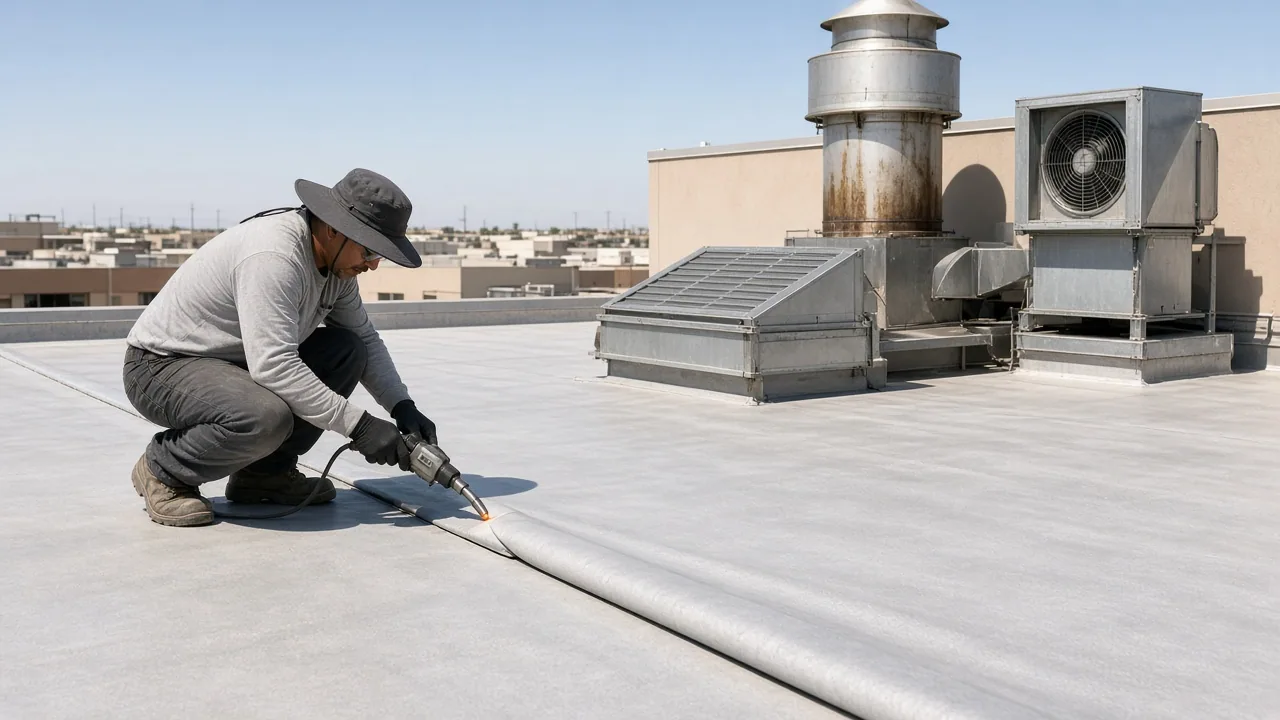
Foam needs a dry, warm surface, light wind and no dew, conditions most reliable from late spring through early fall. Schedule any deck repairs and moisture testing beforehand so spray and coating work can use the stable weather window. If a storm tears into the finished roof, hail damage repair on foam should be treated fast, because water that enters a puncture spreads under the coating. We answer emergency calls at any hour, so a late-night leak does not wait for a business morning.
A rushed spray job can fail in the first freeze.
Questions Owners Ask
How thick does the foam need to be?
Thick enough to meet the insulation target for the building and to outlast the coating wearing thin. Ask for a minimum thickness in writing, with depth readings taken at test points across the roof rather than an average the crew supplies. Thickness is what you are paying for, and a quote that never states it is hiding its biggest variable.
Can foam go over my existing roof?
Often, when the old roof is dry and well bonded. Built-up, modified bitumen, metal and concrete are the usual candidates, while some single-ply membranes will not accept foam. Wet insulation never does. A moisture survey and a few core cuts answer the question before anyone puts a price on paper.
Will hail hurt a foam roof?
Large hail can bruise or puncture foam, especially older foam under a worn coating. The November 2020 storm brought hail up to about 1.25 inches near Rockton, which is the size that tests a thin skin. Denser foam and a properly thick coating resist it better, and a walk after any big storm finds small punctures before water follows them in.
How often does a foam roof need recoating?
The coating is the sacrificial layer, so it is the part that wears out first. Plan on a yearly look and a recoat before the foam shows through, rather than waiting for a leak to tell you. The cycle differs between silicone and acrylic, so compare maintenance costs across ten years when you compare bids.
Is foam a fire risk while it is being installed?
Uncured foam burns, so hot work near it has to be controlled, and the finished assembly needs a fire rating the building department accepts. Ask to see the listed assembly before the order goes in, and ask who watches the roof while torches or welders are running nearby.