
Roofing for Insurance Adjusters and Restoration Contractors in Rockford, IL
Insurance adjusters and restoration contractors in Rockford, IL get dated roof evidence, moisture scans and honest repair-versus-replace scopes after storms.
Insurance Adjusters and Restoration Contractors
Insurance Adjusters and Restoration Contractors
Rockford, IL
Three weeks of freeze and thaw after a storm can leave an adjuster and a roofer looking at the same roof and describing two different roofs. The storm bent a flashing and bruised some insulation, the cold then opened a few seams that were already tired, and meltwater found both. Rockford, IL sees about 134 days a year at or below freezing, so winter wear and storm damage are always stacked on top of each other, and sorting them apart is the whole job. Who pays for what depends on that sorting, and building owners lose money when it is done carelessly in either direction.
The way to protect the owner, and your own file, is evidence taken early and written plainly. Photographs with dates, cores, a moisture map and a scope that separates covered work from maintenance are what hold up when the numbers get argued.
Separate the storm from the winter
Hail leaves a pattern. On November 10, 2020, severe weather brought 1 inch hail to Roscoe and Rockton and estimated 1.25 inch hail near Rockton, with a 73 mph gust at Winnebago. Stones that size can bruise a membrane, crack the cover board or fracture the insulation underneath without leaving an obvious hole, and the owner may not know until a thaw sends water through a ceiling months later. Wind pulls on edge metal, peels flashing and lifts membrane at the perimeter. Winter does damage of its own: freeze-thaw cycling works at seams, copings and fasteners until they open on a day nothing special happened. A roof inspected only after the snow melts will show both kinds of damage, and a careful report keeps them apart.
Look for fresh fractures in a clear impact pattern across the exposed surface, then look at whether the failures follow seams and penetrations, which points to age. Say which is which in writing.

Document the loss before the roof changes
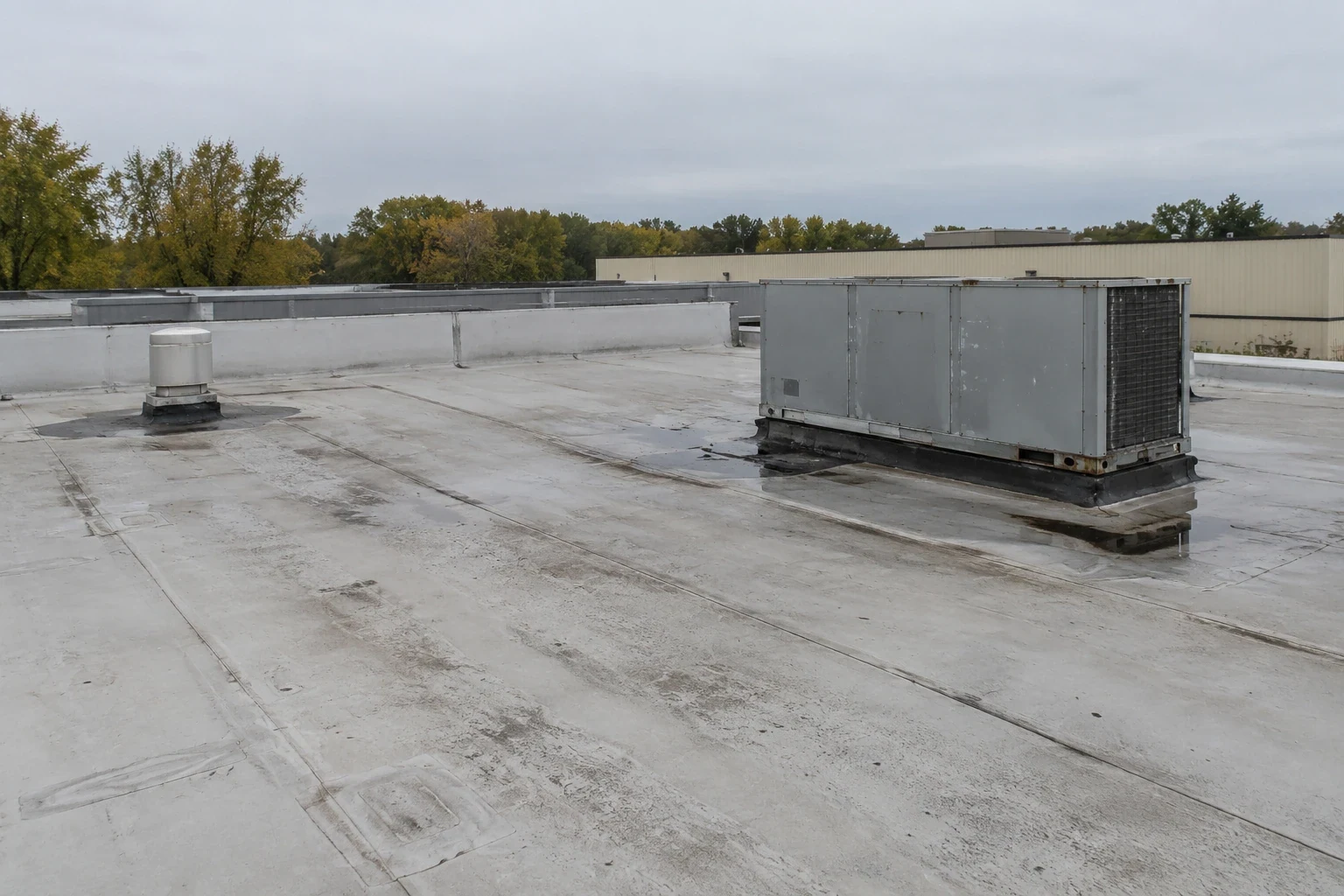
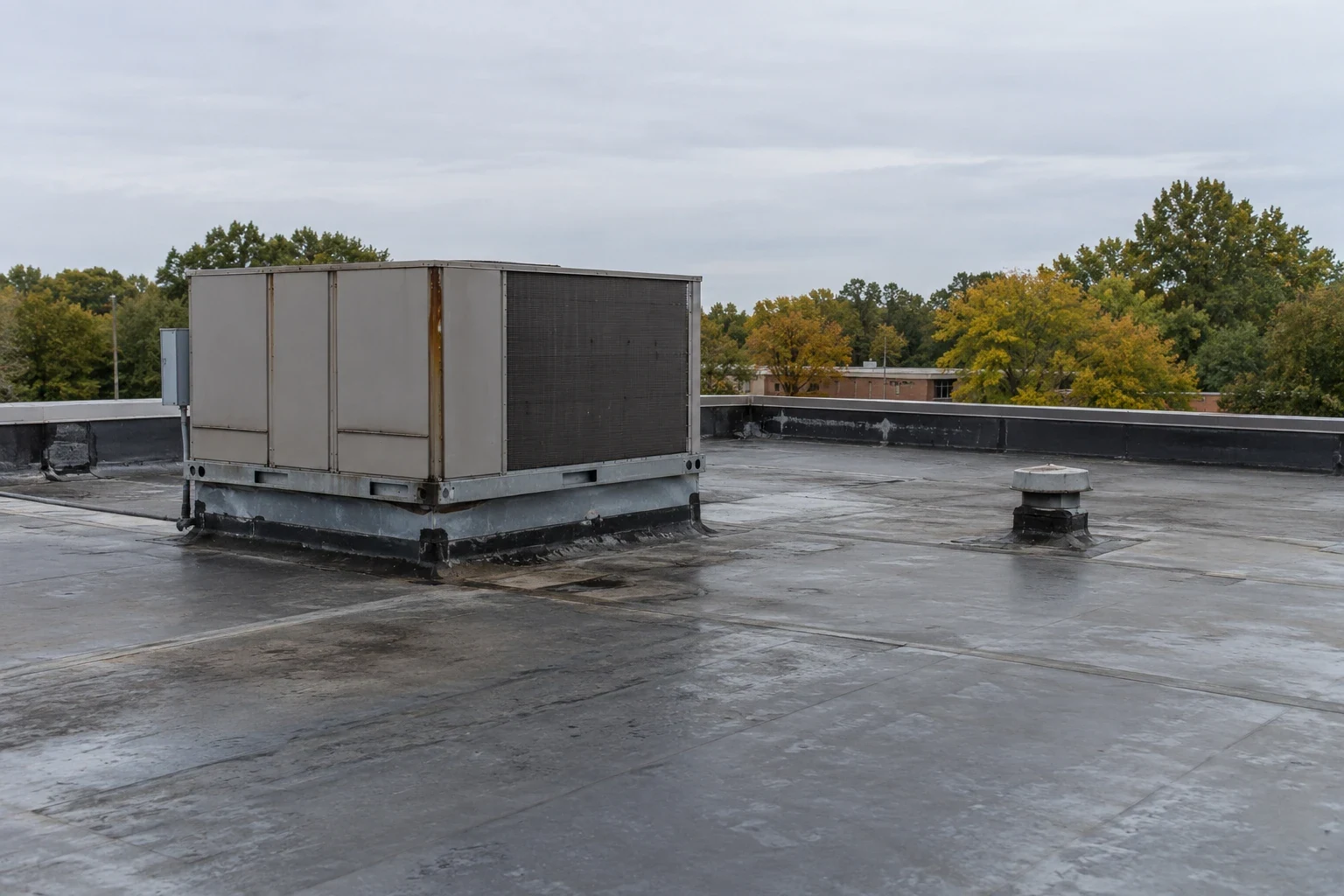
A roof changes fast in a Rockford winter, and the evidence changes with it. Meltwater spreads through insulation, ice moves flashing, and a temporary patch hides the very spot an adjuster wants to see. Take dated photographs of the whole roof before anyone patches it, mark where moisture shows up, and measure each damaged area. An infrared moisture survey maps wet insulation without cutting the roof open, and a drone roof inspection covers an acre of low-slope roof in a way a person on foot cannot, without adding foot traffic to a fragile membrane.
Everything goes into a roof condition report with photographs, core locations, moisture findings and a plain description of what failed. That report is yours to use with us or with anyone else, and it is written for a reader who was not on the roof.
Stop the water before the argument starts
Most policies expect the owner to limit further damage, so tarps, temporary patches and drying are part of the claim, not a threat to it. The March 2023 EF-1 tornado in Rockford caused damage near Sinnissippi Golf Course, and the same storm system carried straight-line winds of up to 70 mph. A storm like that can leave a roof open overnight, and the next rain does more harm than the wind did. Our emergency roof repair crews respond at any hour, holidays included, and they photograph the condition before touching it.
Keep every receipt and every dated photo, and write down who approved what. A temporary repair that is documented and reasonable protects the claim. One that nobody recorded invites questions about what was there before.

Price the repair beside the replacement
The honest scope is rarely the one a salesperson pitches after a storm. A roof with damage in two sections may need those sections repaired and the remainder left alone, or it may be wet through and past saving. Wet insulation does not dry out under a membrane, so any scope that skips it is a fix that fails in the spring. When a full replacement is the right call, Rockford follows the 2021 International Building Code cycle and the 2024 Illinois Energy Conservation Code, so new insulation requirements can change the thickness and the price. How much of that your policy covers is a question for the policy wording, and we will not tell you a number we cannot prove.
Beware a restoration contractor who pushes a full roof when two sections would do, and equally beware a quote built to the lowest scope that leaves the owner paying again next year. Our roof insurance claim assistance work stays on the evidence, and our hail damage roof repair scopes list what is repaired, what is replaced and why.
Scope the big buildings section by section
Large roofs rarely fail all at once. The Belvidere Assembly Plant covers about 5.3 million square feet, Comer Industries runs a roughly 600,000 square foot plant in Loves Park in Loves Park, and the AAR maintenance facility at Chicago Rockford International Airport is 200,000 square feet. On roofs like those, damage tends to be concentrated where wind entered at a corner, where hail struck an exposed slope or where a drain backed up. Scope each area on its own evidence, so a sound section is not replaced to keep the numbers simple and a damaged one is not patched to keep them low.
Restoration contractors and a general contractor on the project will need the same record. So will a property management company managing the building for an owner far away. One report that all of them can read saves everyone days.
Ask these questions before anyone signs off on a scope
Use this list with every roofer on a claim, ours included.
- Which damage was caused by the storm, and which by age, and what in the roof shows the difference?
- Where are the cores, and what did each one find in the insulation?
- What is the repair price beside the replacement price for the same section?
- Which temporary work was done, and where are the photographs from before it?
- What does the scope assume about code-driven insulation changes, and who confirms that with the owner?
Adjusters and owners alike are better off with plain answers than with a polished estimate that leaves out the hard parts.
Questions Owners Ask
How can an adjuster tell hail damage from age on a membrane roof?
Look for fresh fractures or bruises in a random impact pattern across the exposed surface. Age failures follow seams, edges and penetrations. Cores through the damaged spots and a moisture map confirm what is under the membrane, and both belong in the file.
Does a temporary tarp or patch hurt the claim?
No, a documented temporary repair protects it, since most policies expect the owner to limit further damage. Photograph before, during and after, keep every receipt, and label the work as temporary so no one confuses it with the permanent scope.
Who covers wet insulation next to the damaged area?
Only a scan and cores can settle where the wet area ends, and the policy wording settles what is covered. Bring both to the table before anyone argues about numbers. A boundary drawn on the roof with dated photos keeps the conversation short.
Can a partial repair satisfy a claim on a large flat roof?
Often, when the damage sits in identifiable sections and the rest of the roof is sound. The scope has to explain why the untouched area is fine, with cores and moisture readings behind the statement rather than an opinion.
How long after a storm should the roof be inspected?
Do not wait for spring melt. Snow and ice cover bruises and open seams, and each thaw spreads the water further into the insulation. A prompt inspection also helps with any notice deadline in the policy, which you should read the day the storm hits.