Edge Metal, Coping, Gutters and Downspouts in Rockford, IL
Commercial edge metal, coping, gutter and downspout repair and replacement in Rockford, IL, built for wind, ice and repeated freeze-thaw movement.
Edge Metal, Coping, Gutters and Downspouts
Edge Metal, Coping, Gutters and Downspouts
Rockford, IL
Ice builds first at the edge of a Rockford, IL roof, where meltwater from a sunny field runs onto cold metal and stops. Freezing weather arrives here on about 134 days a year, and the perimeter is where that cycle does its worst work: coping joints that spread and close, gutters that fill and freeze, fascia that takes a wet beating from every thaw. The edge is also where wind gets its first grip. Straight-line winds up to 70 mph came through Rockford with the March 31, 2023 storm system, and a roof that held in the field can lose its perimeter metal and then lose the membrane behind it. Edge metal is a small part of the roof bill and a large part of why roofs fail, because water that gets behind it runs into the wall and the deck.
If your roof edge is loose, stained or sagging, fix it before it fixes the schedule for you.
Read the edge for the damage winter leaves
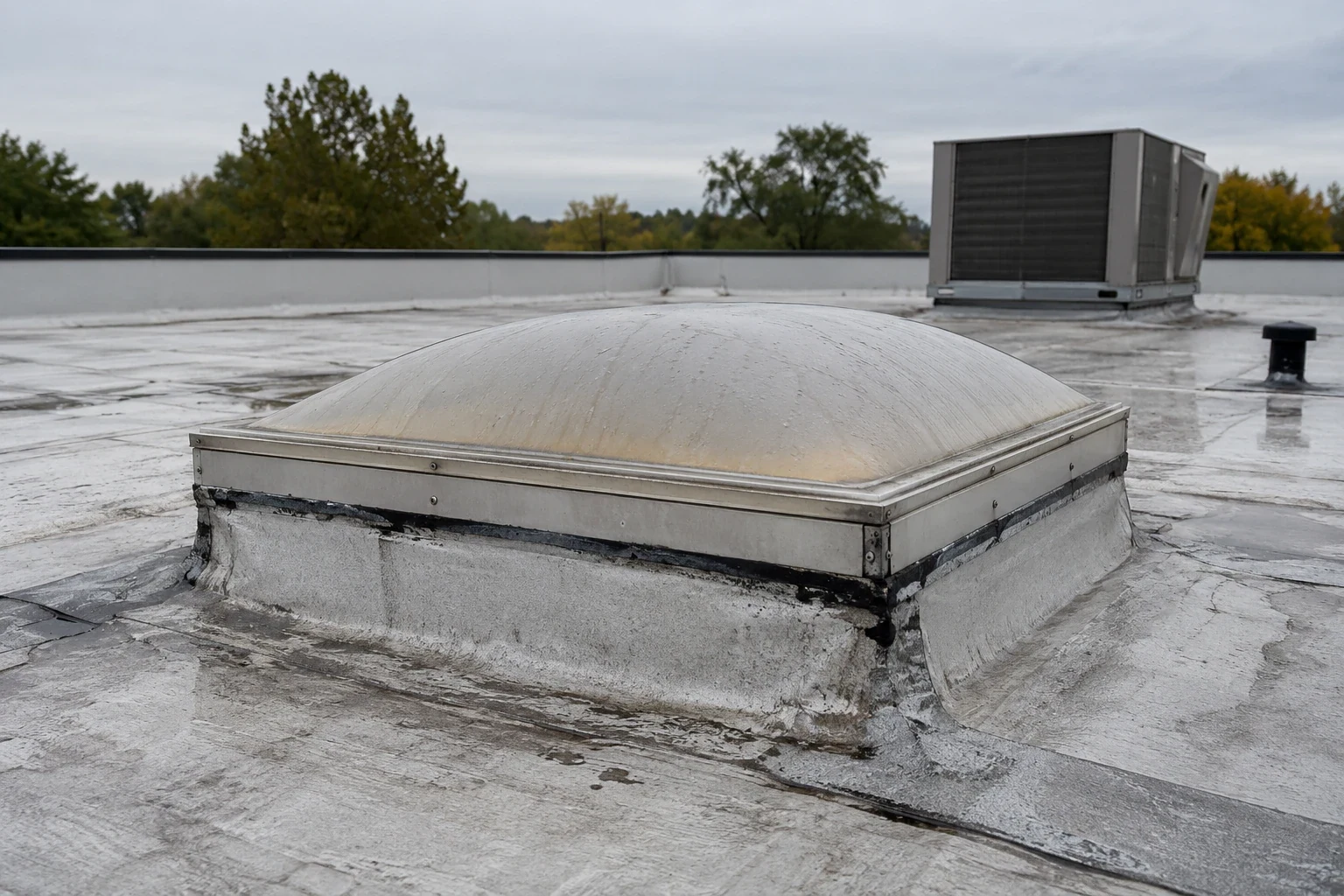
Metal moves. It expands in summer heat, contracts in a January cold snap and rubs against its fasteners every time. Over a few years that movement opens the joints between coping sections, pulls the sealant away, loosens the clips and lets water reach the wall below. On a masonry parapet the damage is quiet and expensive: water soaks the brick or stone, freezes, expands and breaks off the face, so a failed coping costs you masonry repair on top of the roof repair. A two-story brick building like the 1902 Chicago Northwestern Freight Station in downtown Rockford, slated by the city for apartments and storefronts, is the kind of structure where a sound cap on any masonry parapet protects more than the roof. We check every joint, every end dam, every cleat and the wood nailer under the metal. Masonry buildings in downtown Rockford are where a failed cap costs the most.
Rotted nailers hide under metal that looks fine. Ask whether your repair price includes replacing them.
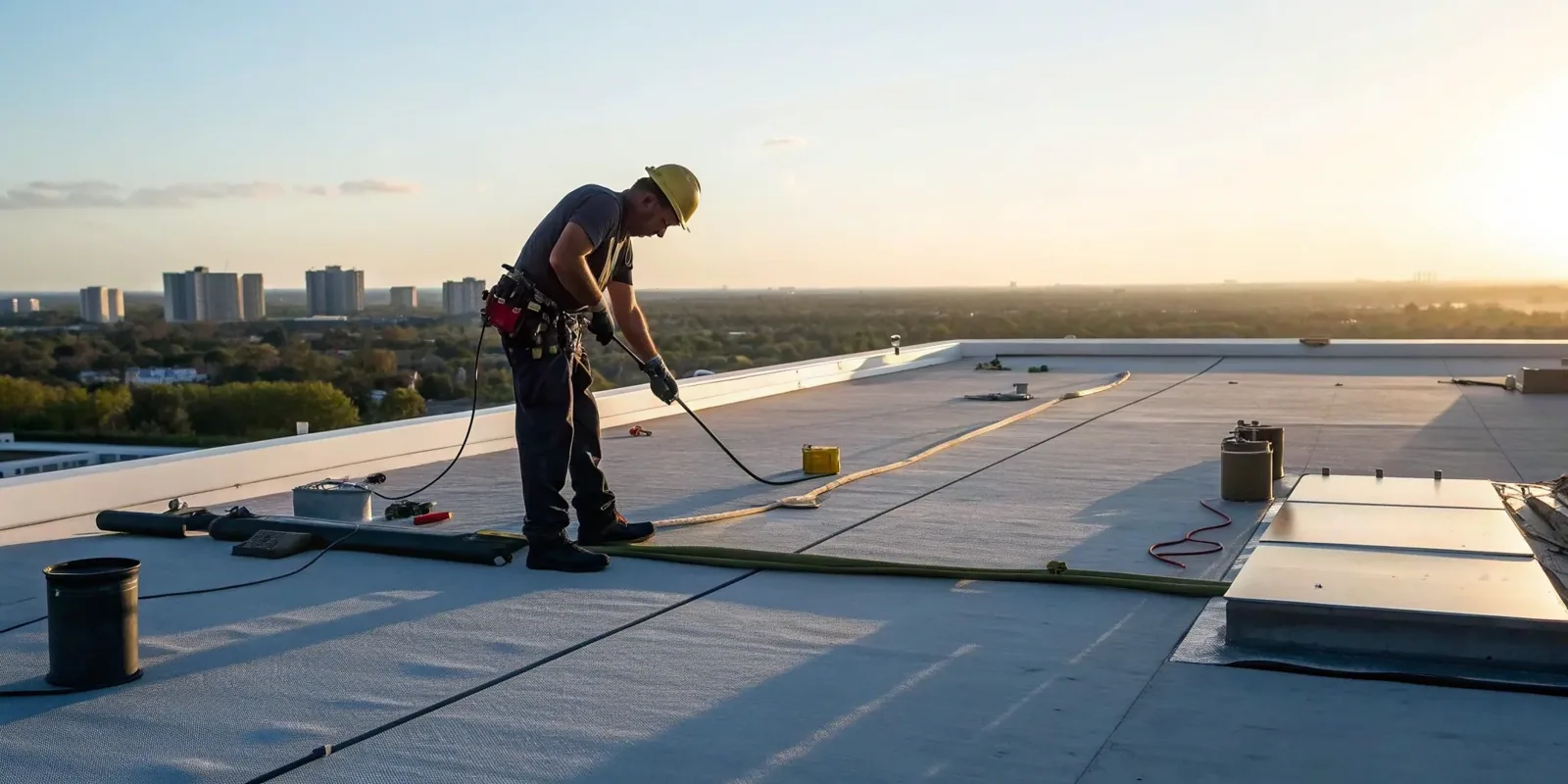
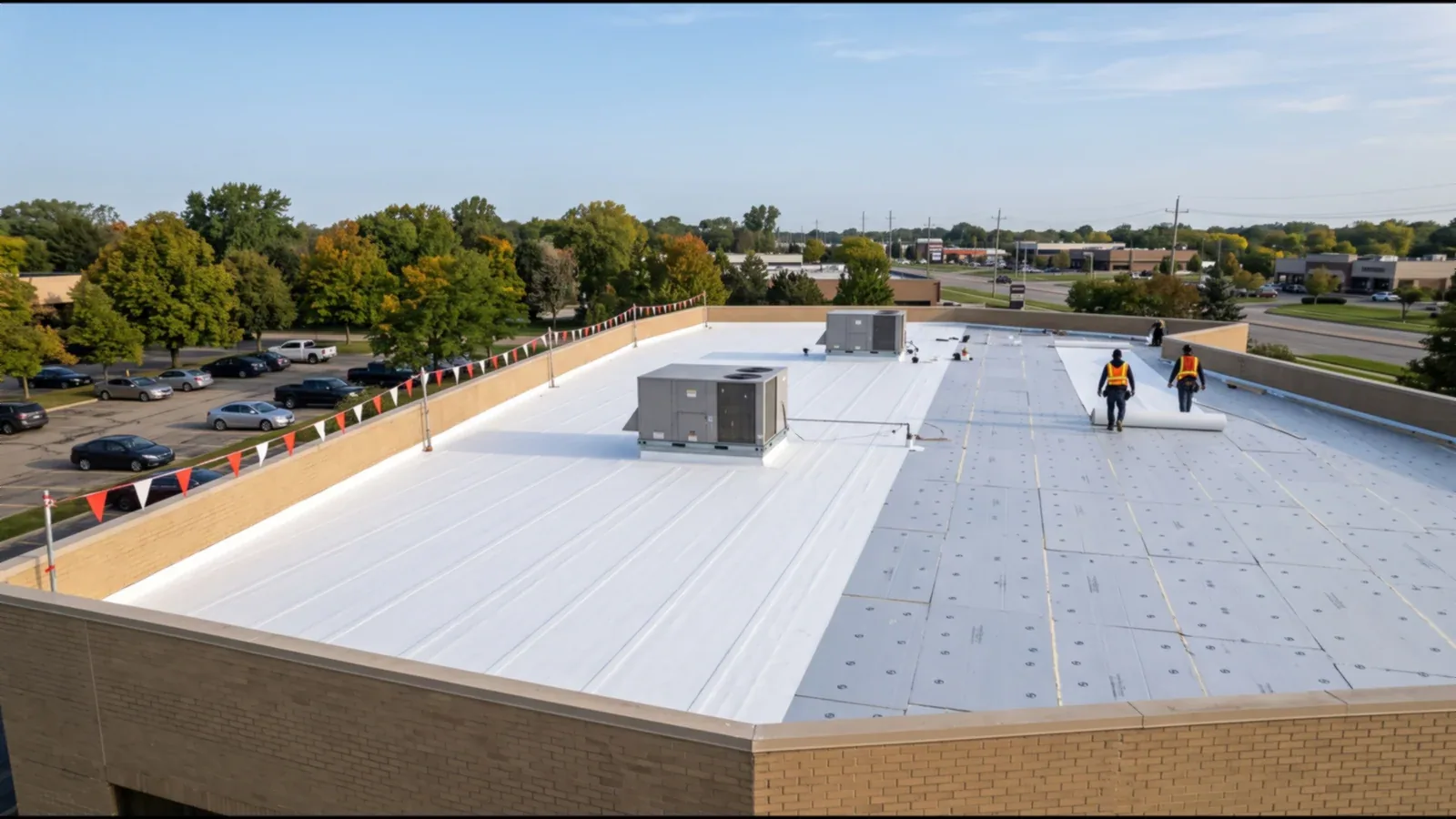
Match the system to the wall it protects
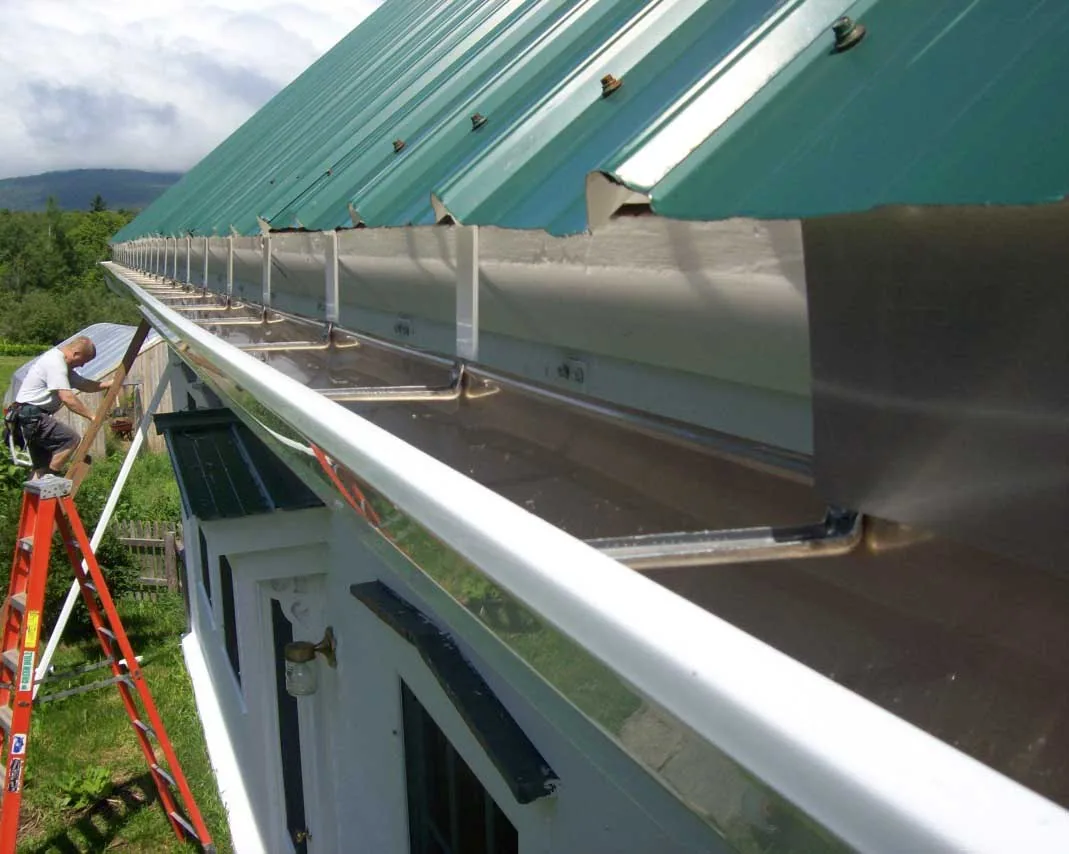
Edge metal comes in several forms, and the right one depends on the wall and the membrane. Pre-finished metal coping with a continuous cleat and concealed fasteners keeps water out of the top of a parapet and resists pull-off. Face-fastened coping is cheaper but puts holes where water wants to go. Drip edges and fascia cover the roof perimeter where there is no wall. On single-ply roofs, coated metal that can be heat-welded to the membrane, such as that used with PVC roofing, creates a bonded edge that moves with the sheet. Gutters hang from the fascia, while built-in gutters sit inside the roof line and need to be flashed properly or they leak into the building. Metal and fasteners must be compatible, because dissimilar metals corrode each other.
Do not accept a bid that says edge metal and nothing more. Ask what the metal is, how thick it is and how it is fastened.
Keep the wind from getting under it
Wind loads are highest at corners and perimeters, so that is where roofs start to peel. The building code points to an edge-metal test standard for exactly that reason. Metal that is thin, fastened at wide spacing or held by a cleat that was never fastened properly can fold up and take the membrane with it. A November 10, 2020 gust reached 73 mph at Winnebago, and a lifted coping that flaps in a wind like that cracks sealants, loosens its neighbors and can tear the sheet beneath it. When we replace or reinforce edge metal, we check the cleat, the fastener spacing and what the fasteners bite into, then tie the membrane back in with the right flashing. A perimeter that peels in a storm is a wind damage roof repair, and the flashing that let go first is usually a flashing failure repair in its own right.
If you see edge metal lifted or flapping, treat it as urgent. The membrane behind it is next.
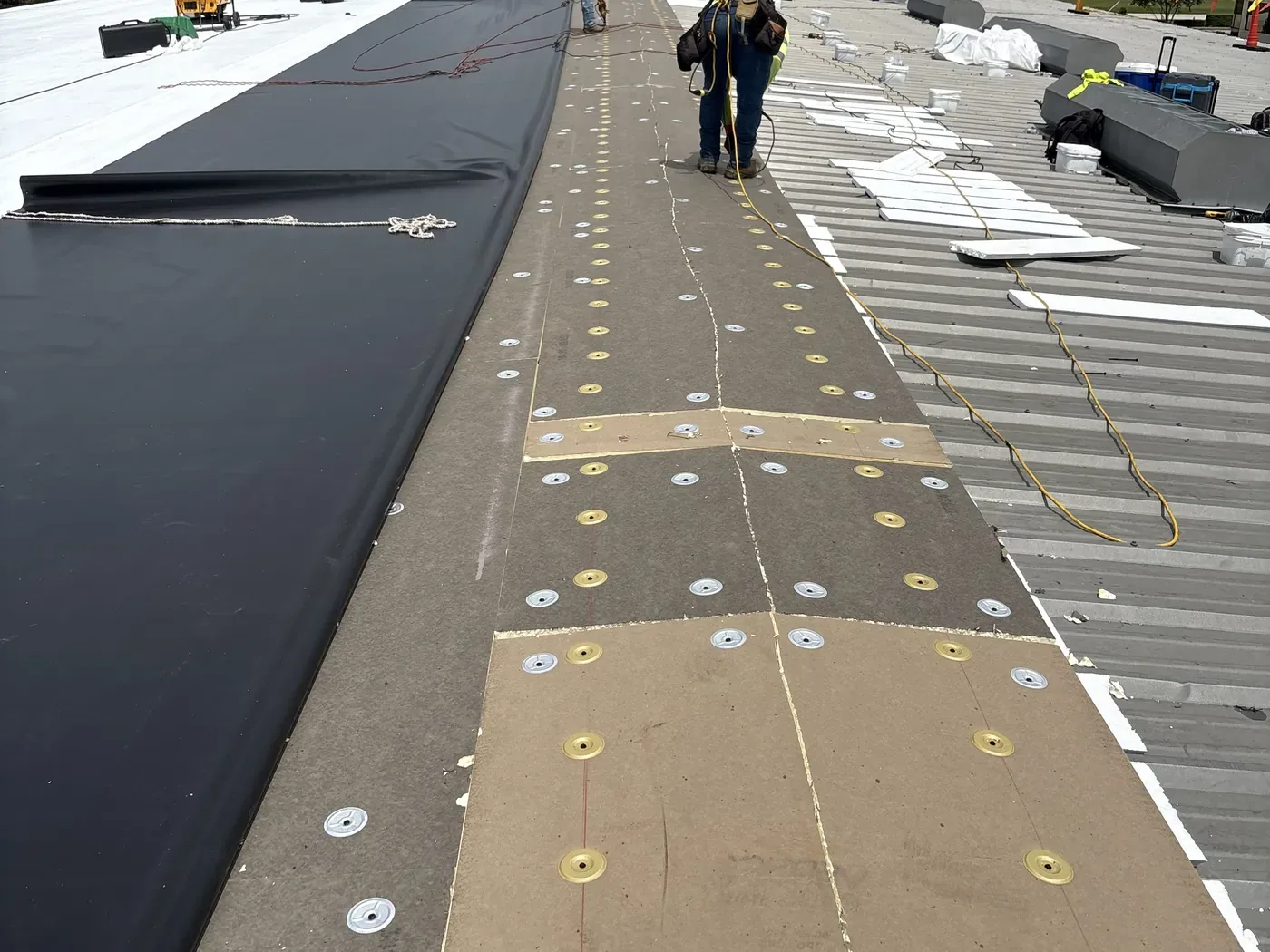
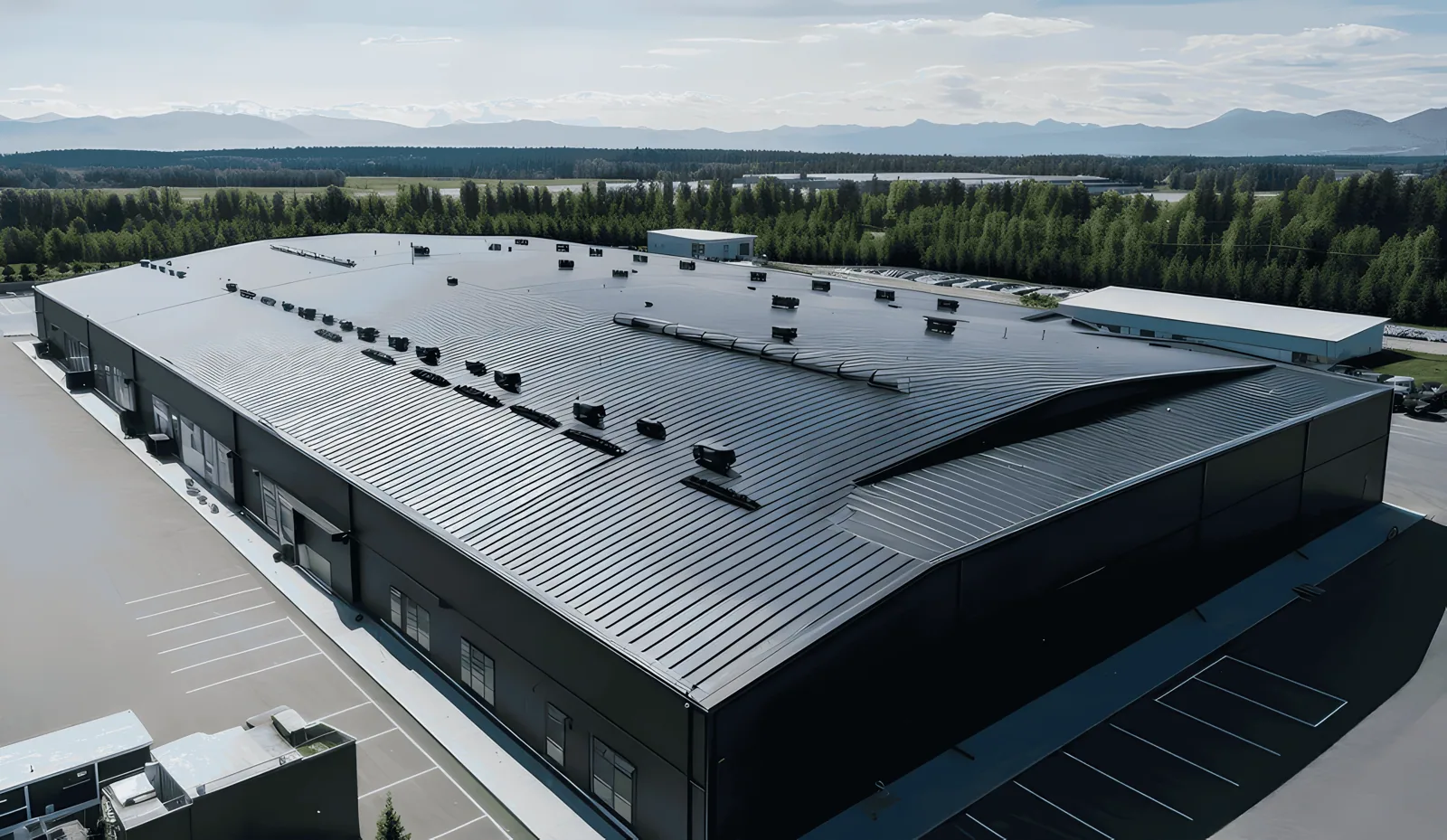
Size gutters and downspouts for a Rockford winter
A gutter that works in a June downpour can fail in January. With about 36 inches of snow a year, gutters collect meltwater that refreezes in the trough and hangs a block of ice from the fascia. Downspouts that run full during a thaw and then freeze split at the seams and push water into the wall. The cures are pitch, size, clean-out access and a discharge point that does not send ice across a walkway or a loading area. Scuppers handle many of the same jobs without a trough, and the roof drains and scuppers layout decides which suits the building. Heat cable can help in a trouble spot, but it is a patch for a drainage design that is wrong, not a substitute for fixing it.
Where downspouts empty onto pavement, make sure that water has somewhere to go, or you will have an ice sheet by the first cold night.
Price edge work by the foot and by the surprise
Edge metal is priced by the linear foot, but the real cost is in what is under it. Ask for the footage, the gauge, the finish and the fastener spacing. Ask how the work will be reached, since a tall wall may need a lift or a swing stage that costs more than the metal. Ask who pays when the nailer turns out to be rotted, because it often is. Long perimeters add up quickly on large retail roofs, and CherryVale Mall, an 850,253 square foot enclosed mall on the East State Street and CherryVale corridor, shows the scale: a building that size has a long run of edge to protect. Custom brake-formed shapes and special colors lengthen lead times, so order early when a roof project is coming.
Compare the unit price per foot for each item. If one bid hides the nailer work in a lump sum, you will pay for the surprise.
Do the edge with the roof, not after it
The best time to replace edge metal is during a reroof, when the membrane is open and the nailers are exposed. That is why a replacement should always include the perimeter. If the field is still good, edge metal can be done alone in dry weather by lifting the membrane, correcting the nailer, setting the new metal and flashing the edge back in. Cold weather limits sealants and welds, so permanent work goes best between spring thaw and the first hard freeze.
Put the perimeter in the same proposal as the field work, and ask for it as its own line so you can see what it costs.
Questions Owners Ask
Why is my coping leaking when the roof field is fine?
Water gets in at the joints between coping sections and behind the metal, then runs down the wall. We check the joints, end dams and nailer before blaming the membrane.
Should I replace a gutter or reseal it?
Reseal when the metal is sound and only the seams are weeping. Replace when it is rusted through, pulled from the fascia or sagging between brackets.
Does edge metal affect my wind rating or warranty?
Usually, yes. Most manufacturers want edge metal tested to the standard the code references and fastened as specified. Tell us who holds the warranty so we use compliant parts.
Can you install new edge metal without replacing the roof?
Often, yes. We lift the membrane at the edge, replace the nailer if needed, set the new metal and tie the membrane back in. It is a common repair on roofs with sound fields.
Why does ice pile up at my scuppers every winter?
Meltwater from the warm part of the roof runs to the cold edge and refreezes in the opening. A larger opening or a sloped throat helps more than heat cable.
Does the finish on the metal matter?
It matters for how long the color holds under summer sun and repeated freeze-thaw. Ask for the finish warranty from the maker and the metal gauge in writing.