Flashing Failure Repair in Rockford, IL
Commercial flashing failure repair in Rockford, IL: parapet, curb and penetration flashings rebuilt properly instead of caulked, before winter finds the gap.
Flashing Failure Repair
Flashing Failure Repair
Rockford, IL
Roof and wall do not move together, and flashing is the thin strip of metal or membrane that has to forgive the difference. Rockford, IL gives it plenty to forgive. A winter here brings about 12 days below 0 F and roughly 134 at or below freezing, and a summer adds about 15 days above 90 F, so the membrane, the parapet and the equipment curb are all growing and shrinking at different rates, all year. Flashing sits right at the joint where those movements meet. When it cracks, pulls loose or shrinks back, water does not announce itself. It runs behind the wall, under the membrane or down a pipe, and the first sign is a stain at a ceiling nowhere near the real problem.
Flashing is cheap to repair and costly to ignore. Fix it while it is still a detail.
Spot the flashings that are quietly giving up
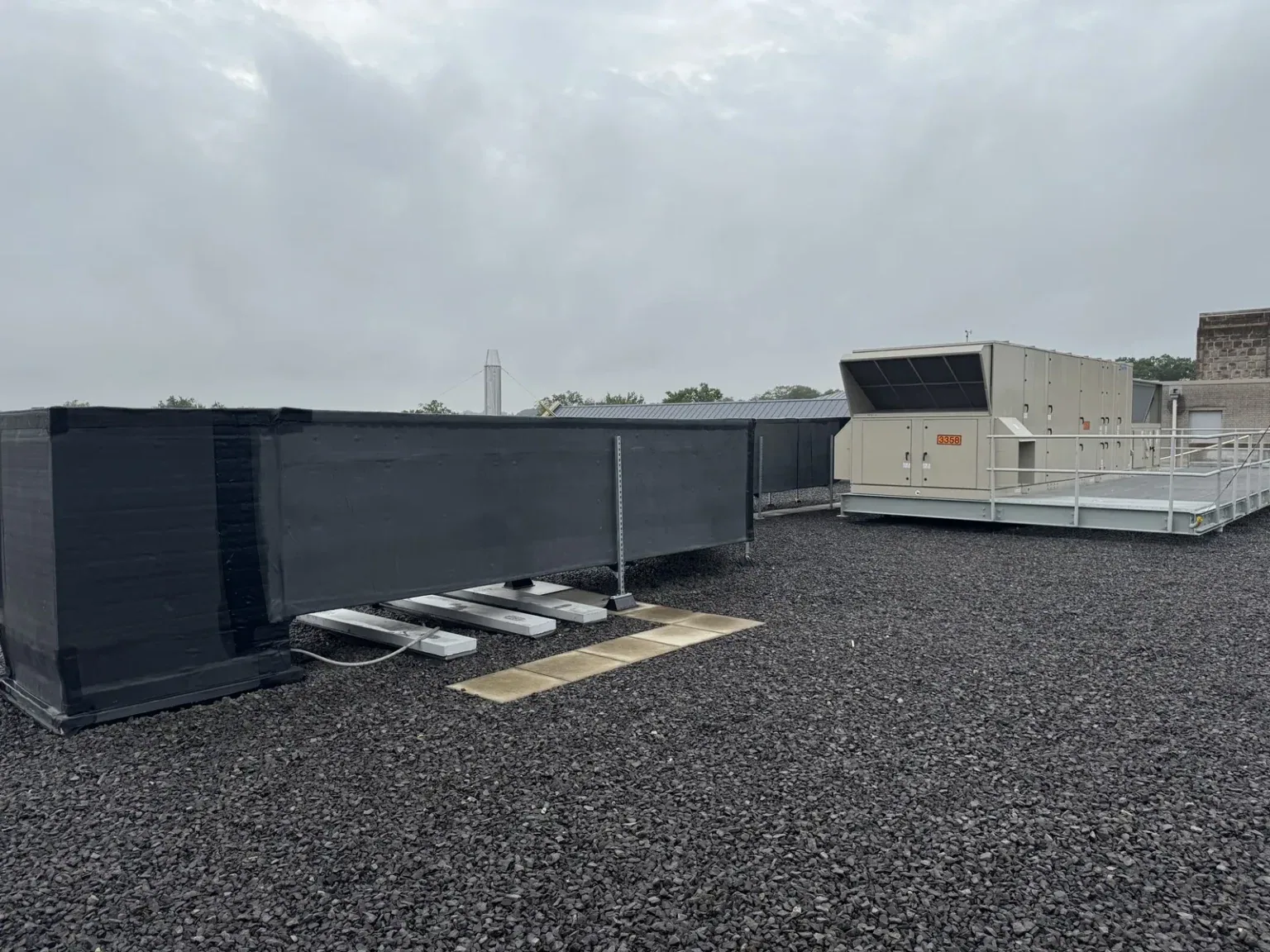
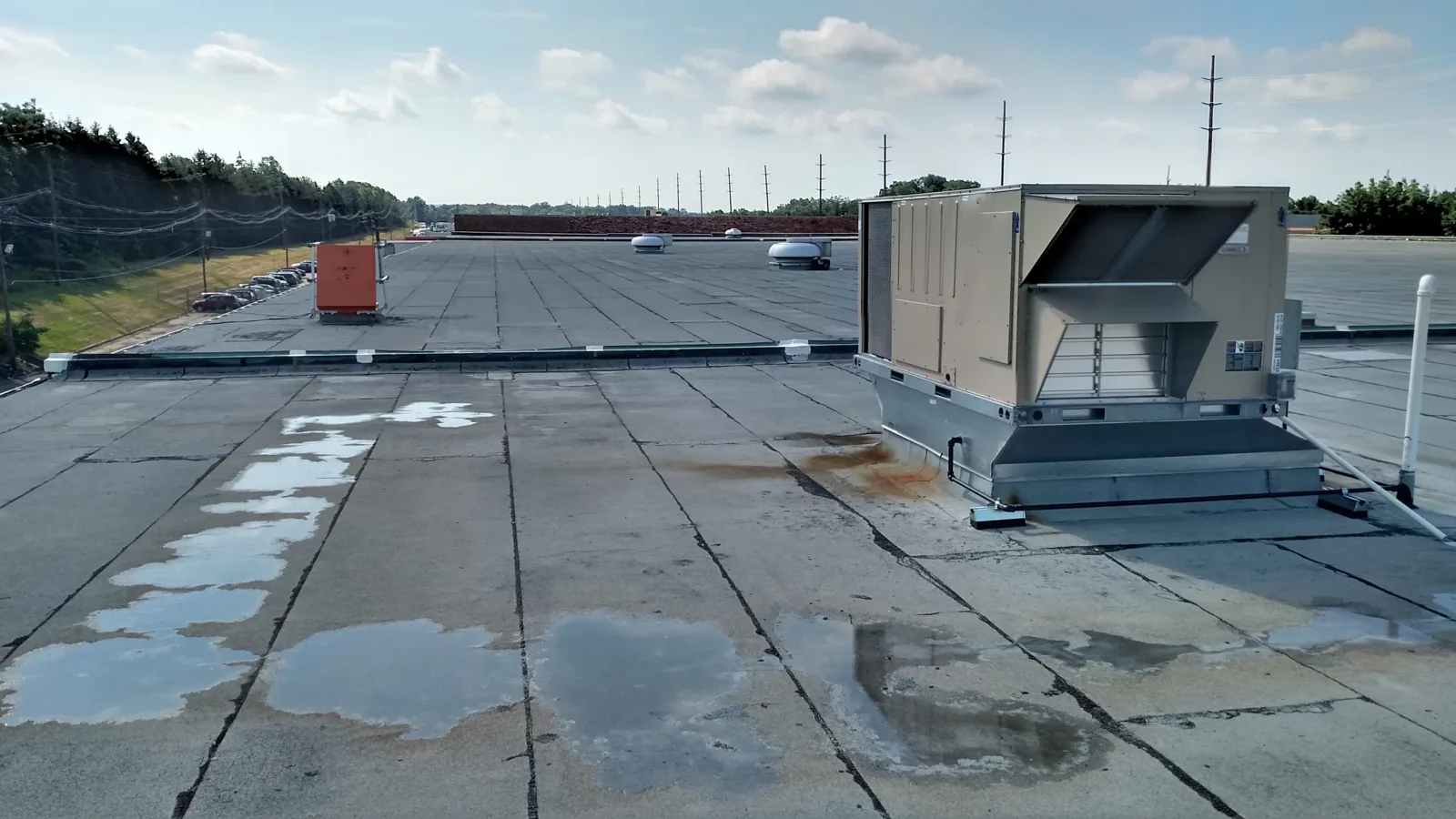
Most failed flashing is found by walking the perimeter slowly, not by waiting for a leak. The membrane flashing at a parapet wall pulls away from the wall as it ages and the adhesive lets go, leaving a gap you can slip a finger behind. Termination bars and reglets lose their sealant and backed-out fasteners show as little raised heads along a line. Metal counterflashing rusts through at the bottom edge or lifts at a joint. Pitch pans dry out and crack, pipe boots split along the collar and sealant on a curb turns brittle and chalky. Each of these takes a different repair, and none of them is cured with a bead of caulk across the top. A big enclosed retail roof such as CherryVale Mall, which opened in 1973, carries a long run of curbs, penetrations and wall joints, and the junction where one flashing detail meets the next is where failure usually starts.
See how freeze-thaw works a joint loose
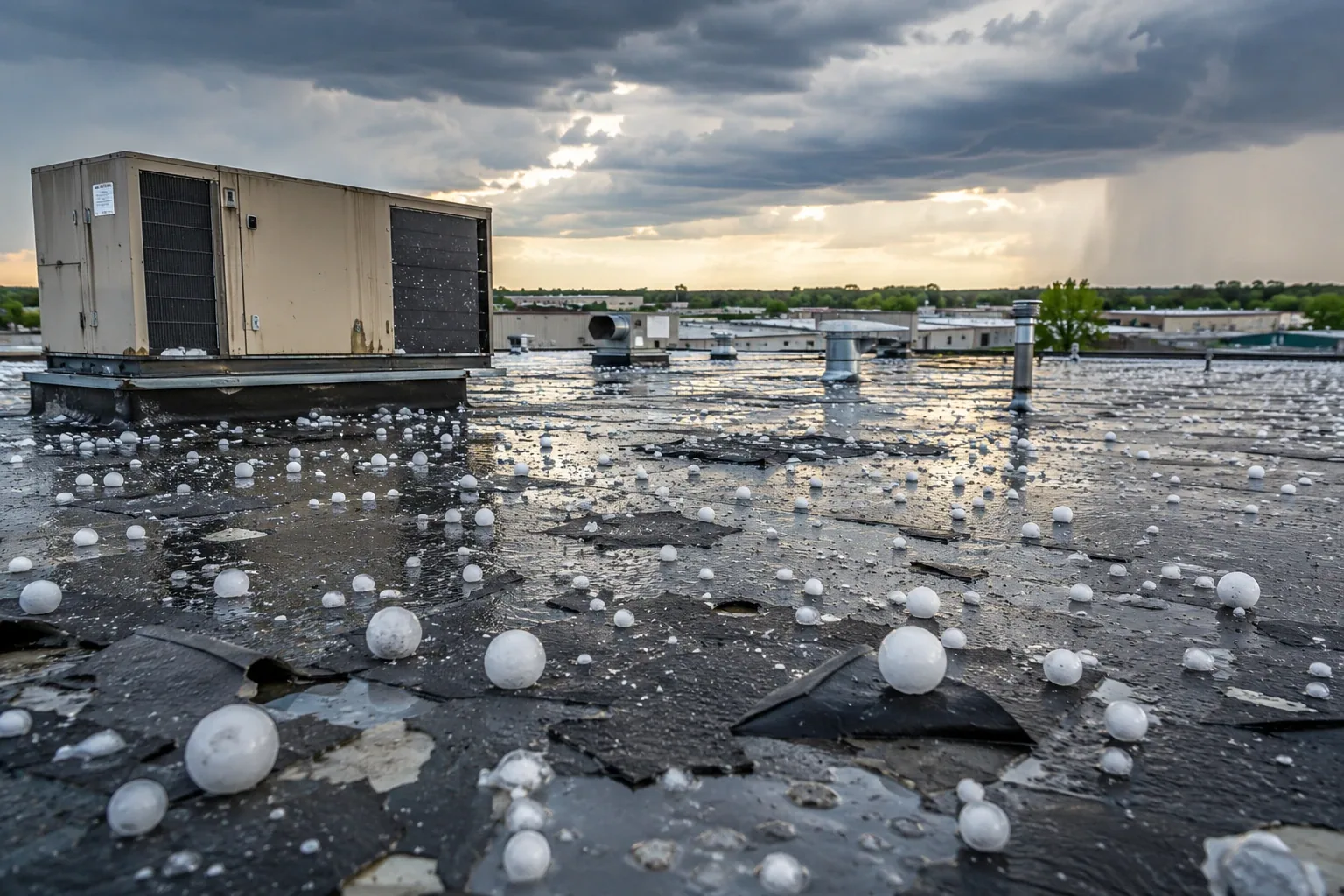
Water gets into a small opening and freezes, and ice takes more room than water did. Each cycle widens the gap a little and each thaw pulls in a little more water, so a hairline crack in November is an open joint by March. Sunlight and heat do their own damage in between, drying sealants and shrinking membrane flashing back from the wall it was bonded to. A tall parapet makes the problem sharper, because it takes the brunt of wind-driven snow, ice and thermal movement on every face. That matters on tall buildings such as the 19-story Ziock Building in downtown Rockford, and across downtown Rockford wherever a roof ends at a wall. The flashing there has to be right, because a wall behind it can hold water and show the damage later.
Do not treat winter staining as a roof leak until the flashing has been looked at.
Rebuild the detail instead of caulking the crack
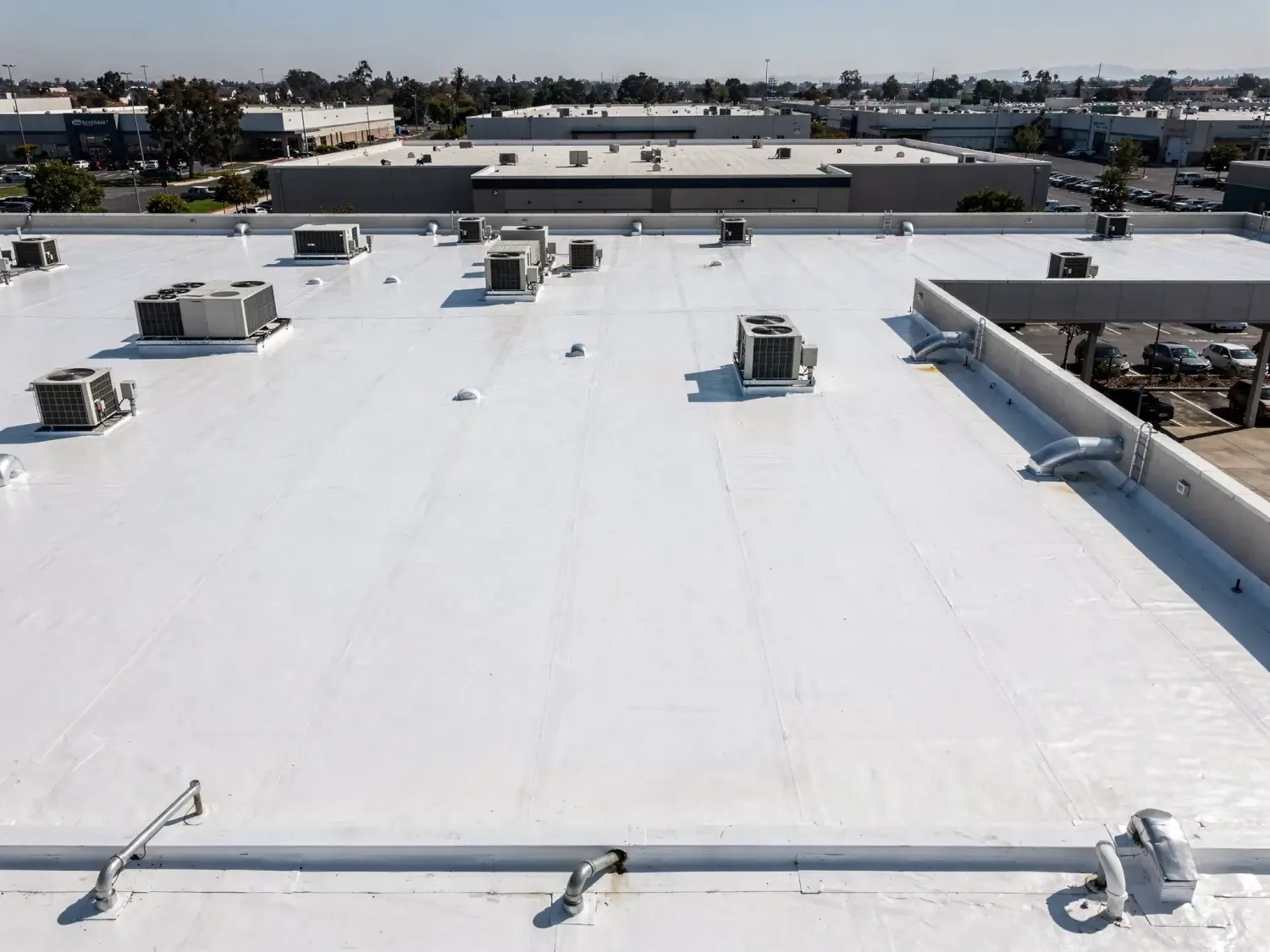
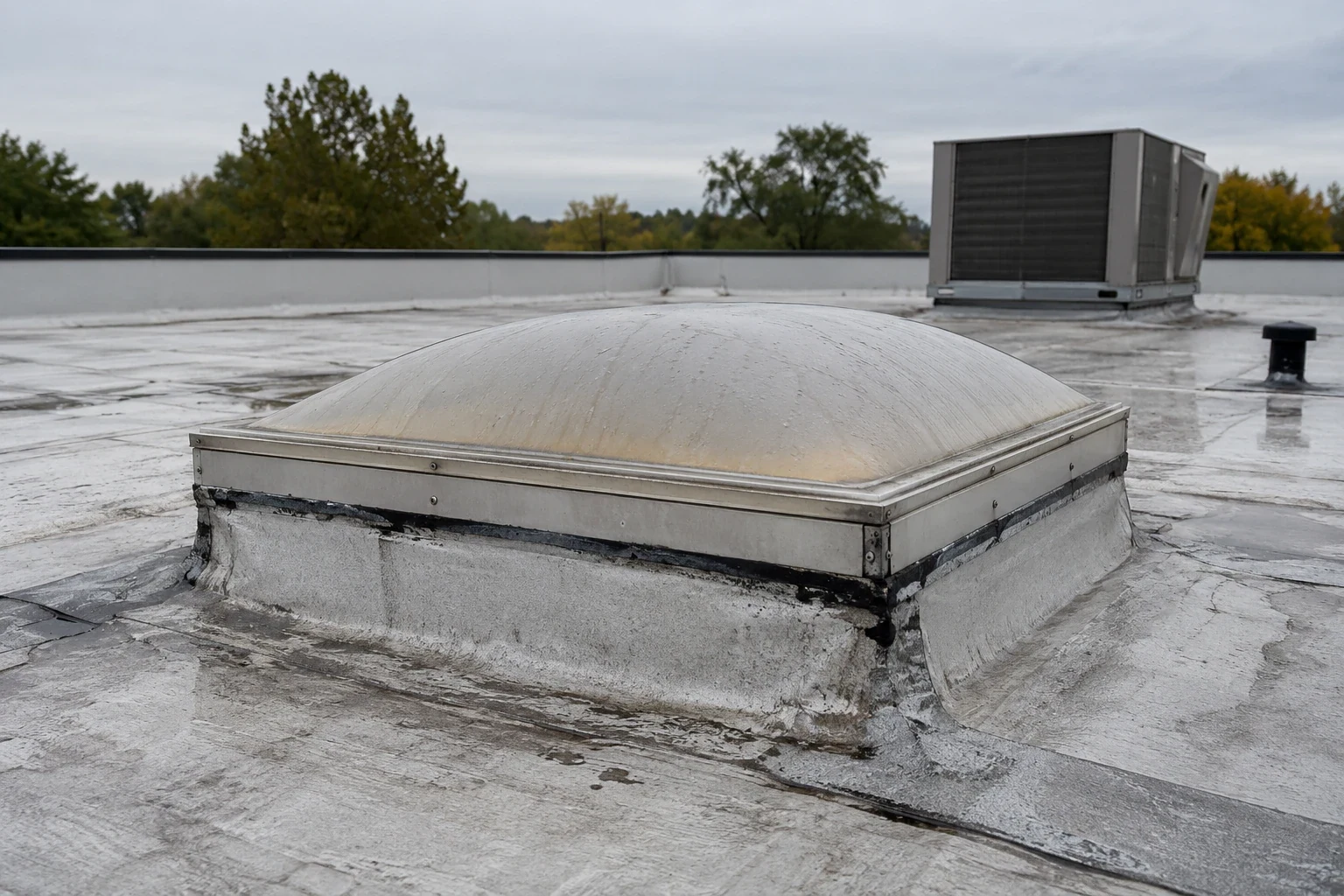
Sealant is a maintenance item, not a repair. A proper fix replaces the failed flashing: stripping the old material, preparing the wall and base, installing new membrane flashing with the right adhesive and a mechanical termination at the top, then covering it with counterflashing or a sealed coping that sheds water away from the joint. Penetrations need their own treatment. Pipes get new boots or built-up flashing, and skylight curbs and rooftop equipment curbs get their corners rebuilt where the old sheet was cut and folded rather than fitted. Flashing around skylights and penetrations and on rooftop equipment curbs follows that sequence, because the corners are the first thing to fail and the last thing anyone looks at.
Stop paying for a patch that fails every winter
If you have been calling someone back every February for the same leak, the problem is probably a flashing detail that keeps getting patched instead of redone. Each visit costs money and none of them fixes the cause. Before you sign off on another round, ask for a flashing survey that identifies every failed detail on the roof, with photographs, so that the repair can be priced as one scope instead of a string of small calls. That also gives you a fair price to compare, and a basis for a second opinion if the number seems wrong. Where water has already entered, a leak repair may need to include wet insulation under the flashing, because new flashing over a soaked base only moves the leak.
Ask any contractor for the repair and the cause in the same quote. That is how you avoid a change order after the work starts.
Check the wall and the coping before the new flashing goes on
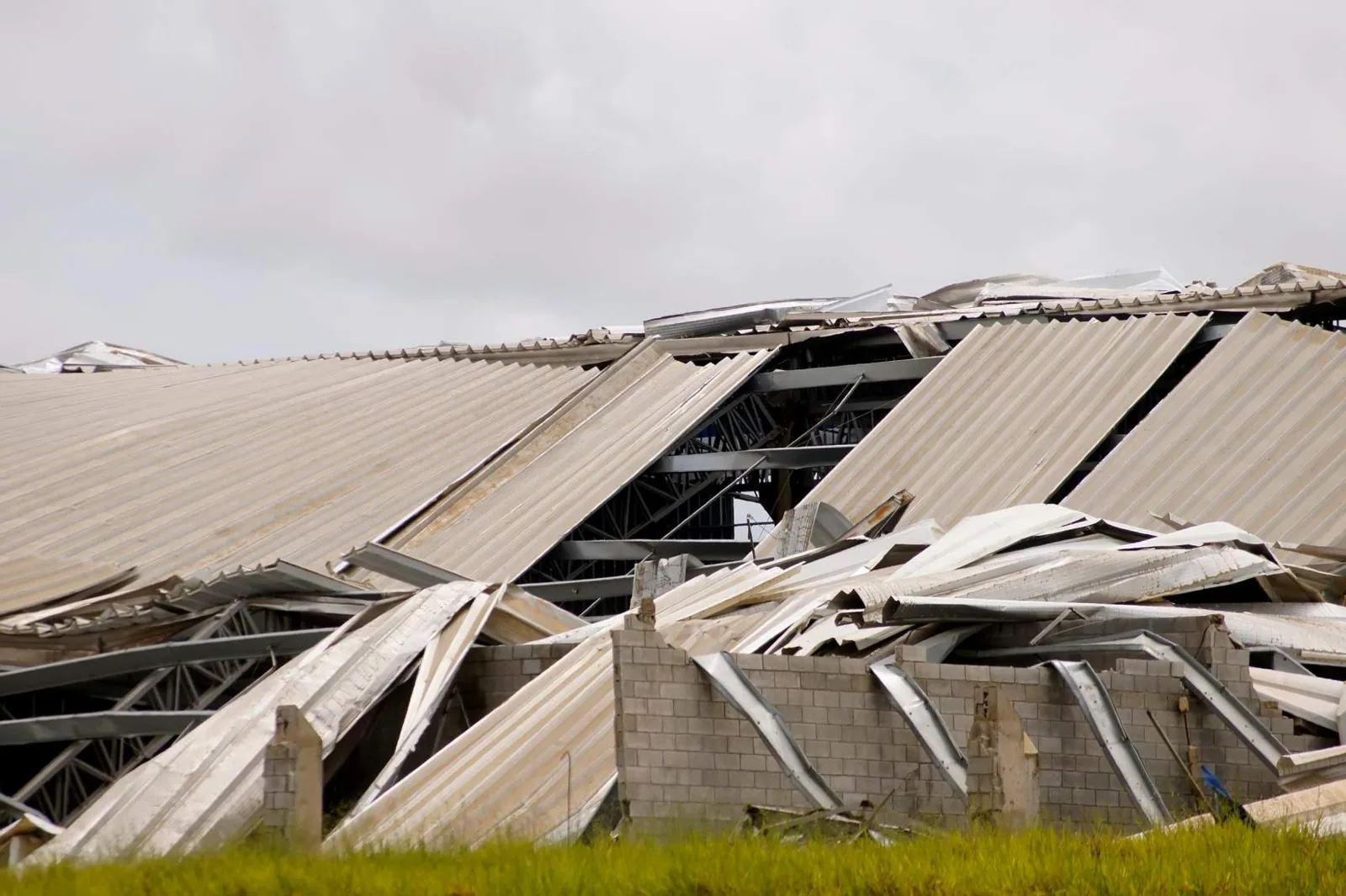
New flashing is only as good as the surface it is fastened to. If the parapet masonry is crumbling, the mortar joints are open or the coping stones have shifted, the new sheet will not stay bonded and water will go on entering behind it. Metal coping needs the right slope and sealed joints, and the same attention goes to the coping and edge metal above it. When a wall repair is needed, it comes first, and masonry work may need to be done by another trade. We flag it before the roofing work starts so you are not surprised halfway through. After wind has torn the flashing loose, the problem looks different, and the tie-downs and edge work on a wind-damaged roof come first. A failure at a membrane joint rather than a wall joint is a seam failure, and it takes a different repair.
Time the reflashing for a mild stretch
Adhesives, primers and sealants need temperatures above freezing and dry surfaces to bond. In Rockford that makes late spring through early fall the working season for a full reflashing project, with a few workable days in the shoulder months. If a failed flashing is leaking in January, we stop the water with a temporary seal and then schedule the full repair for weather that lets it cure. Do not wait a full year, though. The temporary seal is meant to bridge one winter, not four. On an occupied building the work can be sequenced a wall at a time so tenants stay dry and operations keep running.
Wall and curb flashing should be inspected from both sides of the transition. On the roof, look for open laps, split sealant, loose counterflashing and water marks behind the termination. Inside, inspect the top of the wall and the ceiling line for a moisture path. Rockford's freeze-thaw season can widen a small opening, so owners near the North Main Corridor and Downtown Rockford should include parapet corners and rooftop equipment curbs in a post-winter walk. A repair needs a sound substrate and a termination that can move without pulling loose.
Questions Owners Ask
Why does the leak show up far from the flashing that failed?
Water runs along the membrane, the deck or inside a wall before it drips. A parapet leak can reach a ceiling two bays away, which is why the survey follows the water back to its entry.
Is caulking a cracked flashing ever a fair repair?
As a short-term seal during a cold snap, yes. As a permanent fix, no. Sealant ages and cracks again, so budget for new flashing.
What does flashing repair cost compared with replacing the roof?
Flashing is a small part of a roof, so reflashing costs a fraction of replacement. We price the repair next to replacement so the difference for your building is on paper.
How can I tell a flashing problem from a membrane problem?
Leaks that follow rain from one direction, show up near walls or curbs or appear after thaws usually start at a flashing. Flat-field leaks point at the sheet itself.
Do rooftop units make flashing fail faster?
They add corners, penetrations and vibration, and every one of those is a place the sheet was cut and folded. Curbs are among the first details to crack, so we check them early.