Solar-Ready Roofing in Rockford, IL
Solar-ready commercial roofing in Rockford, IL: prepare a roof for arrays, handle snow and wind loads, and avoid paying twice to lift panels for roof work.
Solar-Ready Roofing
Solar-Ready Roofing
Rockford, IL
A Rockford winter drops about 36 inches of snow, and it does not stop at the roof you can see. It lands on whatever you bolt to that roof as well. A solar array catches drifting snow along its low edge, holds meltwater against its mounts, and slides sheets of ice off its panels onto the membrane below. The roof under those panels still has to survive about 134 freezing days a year, and nobody can walk it or repair it easily once the array is in. That is why the roof decision comes before the panel decision, and why owners who get it backward end up paying a roofer and a solar crew to undo each other's work.
If solar is on your list, get the roof ready first, and get it priced as part of the same plan.
Test the roof's remaining life against the array
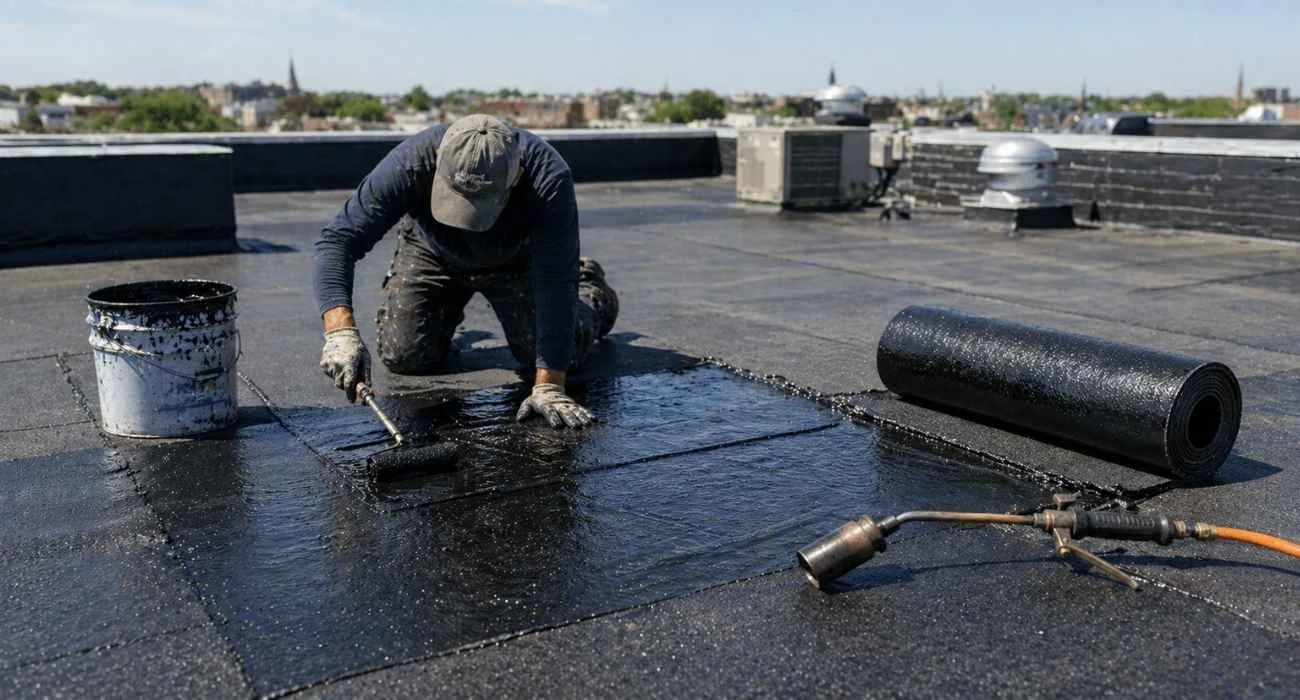
A solar array is expected to produce for a long time, and the roof under it has to last as long or be replaced before the panels go on. Putting a new array on a roof with a few years left is the most expensive mistake in this work, because the array has to come off for the replacement and go back on afterward. Start with a hands-on inspection and a moisture scan, and ask a plain question: will this roof outlast the first stretch of panel life?
If the answer is no, replace the membrane first. If the roof is dry and sound but aging, a recover and overlay may carry it if the insulation tests dry. Either way, the roof and the array should be priced against each other, so the combined cost is visible and not just the price of the panels.
Count the snow, wind and hail the array adds
Panels change how a roof behaves in weather. Snow drifts against the low edge of an array and in the aisles between rows, adding load to spots the roof was not designed to hold in a drift. Wind gets under tilted panels and creates uplift that the mounting system has to resist. Hail matters on the panels as well as the membrane, and the area has real recent history: 1.25 inch hail was estimated near Rockton during the November 10, 2020 storm, and a 73 mph gust hit Winnebago the same day. An EF-1 tornado confirmed in Rockford on March 31, 2023 came with a storm system carrying straight-line winds up to 70 mph.
None of that is a reason to skip solar. It is a reason to ask the structural engineer to confirm the roof can carry the array plus a drift, and to ask the solar contractor how the mounts resist uplift. A roof tends to lose first at the edges and at any mount that is not tied down properly, which is where wind damage repair usually starts.
Choose how the array attaches to the roof
There are three common ways to hold an array, and each one asks something different of the roofing.
- Ballasted racks sit on the membrane under weight and need a protection layer, a roof that can carry the load, and enough slope or drainage that water does not collect under the rows.
- Attached racks fasten through the membrane to the structure, and every fastener is a penetration that has to be flashed properly and checked each year.
- Adhered or integrated systems bond to the membrane or replace part of it, and they work best on a new roof installed with the array in mind.
Ask which one your solar contractor plans to use, then ask your roofer what each choice does to the membrane. The right answer will differ from roof to roof. On a standing seam metal roof, clamps that grip the seam avoid penetrations altogether, which is why they suit so many standing seam metal roofs.
Avoid paying twice to lift the panels
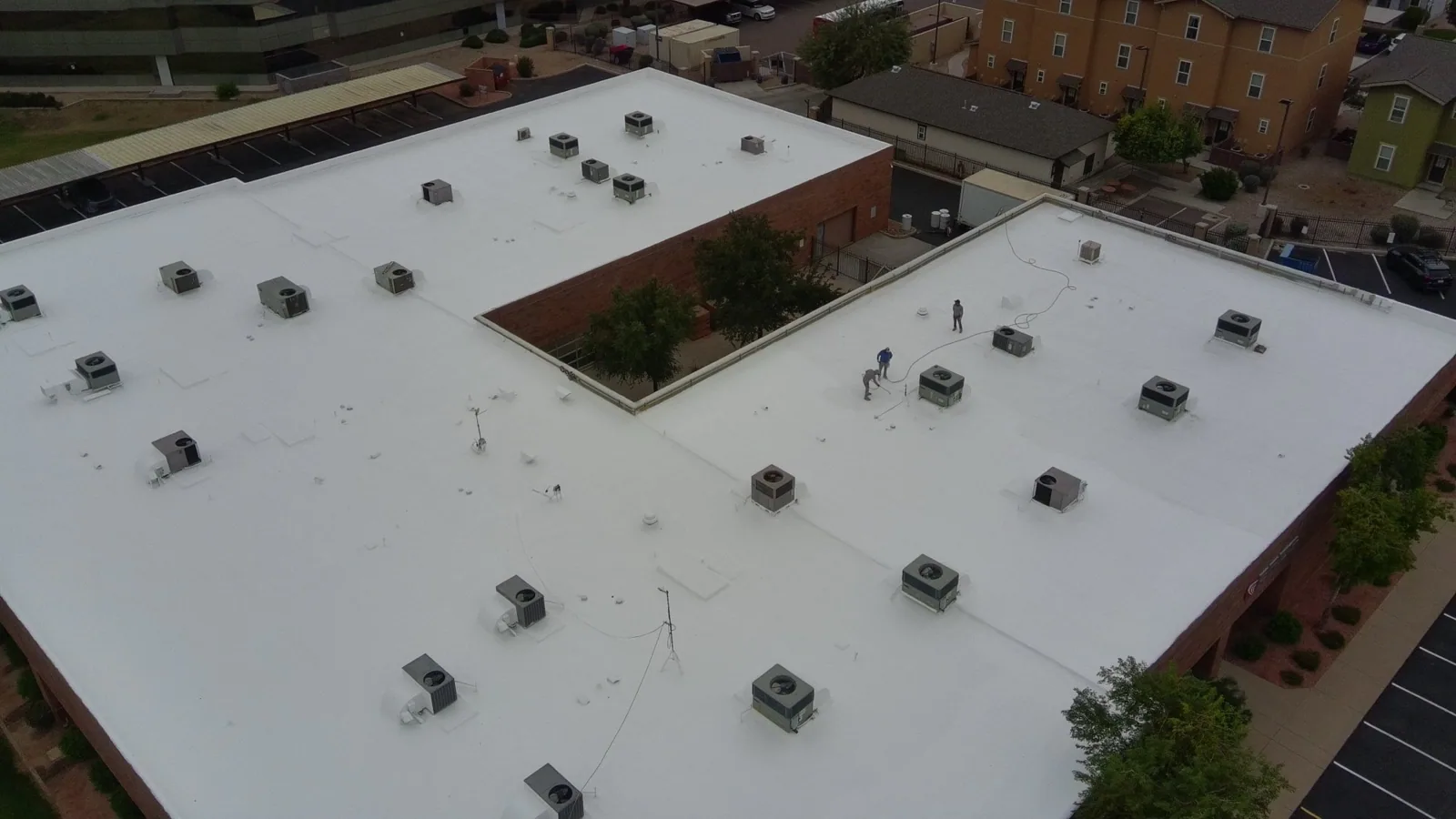
The expensive line in a solar and roofing project is the remove-and-reset. If the roof needs repair under an installed array, someone has to disconnect the panels, move them, fix the membrane, and put it all back, and the solar contractor will bill for every hour of it. A solar-ready roof avoids that bill by finishing the roof work first, adding walkway pads where crews will travel, setting aside clear paths around curbs and drains, and documenting where the conduit will run.
Ask how the solar contractor will coordinate with the roof warranty. A roof that is cut and fastened without the manufacturer's approval can lose its coverage, and the person who loses is you. A roof warranty management plan keeps those conversations in writing so a leak under the array does not turn into a dispute between the roofer, the installer and the manufacturer.
Ask these questions before any panel is ordered
Before you sign a solar contract, get answers to the following in writing.
- Has an engineer confirmed the roof structure can carry the array and the drift?
- Who is responsible for leaks at the mounts, and for how long?
- What setbacks and access pathways does the 2021 International Fire Code require around the array?
- How will future roof repairs under or beside the array be handled and billed?
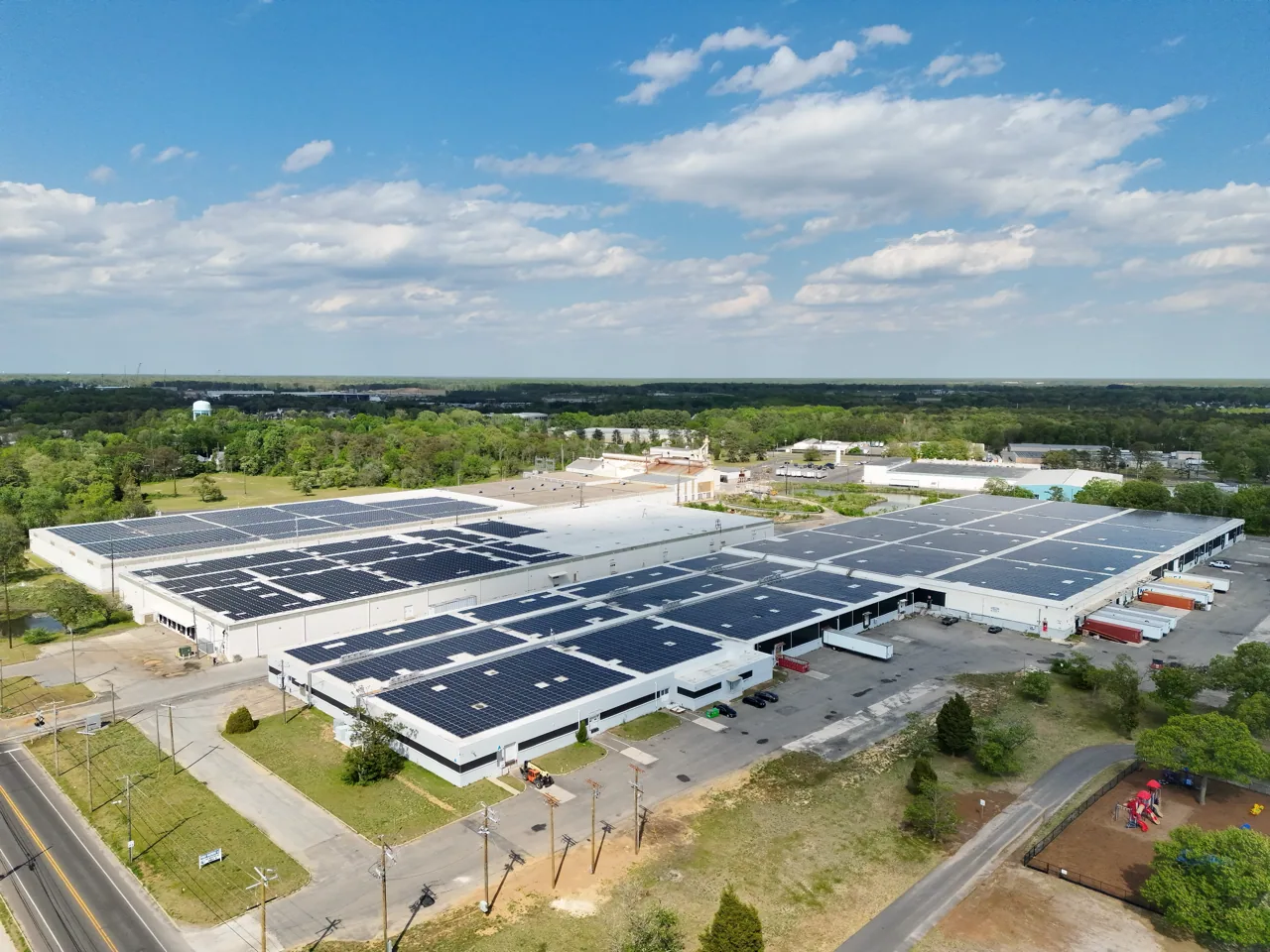
Large, open roofs make the best candidates, and the scale of buildings like the roughly 600,000 square foot Comer Industries plant in Loves Park, or the Belvidere Assembly Plant at about 5.3 million square feet, shows why a roof that size is a long-term asset. The roofing plan should be part of any roof capital plan that includes solar.
Put the roof work ahead of the panels
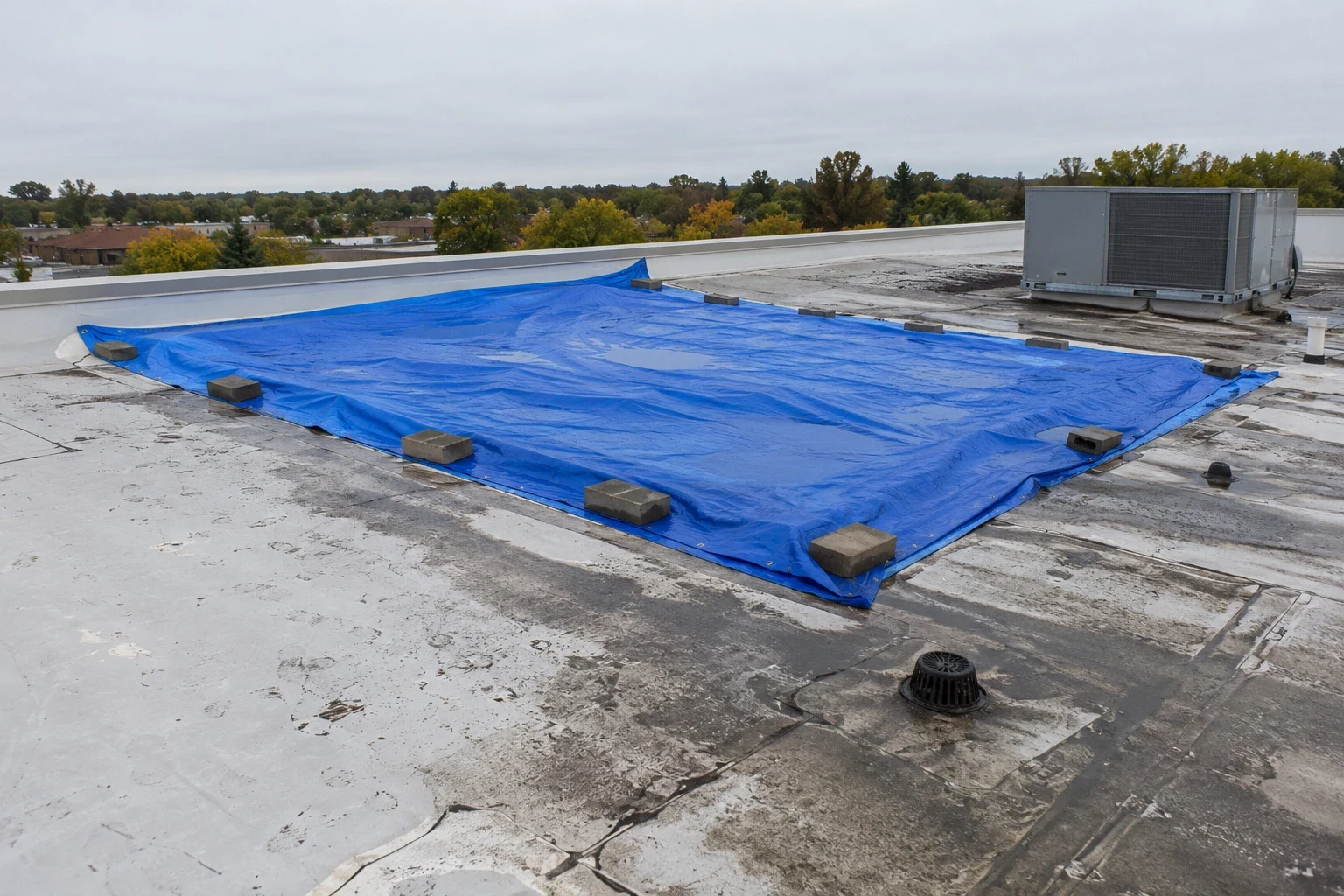
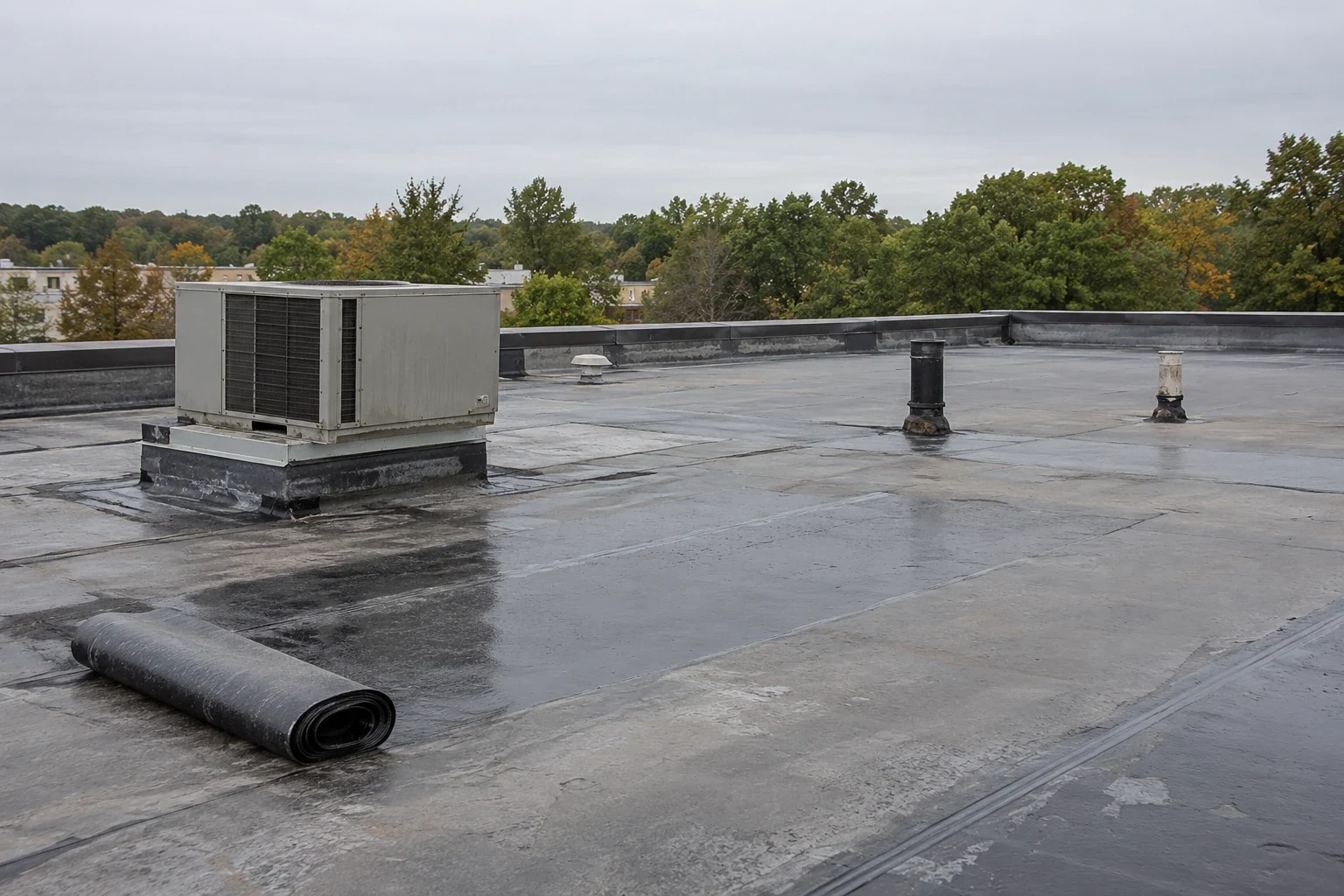
Sequence matters more than speed. Finish roof repairs or replacement in the warm months, let the membrane settle, and then bring the solar crew. Panels installed on a roof that is still being repaired get walked on, scratched and shaded by staging, and every repair after that has to work around them. Schedule an inspection after the array is installed too, so any penetration problems show up while the installer is still on the hook.
If you are only thinking about solar, ask for a solar-ready scope now and let it sit until the project is funded. It is cheap to prepare and expensive to retrofit.
Questions Owners Ask
Can any commercial roof take solar panels?
No. The structure must carry the weight and the snow drift, the membrane must have enough life left, and the layout must leave room for access and service. A roof that fails any of those needs work first.
Will solar void my roof warranty?
It can, if the work is done without the manufacturer's sign-off. Get the roofing manufacturer's requirements for solar in writing, and have your roofer present when penetrations or ballast go on.
What happens when the roof leaks under the array?
Finding the leak gets harder and costlier. Panels may have to come off for access, and the bill depends on how the contract assigned responsibility. Settle that before installation, not after the first thaw.
Should I replace the roof before going solar?
If the roof is near the end of its life, yes. If it has years left and tests dry, a repair or a coating may carry it. A moisture survey and a core cut give you the evidence to choose.
Does snow on the panels hurt the roof?
Drifts add load at the edges of rows, and ice sliding off the panels can scuff the membrane below. A protection layer and a layout that leaves drainage paths reduce the damage.