Standing Seam Metal Roofing in Rockford, IL
Standing seam metal roofing in Rockford, IL: snow retention, thermal movement, wind and hail behavior, and what a fair price covers on pitched commercial roofs.
Standing Seam Metal Roofing
Standing Seam Metal Roofing
Rockford, IL
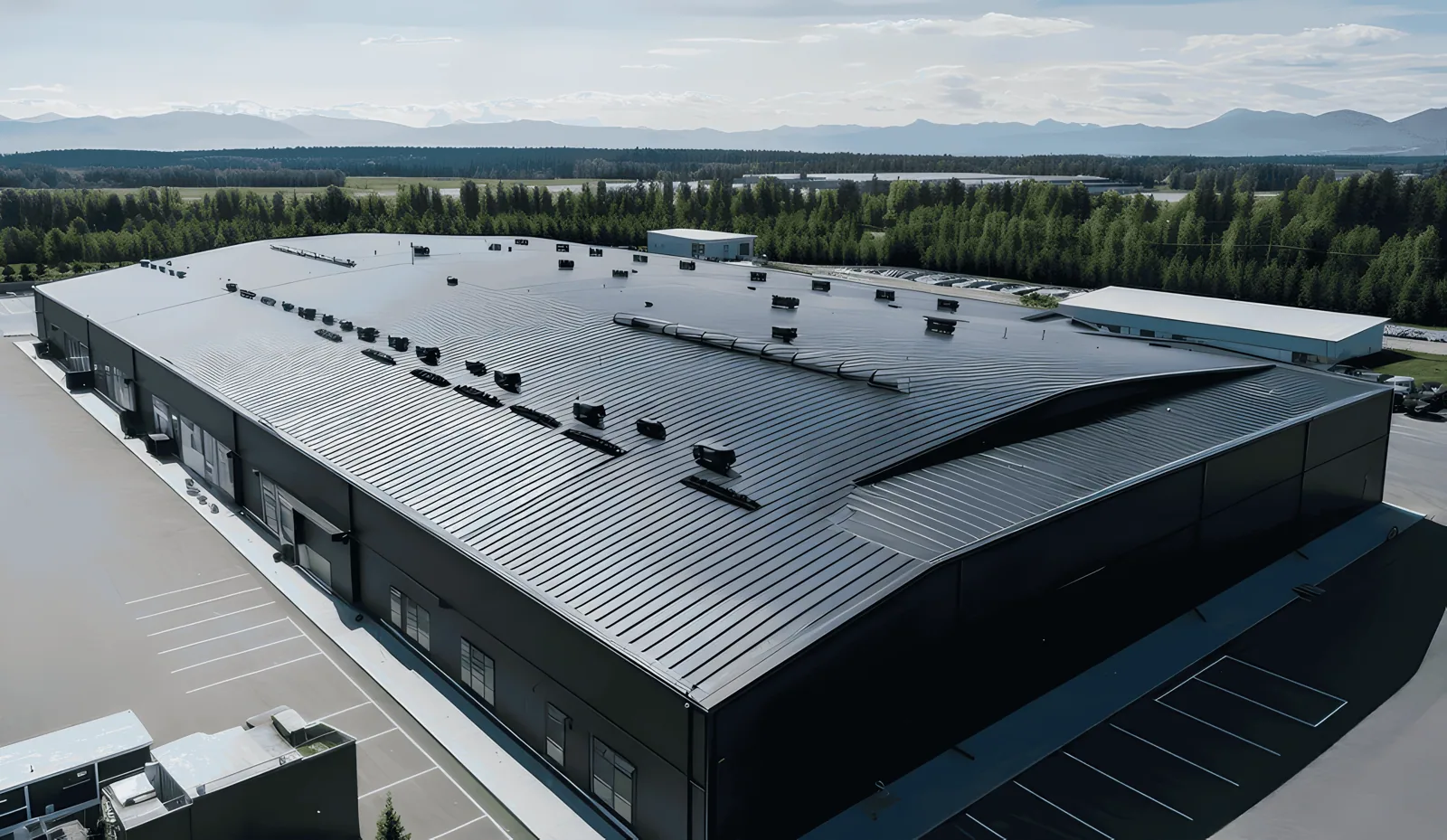
A metal roof can shed a foot of snow in one slide, and where that snow lands is the owner's problem, not the roofer's. After a thaw in Rockford, IL the slick, sun-warmed panels let go of the pack in a sheet, and it can crush a railing, a parked truck or a person at the door. That surprise is the first thing to plan around when you consider standing seam. The system is good: interlocking panels with raised seams, fasteners hidden under the seam, and a surface that sheds water and snow quickly. With roughly three feet of snow and more than a hundred freezing days a year here, it is a reasonable choice for pitched and low-slope roofs alike. It also costs more than most single-ply systems, and every dollar should be traceable to something on the roof.
Before you approve a standing seam bid, ask where the snow goes, how the panels move and who flashes the penetrations.
Ask where the snow will land
Smooth metal sheds snow, which is useful for lowering roof load and risky below an entrance, a walkway or a lower roof. Snow guards or rails slow the slide and break the pack into pieces, and their placement depends on the slope, the panel profile and what sits underneath. Ice is the other half of the problem. Warm air leaking into the roof assembly melts snow from underneath, the water runs to the cold eave and refreezes into a dam that backs water up beneath the panels. Proper insulation, ventilation or a continuous underlayment at the eaves reduces that risk. Rockford roofs are designed for heavy and drifting snow loads, and the structure behind a metal roof has to be checked for the same reason, since a roof that sheds snow onto a lower roof can overload the lower one in a way the designer did not intend.
Walk the roof, point to every spot where snow might fall, and ask for a snow retention layout in writing.
Let the panels move with the temperature
A long steel panel grows and shrinks with temperature, and between a zero-degree night and a 90-degree afternoon in Rockford that movement adds up. Standing seam handles it with clips that hold the panel down while letting it slide, instead of fastening through the face. If the clips are wrong for the panel length, or if the panel is pinned at both ends, the metal fights itself and you get noise, oil canning, torn seams or loosened trim. Wind is the other force at work. The winds of November 10, 2020, with a 73 mph gust recorded at Winnebago, and the March 31, 2023 storm system, with straight-line winds up to 70 mph around the EF-1 tornado that caused damage near Sinnissippi Golf Course, are the kind of events that test clip spacing and edge details. A tornado can strip panels from any roof, and tornado damage repair starts at the edges and clips. Hail dents panels but rarely breaks the weather seal, so ask how your insurer treats cosmetic denting before the next storm, because a hail-damaged roof claim can turn on that wording.
Choose clips and edge details for the wind zone, not for the lowest bid.
Price panels, clips and the structure underneath
A standing seam bid has more moving parts than a flat-roof bid, and the lowest number often leaves out the expensive ones. Compare panel gauge and finish, clip type and spacing, underlayment, insulation, snow retention, flashing at curbs and walls, and trim. A quality paint system on the panels keeps its color and resists chalking longer than a cheap one, and that is worth paying for on a roof you will look at every day. If the roof is a retrofit over an existing low-slope roof, the framing and the old insulation matter as much as the panel, and a metal roof retrofit starts with that question. Where a flat roof is the problem and you are only considering metal for the look, compare it fairly with TPO on cost per year of service, then decide.
- What gauge and finish are in the bid, and who warrants the paint?
- How many clips per panel, and at what spacing?
- Is snow retention included, and where?
A fair price shows each of these specifications in the proposal.
Seal the penetrations, because panels rarely leak
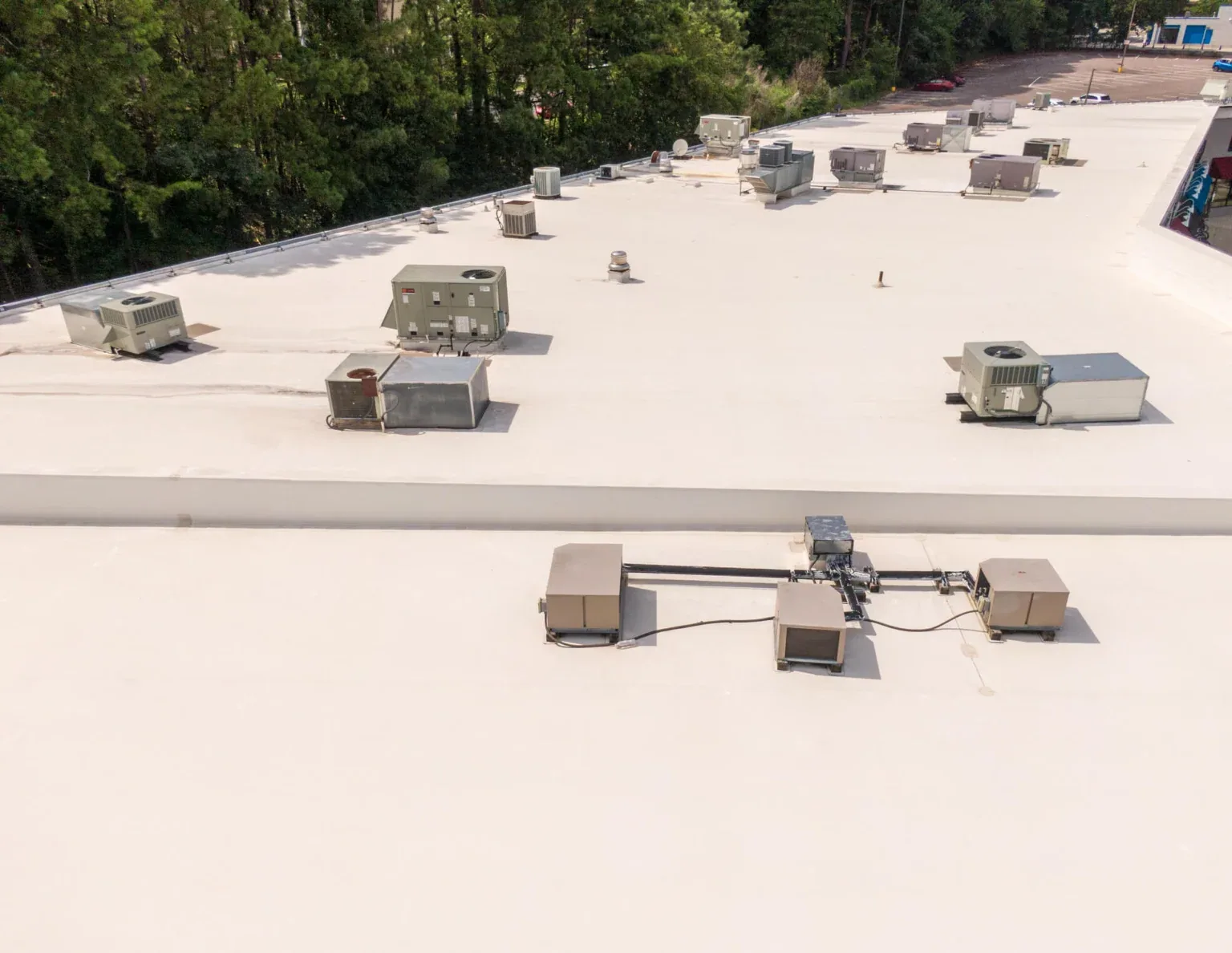
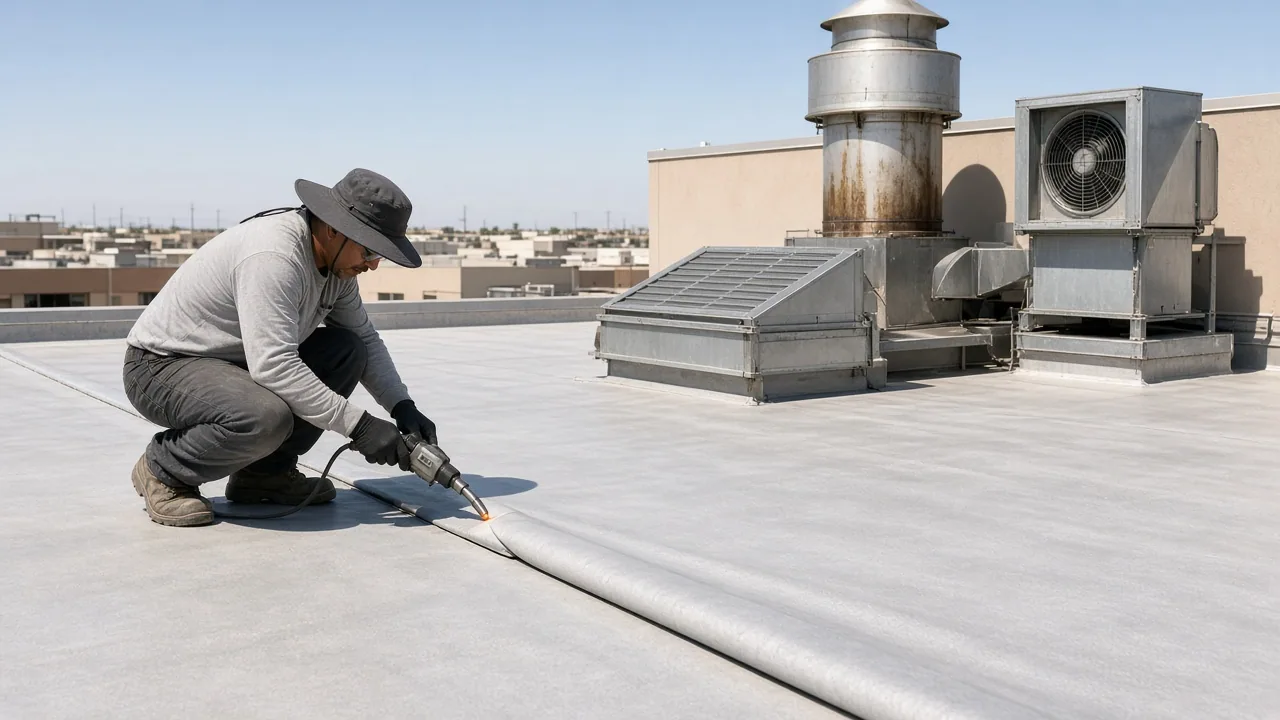
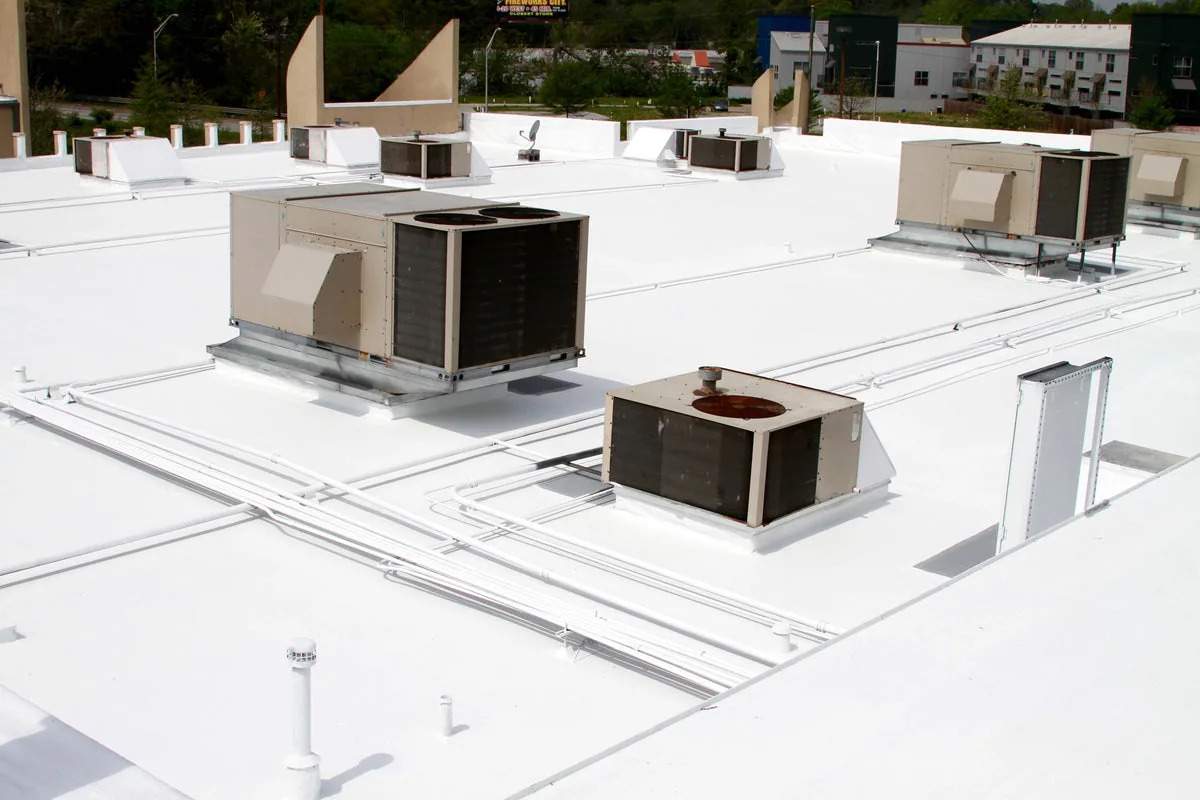
Standing seam panels themselves seldom leak. The trouble sits at everything that interrupts them: pipe boots, curb flashings, skylights, roof hatches, ridge caps, eave closures and wall transitions. Each of those is a custom detail, built by hand, and each is a place where sealant and a weak flashing can fail after a few winters of movement. A roof with a dozen rooftop units is a roof with a dozen places to check. Ask who builds the flashings and how they are fastened, and look for details that allow the panel to move without tearing the seal. Wherever a pitched metal roof meets a brick wall, the transition needs careful flashing. Lena, with a three-story brick commercial building from 1856 at Railroad and Schuyler streets still used by local businesses, and an 1879 Opera House that an EF2 tornado damaged on April 17, 2026, is a town where older brick buildings and storm exposure meet.
Photograph every penetration before the crew leaves, and keep the pictures with your roof records.
Plan access, badging and inspections on institutional sites
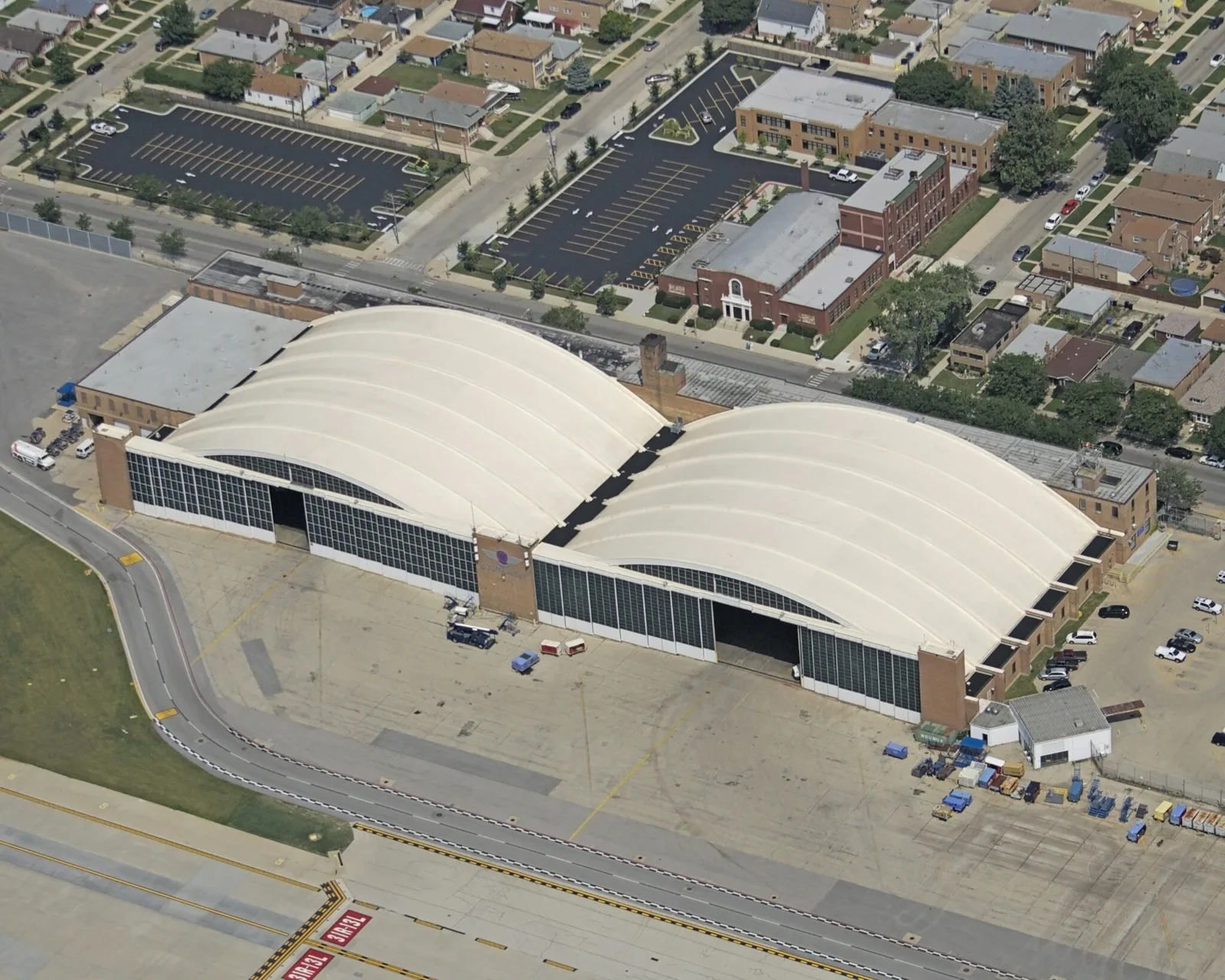
Standing seam is common on armories, clinics, churches and other institutional buildings with pitched roofs. The Rockford Army Reserve Center, a 38,880 square foot building with brick masonry walls and pitched rooflines, and the single-story Rockford VA outpatient clinic in the North Mulford area are buildings where the roof type is a fair question, and the Reserve Center's roof work follows federal anti-terrorism and force protection standards. Roofing on a military installation or federal property normally involves base access and escort procedures, badging, scheduling around mission operations and work built to the Unified Facilities Criteria for roofing. We plan for those requirements before a bid goes out, and on federal property the escort and badging steps are priced as their own line. The same access and sequencing questions come up on military installation roofing and over an occupied sanctuary at a church, where a steep metal roof needs careful scheduling.
Ask early about access rules, because they set the schedule and the price.
Questions Owners Ask
Do I need snow guards on a metal roof?
Over doors, walkways, parking and lower roofs, yes. Smooth metal drops snow in slabs, and the guards are far cheaper than damage or an injury claim.
Will hail ruin standing seam panels?
Hail usually dents the panels without breaking the weathertight seal. Check your insurance for cosmetic damage language before a storm, not after one.
Why does my metal roof make noise in winter?
Panels expand and contract. Ticking or popping at sunrise or sunset is usually normal, but loud banging can point to pinned panels or incorrect clips.
Can standing seam go over my old flat roof?
Over some, with framing that creates slope and a dry old roof underneath. Wet insulation needs to come out first. A moisture survey settles the question.
How should I read a metal roof warranty?
Separate the paint warranty from the weathertightness warranty, then read the exclusions. Many drop out if the roof is altered, so tell us before anyone adds equipment.