Commercial Roofing in Harvard, IL
Commercial roofing in Harvard, IL for very large industrial roofs and storm-exposed buildings, with wind damage checks and fair repair-first pricing.
Harvard
Harvard
Rockford, IL
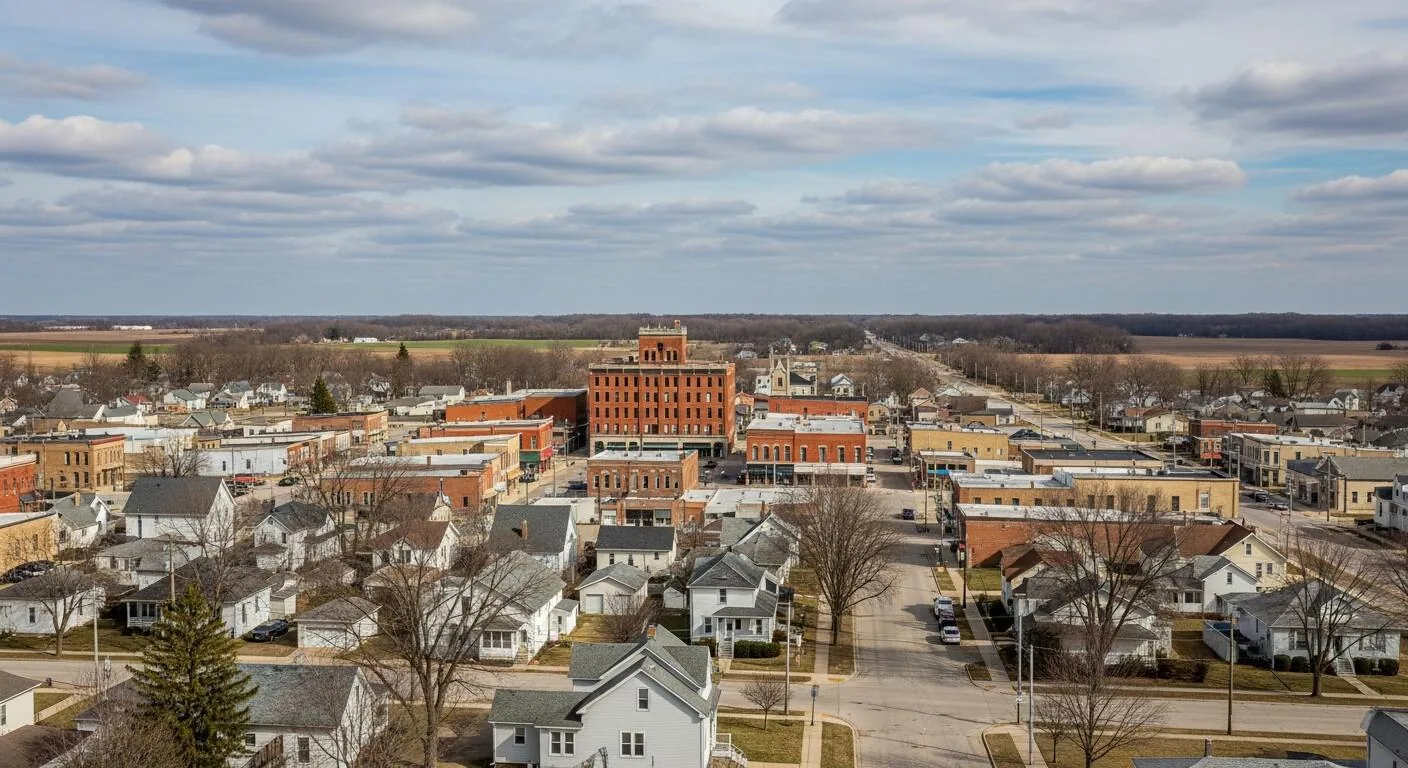
One windstorm can add years of wear to a commercial roof, and the storm of March 31, 2023 brought damaging winds near Harvard, IL and the Wisconsin line to remind owners of it. Straight-line winds up to 70 mph moved through the region that day, along with an EF-1 tornado in Rockford, and a wind event of that kind lifts edge metal, peels back flashing and opens seams in places nobody sees from the ground. Harvard is where U.S. 14 and Illinois Routes 173 and 23 meet, and the town holds a former Motorola plant of about 1.5 million square feet, built for mobile phone production and since owned by investors, a building with a roof of a scale that very few owners ever have to manage. Rockford's winters, with about 134 freezing days and 36 inches of snow a year, finish whatever the wind started.
If you own or manage a large building in Harvard, get the roof checked after any high-wind event and get the findings in writing.
Walk the roof after the wind, before the first freeze
Wind damage is easy to miss and expensive to ignore. A section of lifted edge metal lets water in at the perimeter, where it runs under the membrane and soaks insulation for months. A torn flashing at a rooftop unit does the same. After a storm, ask for a walk of the whole roof, not just the areas that look bad from the lot, and ask for photos of every spot that is lifted, torn or loose. For large roofs, a drone roof inspection can cover acres of surface quickly and safely, and it finds the places worth a closer visit on foot.
Do this before the first hard freeze. Water that gets in during the fall freezes and thaws all winter, widening every opening, and a small repair in October becomes a leak and a wet-insulation problem by February. A written, dated report right after the storm also protects you if you need to file a claim, since an insurer will want to know what changed and when.
Ask what the roof is worth to the next tenant or buyer
A building made for mobile phone production and now held by investors is judged on different terms than the ones it was built for. A buyer or tenant looking at a 1.5 million square foot building will ask about the roof early, because it is one of the largest expenses attached to the property. If a roof has had no documented maintenance, the prospect will assume the worst and price it that way. If the roof has a recent condition report, moisture findings and a repair history, the conversation is easier.
Ask a roofer for a condition report that divides the roof into sections, with a finding and a priority for each. That makes it possible to plan, repair what is urgent and set aside money for the rest. For owners who need a longer view, roof capital planning turns those findings into a budget over several years. A report like that costs far less than the discount a buyer will apply to an unknown roof, and it gives you a document you can show to a lender or an insurer.
Repair the sections that fail and leave the sound ones alone
On a building this size, replacing the whole roof at once is rarely practical, and it is rarely necessary. Roofs age unevenly. The south and west exposures take more sun, the roof edges take more wind and the areas around rooftop equipment take more foot traffic. Many large roofs have a few sections that are at the end of their service life and many more that have years left. Treating them all alike either wastes money on sound areas or leaves failing ones in place.
Ask for a plan that repairs what is leaking, replaces only the sections that are beyond repair and schedules the rest for later review. For a roof where the membrane is aging but the insulation tests dry, a roof recover may be worth pricing next to full replacement. For sections that have failed, ask for the commercial roof replacement price for that section alone. Request unit prices so that the final number can be checked against what was actually done.
Plan the crew and the haul around three routes and a rail line
Harvard is a crossing point for U.S. 14 and Illinois Routes 173 and 23, and it is the last stop on the Union Pacific Northwest Metra line. For roofers that means a crew and material can reach the building from several directions, though a very large roof means very large deliveries. Ask each bidder how they will stage material, where lifts and dumpsters will sit and how truck traffic will be managed so that it does not block the building's own shipping or any other tenant's access.
Weather decides the pace on a roof like this. Large membranes need dry days to seal and to dry in each section before night. Ask the roofer how many people will be on the roof, how much area they can finish and dry in each day and what they will do when a storm is forecast. A realistic schedule for a big roof is measured in weeks, and a quote that promises otherwise is hiding something. The same questions apply when the building is in Marengo or any other town in the region.
Document the storm before anyone offers to fix it
After a damaging wind event, contractors appear offering to inspect for free and, in some cases, to handle the insurance for you. Be careful. Do not sign an assignment of benefits or an agreement that gives a contractor control of your claim before you have read it and understood what you are agreeing to. Take dated photographs of the damage yourself or have someone you trust do it, and keep copies. Ask any contractor for a written scope and a price, and ask for the repair option next to the replacement option.
A claim file built from your own photos, a roof report and a written scope is stronger than a contractor's sales pitch. Roof insurance claim assistance from a contractor should mean documenting what happened and what it costs to put right, not telling you what to claim. For wind-specific repairs, a wind damage roof repair visit should list each lifted or torn area with a photo and a price. A property in Belvidere requires its own measurements and schedule.

Questions Owners Ask
Can wind damage a roof without leaving anything on the ground?
Yes. Wind lifts edge metal and flashing, loosens fasteners and opens seams while leaving the roof looking intact from below. Only a walk or a drone survey catches it.
Is a drone survey good enough for a very large roof?
For finding problem areas, yes, and it covers acres fast. It does not replace a hands-on check of seams and flashings. The two work best together on a roof this big.
Should I replace the whole roof on a 1.5 million square foot building at once?
Almost never. Sections age at different rates, so a plan that repairs and replaces by area costs less and avoids tearing off roof that still has life. Moisture testing marks the boundaries.
How soon after a windstorm should I call about a claim?
Soon, since policies set deadlines and evidence fades. Photograph the damage, get a roof report and notify your insurer. Do not wait for leaks to prove the damage.
What makes a roof easier to sell to a buyer?
Proof of its condition. A dated report, repair records and moisture findings let a buyer price the roof instead of guessing, and guessing usually costs the seller.