Restaurant Roofing in Rockford, IL
Restaurant roof repair and replacement in Rockford, IL, built for grease, kitchen heat and freeze-thaw, with work scheduled to protect your dining hours.
Restaurant Roofing
Restaurant Roofing
Rockford, IL
A restaurant roof takes a northern Illinois winter on top of a kitchen's worth of heat, steam and grease, and the two together are harder on a membrane than either one alone. Rockford, IL gets roughly 134 freezing days a year and about 36 inches of snow, so the roof around the exhaust fans spends half the year swinging between a warm kitchen exhaust plume and bitter air. Hood fans, makeup air units, walk-in cooler condensers and a grease trap vent all push through that roof, and every one of them is a flashing that has to stay tight.
If you own or lease a restaurant building, the roof is probably the least visible line item on your property, and it can turn into the most expensive one overnight. A leak over the dining room costs you tables. A leak over the kitchen can cost you the night. Find out what is happening on the roof before the next cold snap, not after.
Protect the membrane from grease and heat
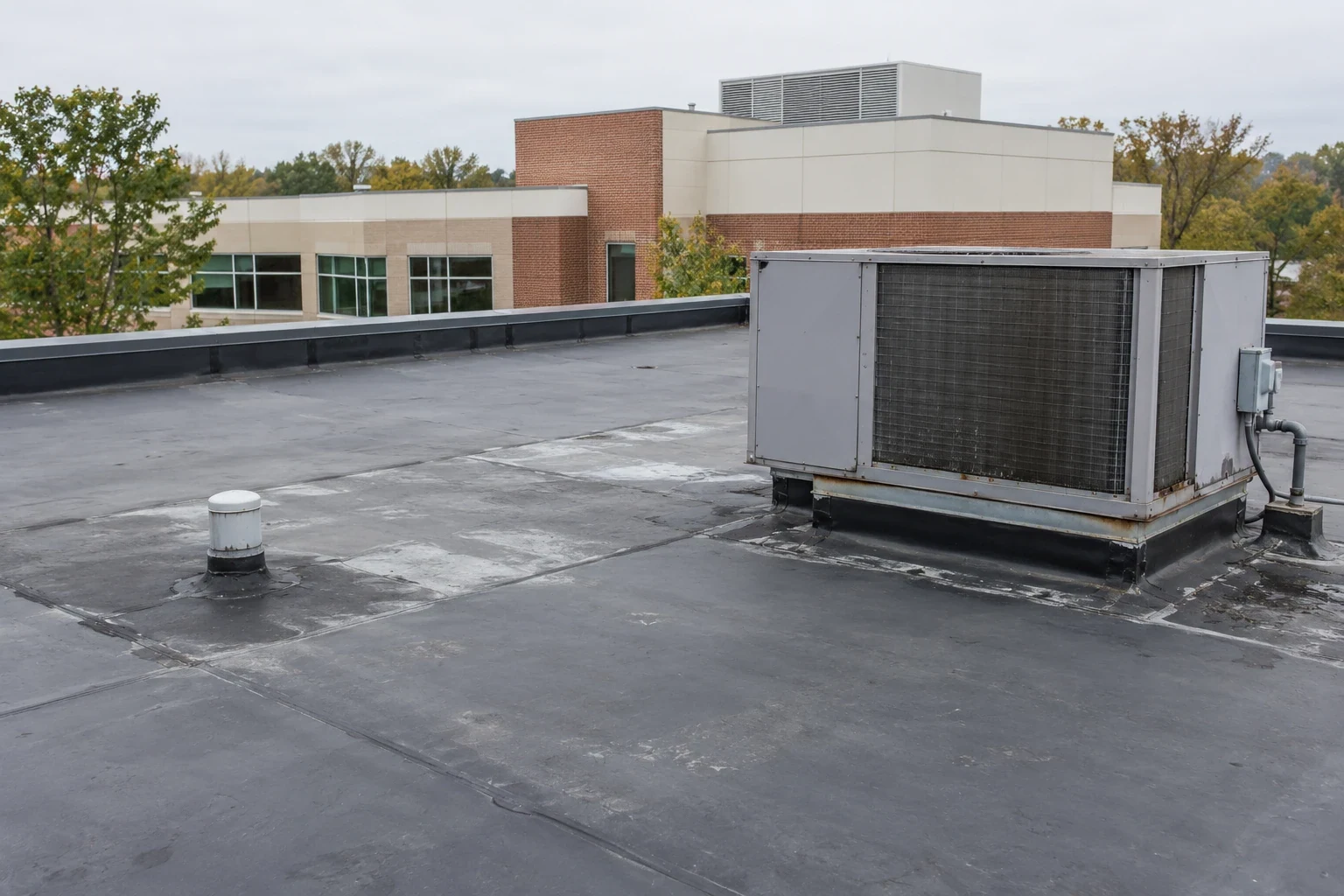
Grease is not just a mess on a restaurant roof. Some single-ply membranes soften and break down faster when fat sits on them, which is why PVC and KEE are the usual choices near kitchen exhaust. A roof that was installed before the restaurant moved in may carry a membrane that was never meant for it. Fan housings drip, hood cleaning crews drag residue across the surface, and the grease collects in the low spots where water already ponds. Over a few seasons the membrane around the fans turns tacky, then brittle, and the first hard freeze opens a seam.
The fix starts with a look at what is on the roof now. We check the membrane near every exhaust fan, the curbs under the hood and makeup units, and the grease containment trays that catch what the fans spit out. Where the existing roof is the wrong material for the job, we say so and price the change. The usual replacement is a grease-tolerant sheet such as PVC or KEE, welded at the seams around every fan.
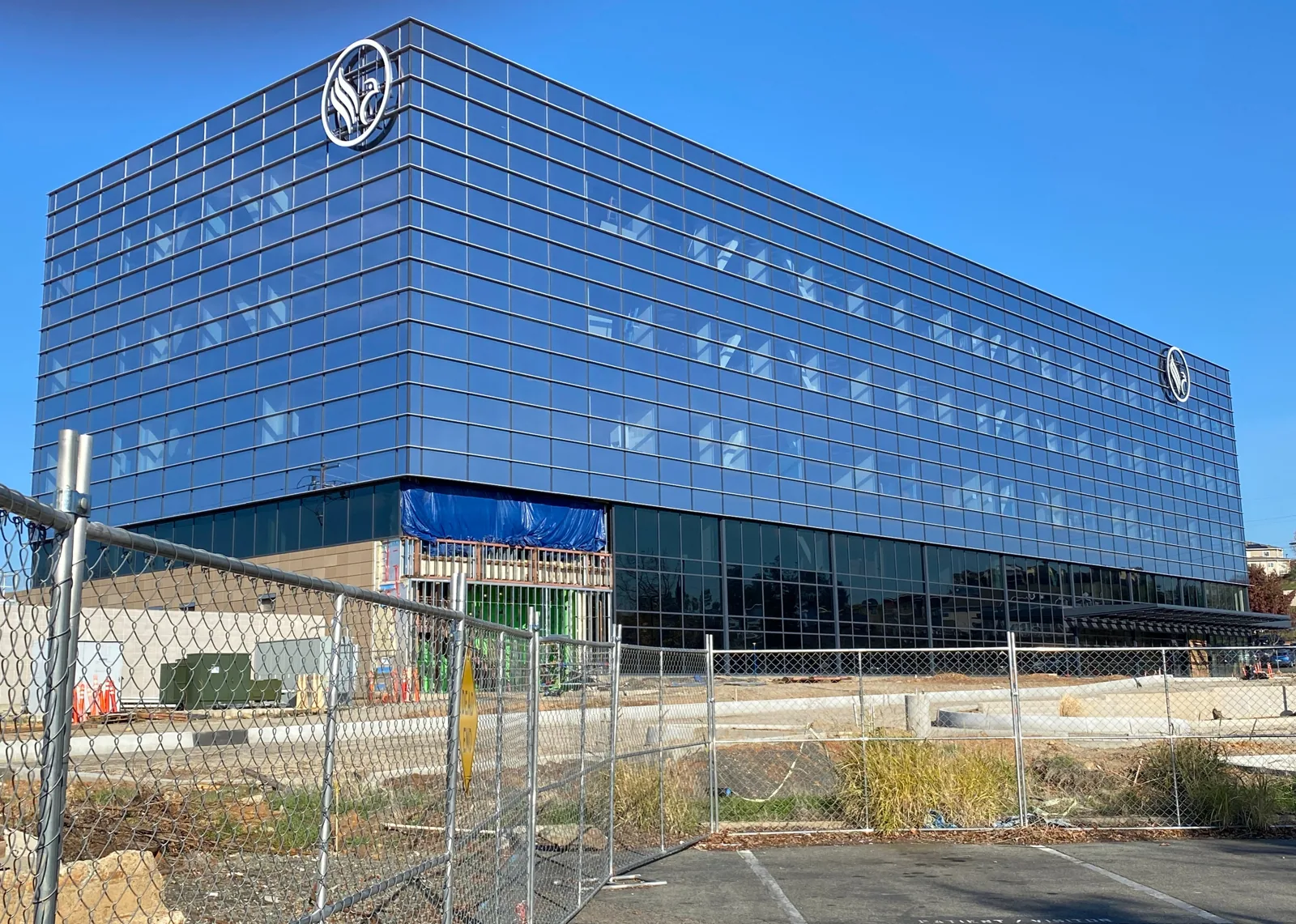
Fix the roof around the kitchen first
Restaurant roofs do not usually fail all at once. The trouble starts around the equipment: a cracked pipe boot, a curb whose flashing has pulled loose, a seam near a fan that has hardened with grease. A repair that replaces only those details, with grease-resistant material, can add years to the rest of the roof. Replace the whole thing when the insulation is wet or the membrane is brittle across the roof, and not before.
Fire matters here in a way it does not on most buildings. A hood or duct fire can scorch a roof and crack the membrane without ever opening a hole, so any fire at a restaurant deserves a roof check afterward, before fire damage turns into a leak. Insurance adjusters will want to see the roof documented, and a written condition report with photos is the cleanest way to give them that. A new rooftop equipment curb has to go in properly flashed whenever a hood or condenser is replaced.
Keep a closed dining room off your bill
The biggest cost of a roof problem in a restaurant is not the roof. It is the lost day. A ceiling that drips into the dining room forces a closure, and a leak into the kitchen can bring a health inspector into the picture as well. That is why prevention is worth more here than at most buildings. Two inspections a year, one after the leaves and one after the spring thaw, will find most failures while they are still repairs.
When you do need a bid, have the bidder show a repair figure beside the replacement figure, and ask what the contractor will do about grease. If the proposal does not mention it, ask why. Make sure the proposal spells out the unit price for wet insulation, a separate line for any new curbs, and the plan for dry-in at the end of each day. A contractor who skips those lines is leaving the surprise to you, and a change order written on the roof is rarely in your favor.
Book the work for your slow hours and mild weeks
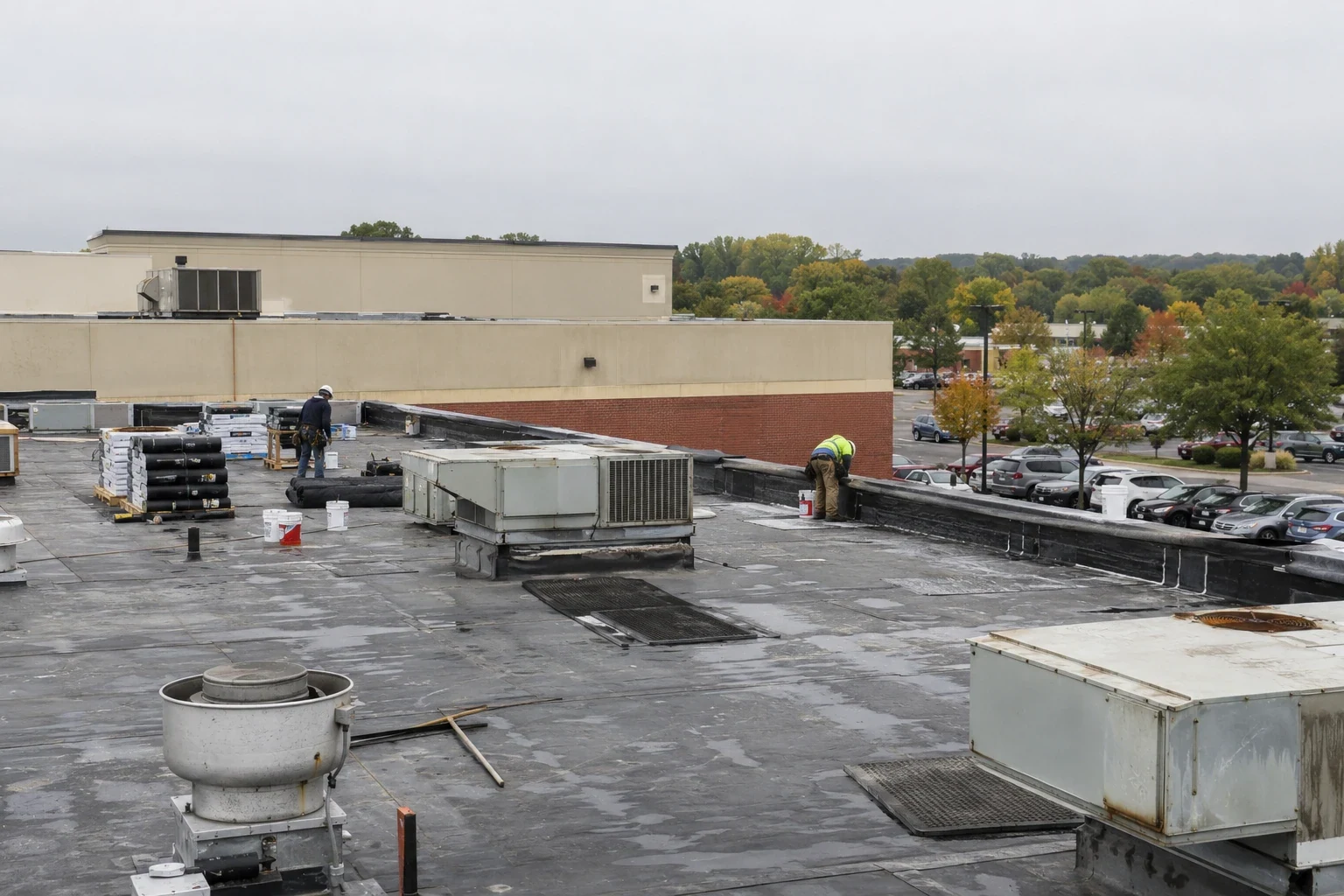
Restaurant roof work can often be done around the dining schedule. Tear-off and equipment lifts are loud, so we schedule them for the mornings, before prep staff and guests arrive, and we keep ladders, hoists and debris away from the entrance and the delivery door. Hood and exhaust fans may need to be off for short periods, which should be agreed with your kitchen manager ahead of time.
Season is the other limit. A membrane only welds or bonds properly on a dry deck in mild weather, so the work belongs between spring and late fall. If you operate near the BMO Center near downtown Rockford in Downtown Rockford, check the IceHogs home schedule before booking lifts and deliveries, since event nights bring crowds and traffic to the area. If you run a pad restaurant on the East State Street and CherryVale corridor, the landlord may own the roof, and you will want to know who authorizes access.
Ask these questions before the lift is scheduled
Restaurant owners should put the following to every bidder.
- What membrane goes around the exhaust fans, and how does it handle grease?
- How will the fans, hood and makeup air be shut down and restarted?
- What is the dry-in plan if weather moves in before the day is done?
- Who protects the delivery door and the guest entrance while materials are lifted?
- How is the roof documented before and after for the landlord or the insurer?
A restaurant in a multi-tenant building sits under a shopping center roof the landlord may control, and the lease usually decides who pays. Operators with more than one location can fold their roofs into retail and restaurant chain programs, so every location is inspected on the same schedule. A grocery-store roof adds refrigeration equipment and cold-room interfaces to the inspection.
Kitchen exhaust creates grease-laden air that can collect near fans and shorten the life of nearby flashing and coatings. During inspection, check the curb, duct support, access path and roof surface around each exhaust point; do not treat a hood service call as a roof inspection. Restaurants in Downtown Rockford and along East State Street may also share a roof with neighboring tenants. Confirm who owns the membrane and who can approve work before scheduling a repair above an active kitchen.
Questions Owners Ask
Will grease damage a TPO roof?
It can, over time. Fat that sits on some single-ply membranes softens the surface and shortens its life, so PVC or KEE is the common choice near kitchen exhaust.
How long will we have to close for a roof replacement?
Usually not at all. We work in sections, schedule loud tasks for the early hours and agree on fan shutdowns with your kitchen manager. Dry-in at the end of each day protects the dining room.
A hood fire scorched the roof. Is it worth repairing?
Have it inspected before you decide. Heat can crack a membrane and char the insulation below it without leaving a hole, and the photos are what an adjuster will ask for.
Who pays for the roof in a strip center restaurant?
Your lease says. Many landlords carry the roof and pass the cost through, but tenants often owe for damage caused by their own equipment. Read the language before the bill arrives.
How do I keep the roof clean around the fans?
Add grease containment trays under the fans, have hood cleaners put residue in a bucket and not on the roof, and let us walk the roof twice a year to clear and inspect it.