Roofing for Cities, Counties and Public Agencies in Rockford, IL
Roof repair, replacement and capital planning for Rockford, IL cities, counties and public agencies, built for public bids, budgets and audits.
Cities, Counties and Public Agencies
Cities, Counties and Public Agencies
Rockford, IL
One November 2020 storm left 1 inch hail in Roscoe and Rockton and a 73 mph gust at Winnebago, and it damaged buildings across Winnebago County. Hail bruising is hard to spot from the ground, and what cannot be seen from the ground still costs taxpayers money. Add roughly 36 inches of snow, about 134 days a year at or below freezing and about 15 days above 90 F, and a public building takes a beating from every direction. Cities and counties also carry something a private owner does not, which is the obligation to explain every dollar in public. In Rockford, IL, an agency that keeps tested, photographed roof records can answer a council or a county board with facts instead of apologies.
Do not let a roof become an emergency purchase. Know what you own, test it, and budget for it a year ahead.
Count what the public owns before the council asks
A city hall, a courthouse annex or a county garage is a government building, and public agencies rarely have just one roof. They have an arena, a depot, a garage, a clinic, a fair grounds, a library branch, a pump house and a dozen small buildings that no one thinks about until water comes through. The BMO Center on Elm Street, a 1981 arena seating about 5,895 for hockey and owned by the Rockford Area Venues and Entertainment Authority, is old enough that its roof history deserves a written file with photos and repairs. Over on Church Street, the city plans to convert the 1902 brick freight station to apartments and storefronts while downtown Rockford readies for passenger rail, and a two-story brick building of that age calls for a careful survey before any tear-off. Out in Pecatonica, the Winnebago County Fair Grounds cover over 108 acres of indoor and outdoor space, and an agency with a site that size is managing more than one roof.
Build an inventory that lists every roof, its type, age, repair history and condition. It is the first document any capital request will need.

Write a scope that survives a public bid
A bid is only fair when every contractor prices the same work. The scope should name the membrane, the insulation, the edge metal, the flashings and the drainage changes, and it should demand line-item rates for wet insulation and damaged deck. Without those, a low bid can turn into a pile of change orders that require board approval after the contract is signed. A moisture scan and core samples before bidding show how much insulation is actually wet, so the scope matches the roof rather than a guess. Where the roof is dry and sound, a roof recover may cost far less than a tear-off, and the scope should say whether it is allowed. Do not accept a bid that is vague about what is included. A public body that signs vague language ends up explaining it in a public meeting.
Compare bids line by line and keep every question and answer in the project file.
Meet the code the permit office will check
Rockford's permit office works from the 2021 International Code Council family: building, existing building, fire, mechanical and property maintenance, with the 2020 National Electrical Code beside them. The 2024 Illinois Energy Conservation Code governs energy, and its insulation rules, drawn from a 2021 model code, apply to any full replacement. A roof priced in an old budget may be missing that line. Agencies often forget that the roof is a code project as well as a maintenance project, with permits, inspections and sometimes fire-rating requirements tied to the work. Ask each bidder to say which code items they have priced and who pulls the permit.
Settle those points in the scope, not on the roof. A permit surprise in the middle of a job is a delay the public pays for.
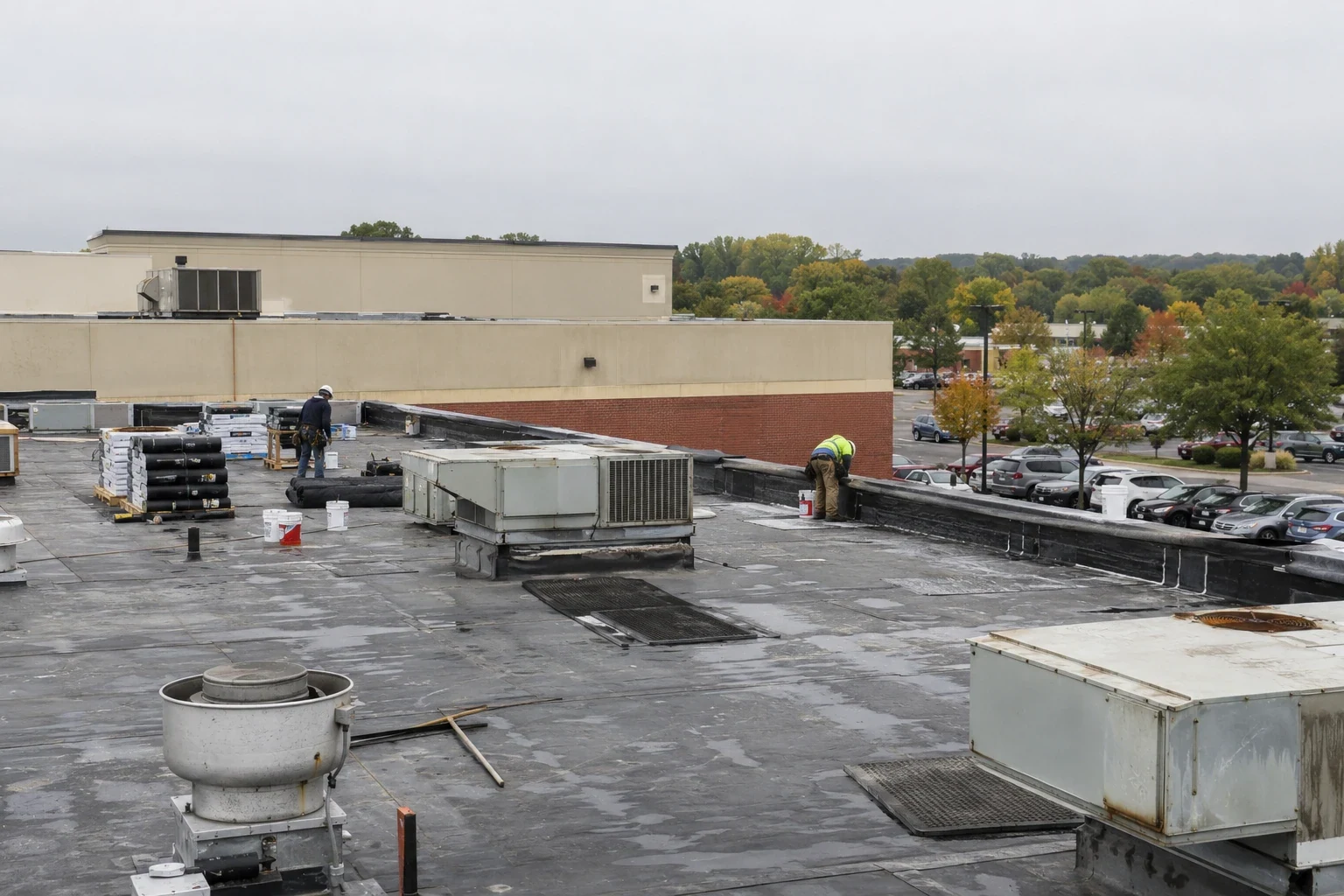
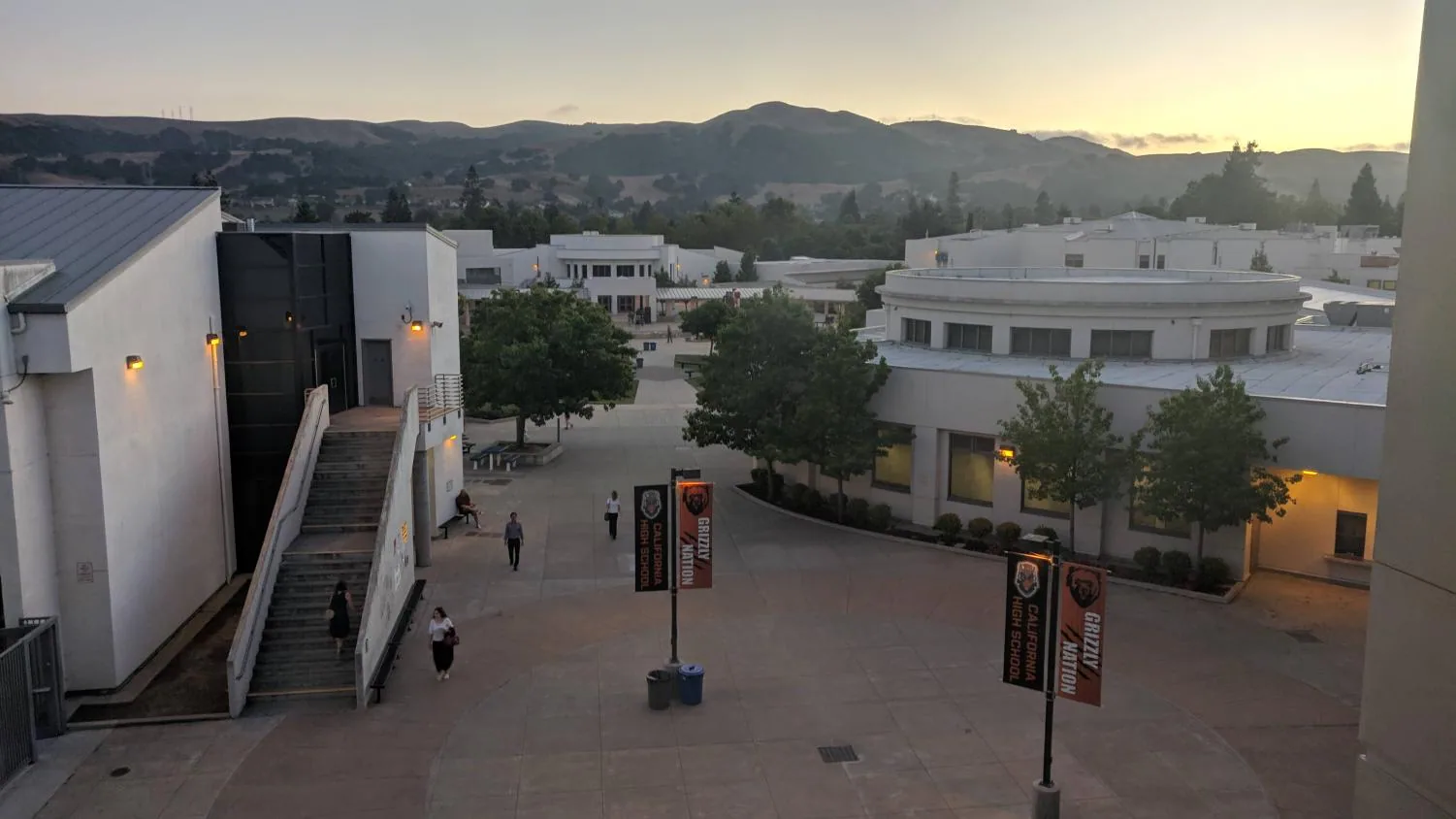
Plan for security, events and restricted access
Public buildings run on schedules that private buildings do not. An arena has event nights, a courthouse has security screening, a fair grounds has a season, and a military or National Guard facility has controlled access. For federal and state military sites, roofing is usually built to the Unified Facilities Criteria for roofing, and work begins with base access, escort and badging arrangements; the same pattern applies to military installation roofing and to an armory roof. Rockford's Army Reserve Center was designed to LEED Silver and carries blast-resistant windows and a card-reader security system, so roof work there falls under anti-terrorism and force protection rules. The same discipline applies at the Freeport Armory, where the Illinois Army National Guard's 333rd Military Police Company is based.
Ask early how contractors will be vetted and escorted. Late discovery of access rules costs weeks.
Spread roof spending across the budget years
Cities and counties plan in cycles, and roofs do not fail on cycle. A roof that is left alone until it leaks will be replaced in an emergency, often at the worst possible time in the winter. The better approach is a roof capital plan that ranks every building by condition and consequence, spreads replacements across several budget years and holds a small reserve for the surprises. One-time money, such as the water-extension grants Illinois awarded in 2026 for industrial sites or tax increment funding, comes with rules about what it can buy, so check whether a roof qualifies and plan on ordinary capital funds if it does not. Pair the plan with a maintenance routine so the roofs you intend to keep make it to their expected life. Schools face the same question every year, as school districts know well.
Public owners usually need a scope that can be reviewed, bid and audited by people who were not on the roof. Define quantities, access assumptions, alternates, unit prices and closeout documents before solicitation. For a school or municipal building in the Rockford region, schedule noisy work around public use and show how routes remain accessible. A roof plan with dated photographs gives the project manager a neutral reference if bids differ or a change order is proposed later.
Questions Owners Ask
How can a small agency afford to test every roof?
Start with the buildings that matter most and the ones with a history of leaks. A scan and a handful of core cuts cost a small fraction of an emergency replacement, and the results guide the whole capital plan.
What does a public bid need to say about wet insulation?
It should list a unit price per square foot to replace it, with a method for confirming it is wet. That keeps the contract fair and spares the agency a surprise change order after the roof is open.
Are historic buildings handled differently?
Often. Old masonry, steep parapets and original decks need a careful survey before the scope is written, and historic funding sometimes adds review steps. Bring the roof findings to the preservation conversation early.
Who should walk the roof after a storm?
Someone trained to read it, with photos taken before anything is touched. A general contractor on a current project can help, but the findings should be recorded in writing for your claim and your file.
Can we keep an old roof going while we wait for funding?
Often, for a time. Targeted repairs, drain cleaning and sealing the worst seams can stretch a dry roof through a budget cycle. The danger is a roof with wet insulation, which keeps worsening whatever you patch on top.