Occupied Building Reroofing in Rockford, IL
Reroofing Rockford, IL buildings while tenants, patients and production keep running, with phased dry-in, protected air intakes and clear rules on delay costs.
Occupied Building Reroofing
Occupied Building Reroofing
Rockford, IL
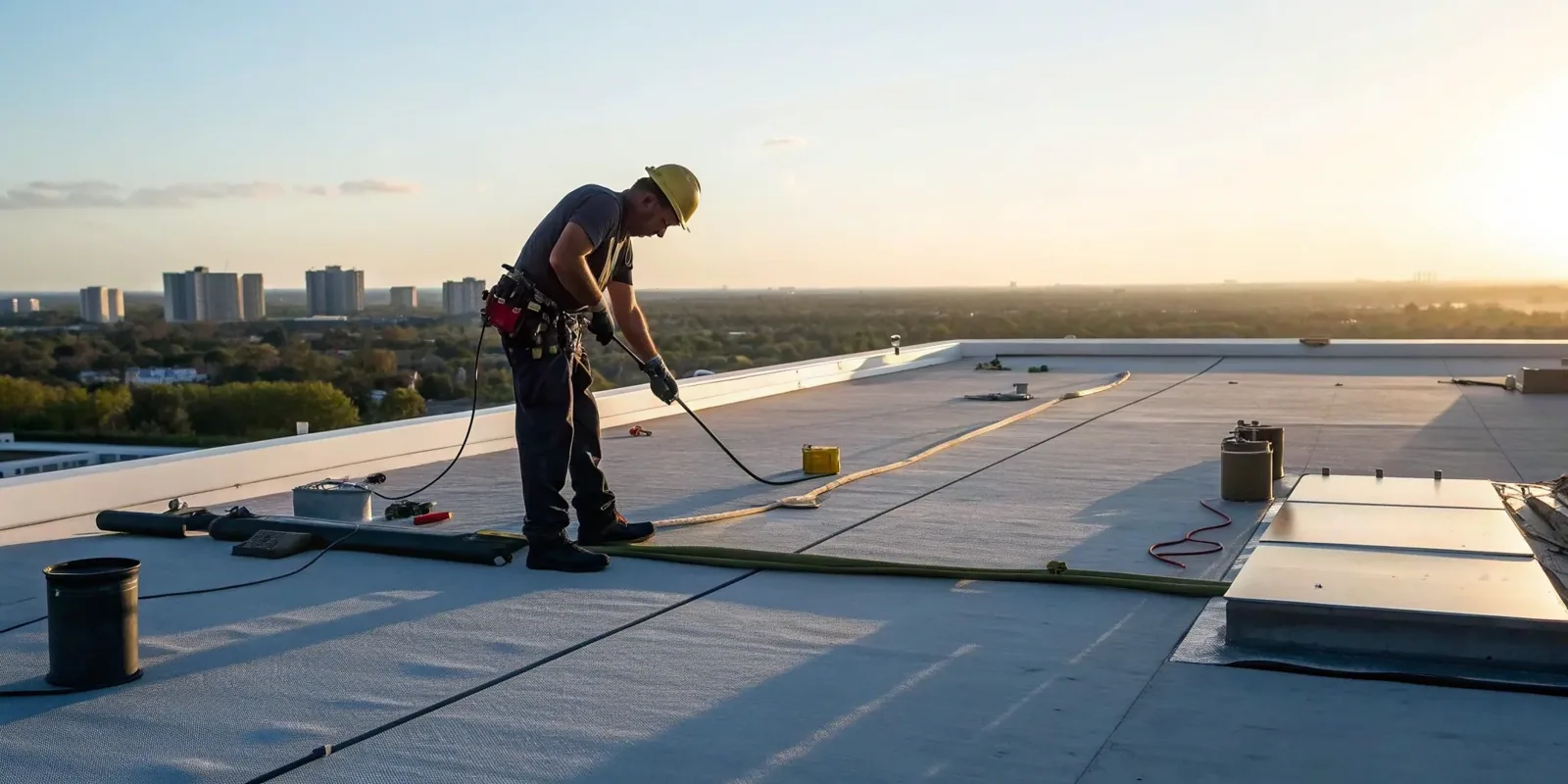
A Rockford spring thaw tends to arrive on the same week the roof finally cannot wait, and that is the week the building is full. Tenants are in the suites, production is running on the floor, and patients are in the rooms below. Northern Illinois gives roofers a short stretch between the last hard freeze and the first winter storm, and an old membrane that has been taking on water through about 134 freezing days a year does not care what is happening inside. Many owners assume the only choices are to shut down or to wait, and that is rarely true. A roof can be replaced one phase at a time, dried in every evening, and kept off the critical path of the business under it.
What matters is the plan you approve before the first section of the old roof comes off, so insist on seeing it in writing.
Plan the phases before the first section comes off
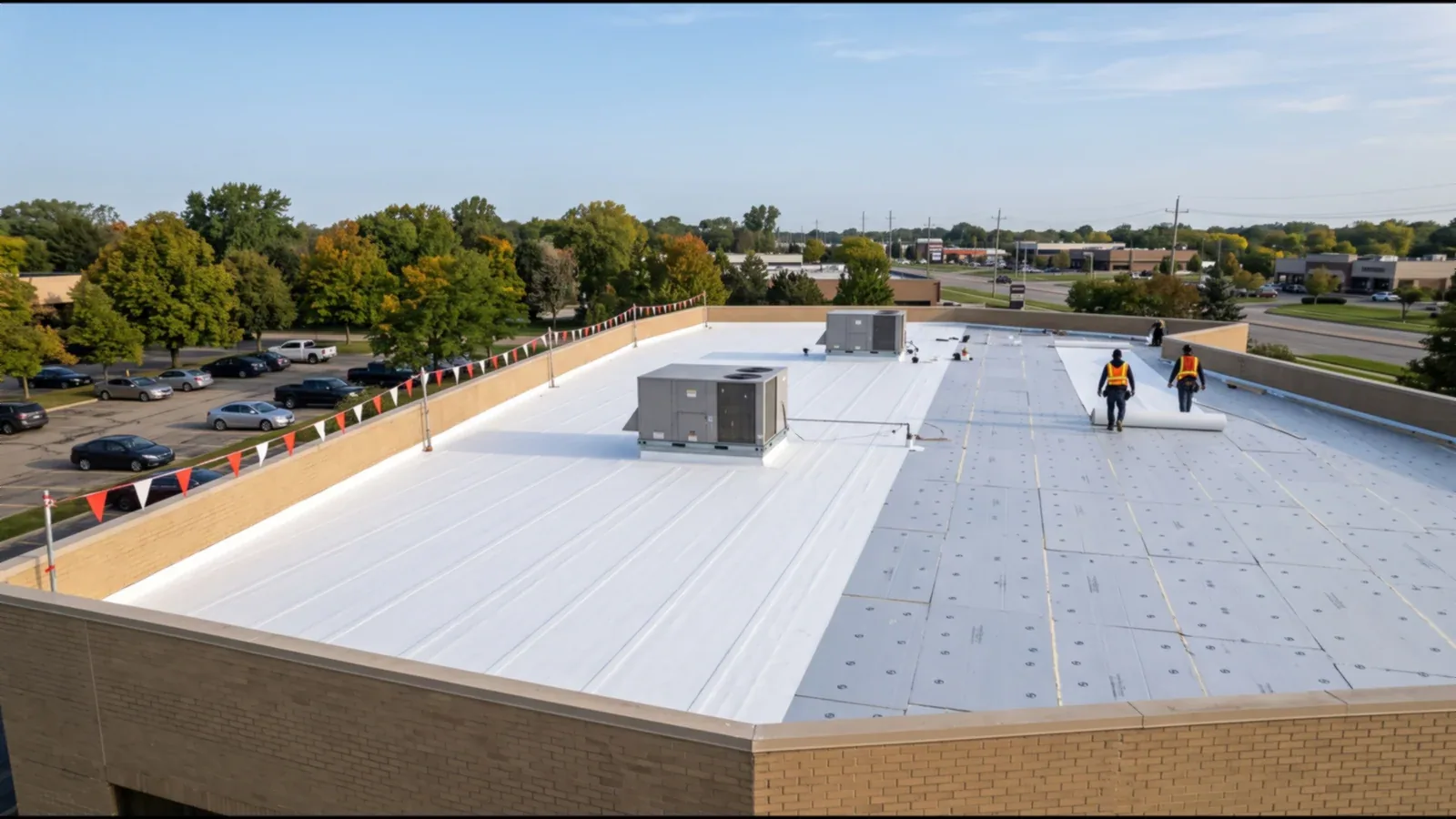
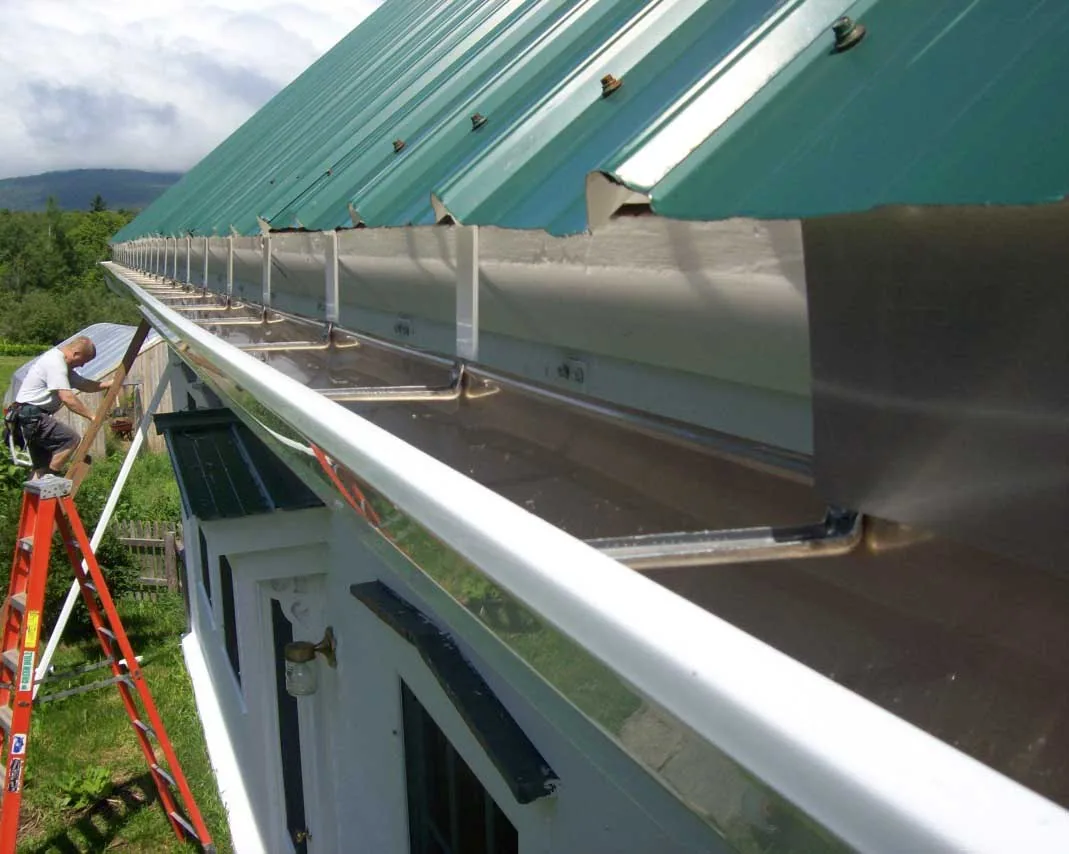
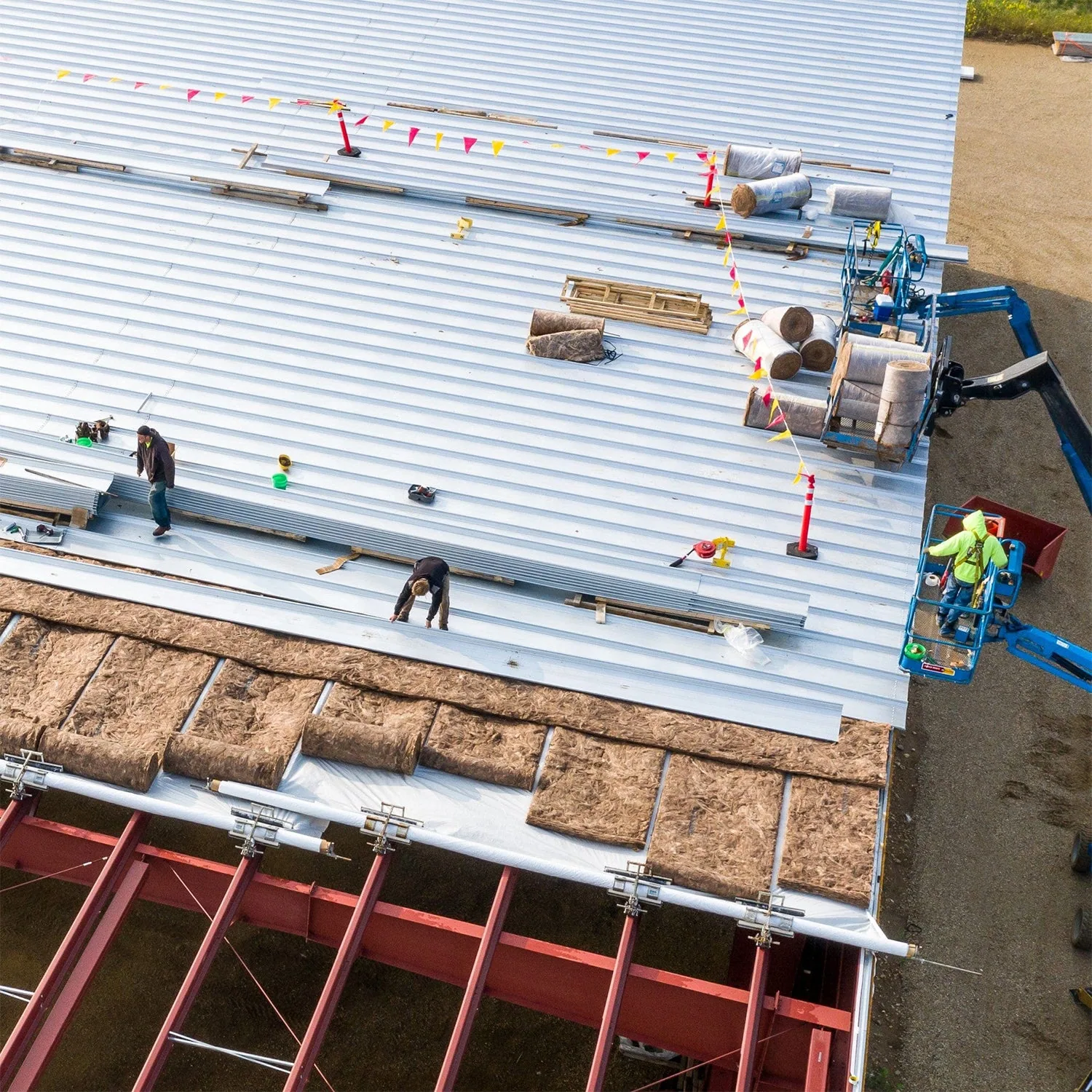
Phasing is the heart of occupied work. The crew opens only as much roof as it can fully close that day, so the building is never left with a hole over live space. That sounds simple, and it is easy to promise and hard to do. It takes tight material staging, a crew sized to the section, and a foreman who will stop an hour early rather than leave a seam unsealed ahead of a storm. Ask the contractor to show the sequence on a roof plan, with each phase marked and the tie-in details between phases drawn out.
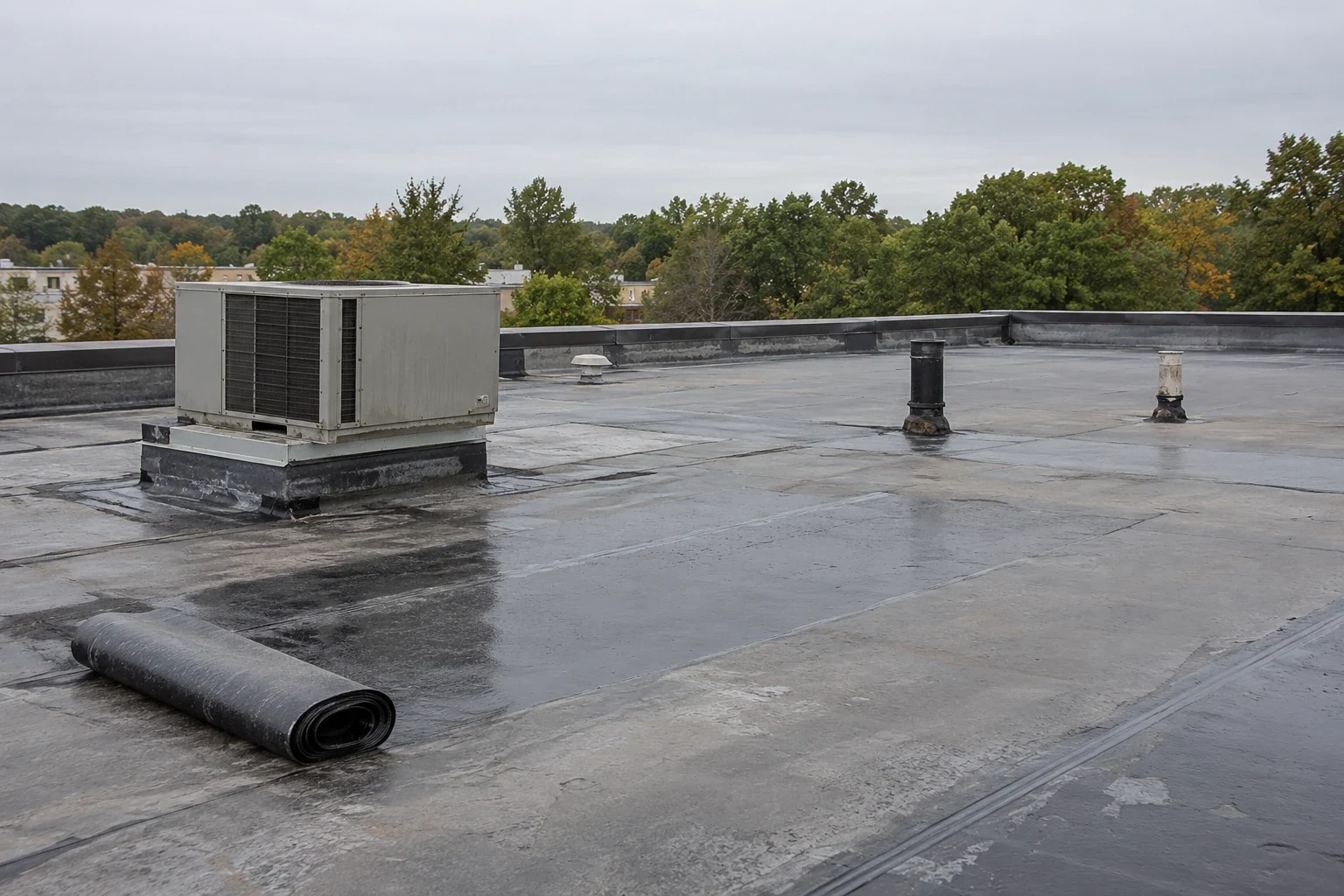
The same logic applies to the choice between tear-off and overlay. A recover over the existing roof creates less noise and debris because nothing is stripped, but it only works when the insulation below is dry. When the roof has to come off, a phased commercial roof replacement is the way to keep the building running.
Keep rain, snow and wind out of an open section
The risk on an occupied roof is not the work. It is the gap between tearing off and drying in. The Rockford area has seen what weather can do to a roof that is not ready: a 73 mph gust hit Winnebago on November 10, 2020, an EF-1 tornado on March 31, 2023 damaged property near Sinnissippi Golf Course, and heavy rain has flooded the area repeatedly, including a June 2018 flood that caused $30 million in damage at Mercyhealth's Rockton Avenue cancer facility. A roof opened above operating space during a storm like those does not just leak. It damages inventory, equipment and records.
That is why a good crew watches the forecast every day, keeps temporary cover on site, and closes every section before the weather changes. If a storm does catch an open area, our emergency roof repair response is what keeps the building dry.
Protect people, air intakes and inventory below
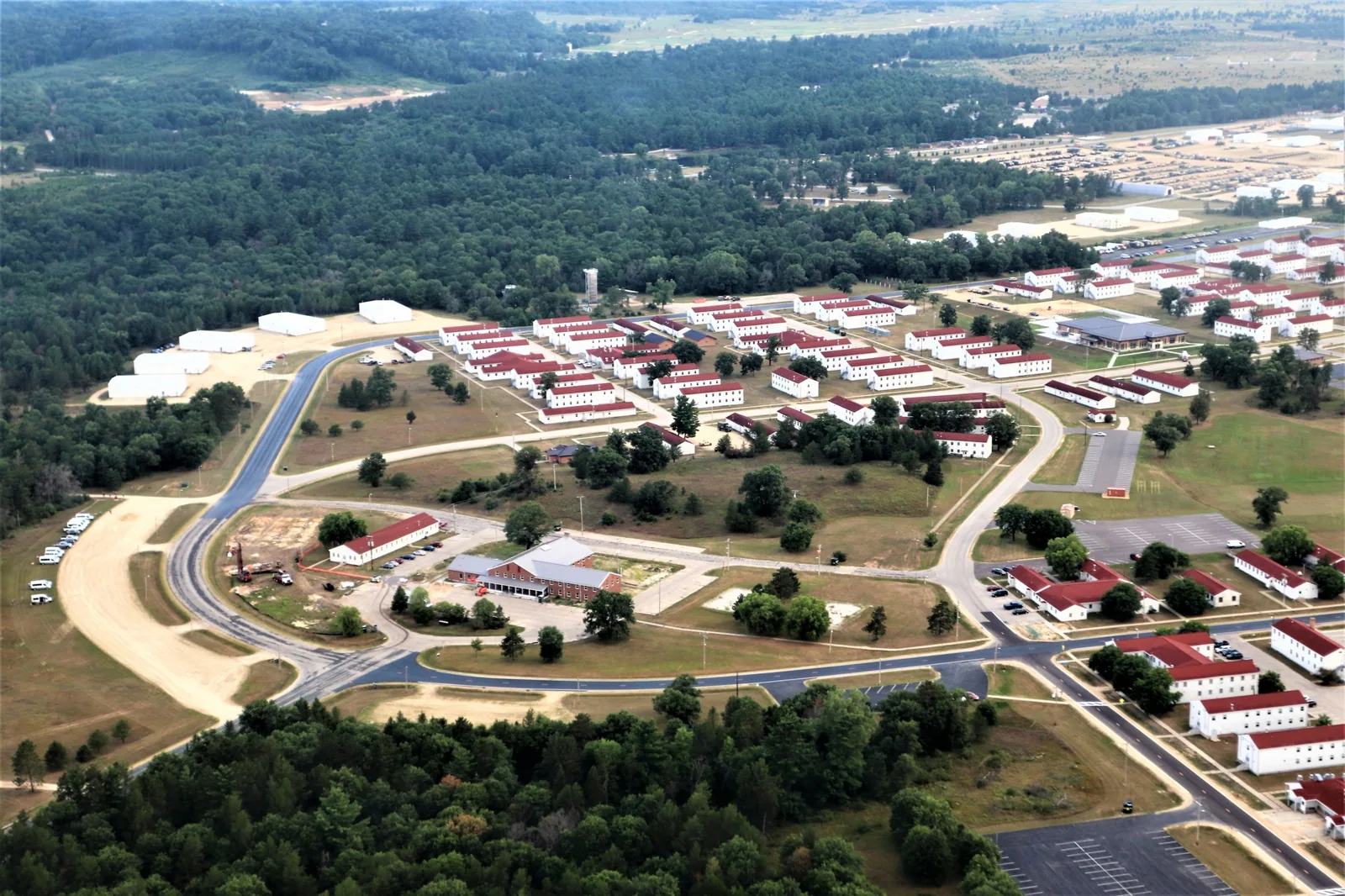
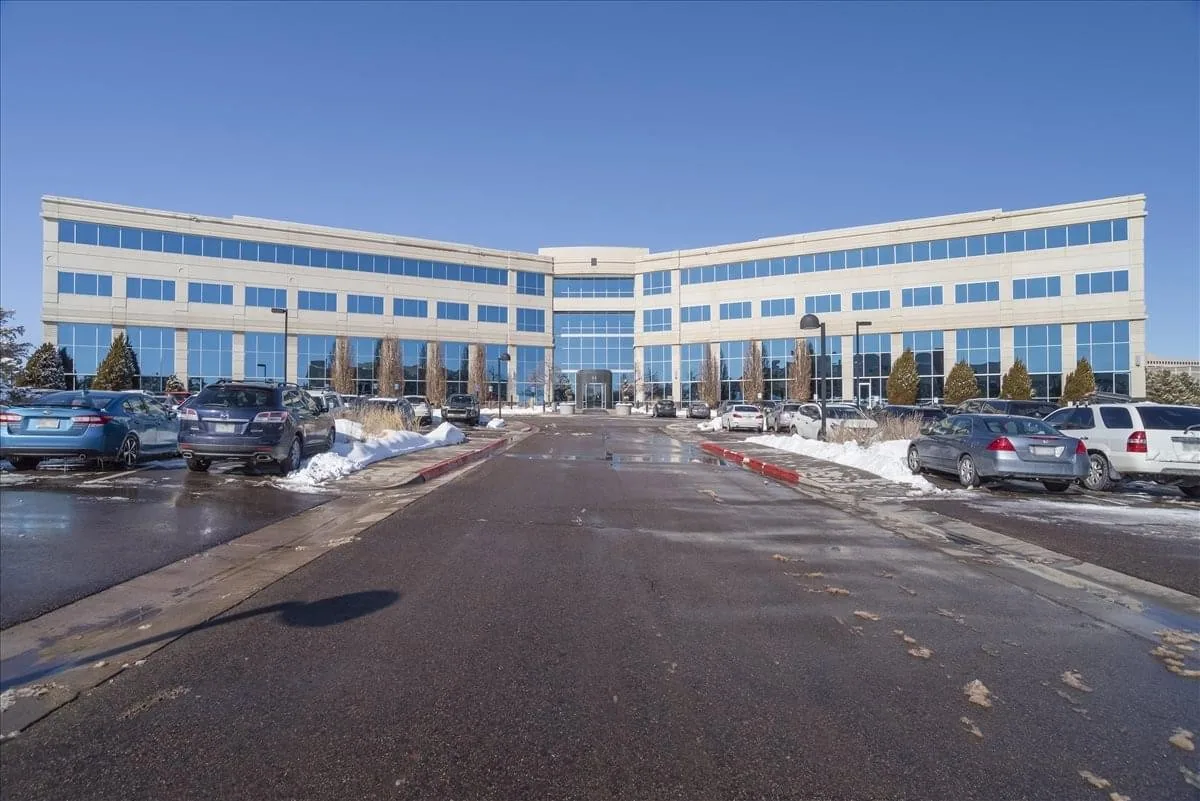
Every occupied job has a different sensitivity, and the plan has to name it. On a hospital campus such as Mercyhealth's Javon Bea Hospital-Riverside in the Rockton Avenue corridor, the questions are dust, odor, noise and the location of fresh-air intakes. In a school, the issue is the bell schedule and student entrances. In a plant, it is overhead debris and what is hanging beneath the deck.
- Cover or shut down air intakes near the work, and agree who does it.
- Set safe walkways and overhead protection at entrances, loading docks and parking.
- Cover equipment, shelving and ceiling grids that sit directly under the deck where fasteners are driven.
- Set noisy work for the hours that cause the least disruption.
The same planning applies to a hospital roof or a precision manufacturing plant roof, where vibration and dust can cost more than the roof.
Budget for the phasing, not just the membrane
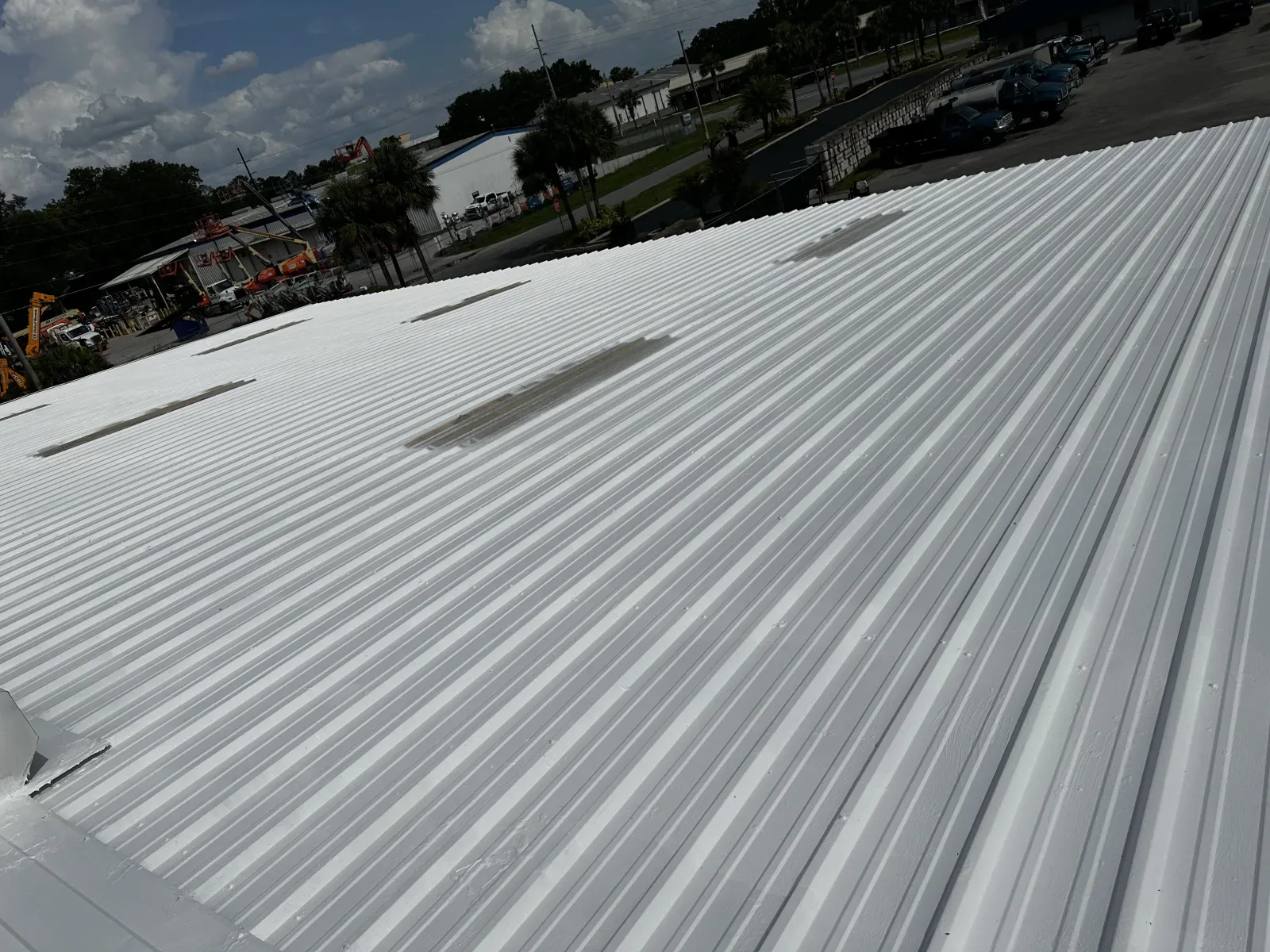
Occupied work costs more than empty-building work in a few specific ways: smaller crews moving more often, extra supervision, night or weekend hours, temporary protection and more tie-in details. A fair contractor shows those costs as lines on the proposal. An unfair one hides them in the unit price and then adds change orders when the schedule slips. Ask for a phasing allowance, a daily dry-in procedure and a written rule for who pays when weather stops the work.
Compare that against the cost of a shutdown, which is usually far larger than the phasing premium. A plant that stops a production line, or a tenant that threatens to leave, costs more in a week than a careful schedule does in a season. If you own several buildings, a multi-site roof program lets you stage the work so one building is never down while another is under construction.
Get the logistics in writing before you sign
Do not leave the details to a pre-job conversation. Get answers on paper to these.
- How many square feet will be open at one time, and what happens if rain is forecast?
- Where will materials be staged, and how will the crane or hoist traffic cross your parking, docks or runways?
- Who tells tenants what, and when?
- What does the crew do when a tenant calls with an emergency?
Roof work at an airport campus such as Chicago Rockford International Airport, home to a large AAR aircraft maintenance facility, usually comes with its own access rules, restricted areas and operating hours, and the roofing schedule has to fit around them.
Schedule the loud work around your calendar
The best time for a roof is the time when your building is least sensitive, and the weather has to agree. In Rockford that usually means late spring through early autumn, with the heavy tear-off pushed into the quietest weeks of your own year. A school reroofs in summer. A retail center avoids the holiday season. A plant plans around its shutdown weeks. Tell the contractor what your calendar looks like in the first conversation, and let that shape the start date.
Start planning in the winter before, so permits, materials and crews are ready the first dry week.
Before the first lift, identify the rooms and operations directly beneath each work zone. A facilities contact can help mark air intakes, production equipment, patient access and loading paths on the phasing plan. Then agree how the crew will notify staff when a noisy task moves, how temporary protection will be checked at the end of the shift, and who can stop work if weather changes. This preparation turns a roof sequence into a manageable building schedule instead of a daily surprise.
Questions Owners Ask
Will my tenants have to move out during reroofing?
Almost never. The crew works from above and phases the roof so that the space below stays usable. A tenant may see some noise, closed entrances or covered air intakes, and the plan should tell them about those in advance.
How noisy and dusty is a tear-off?
Loud enough that you should schedule around it. Removal, fasteners and equipment all make noise, and dust can come through a deck that has openings. Ask the crew how they control debris above sensitive space.
What if it rains while the roof is open?
That is why only a small area is opened at a time. Each section is dried in before the crew leaves, and temporary cover stays on site. If the forecast turns, work stops and the exposed area gets closed.
Can a hospital or clinic stay open during reroofing?
Yes, with planning. Intakes, access routes and noise limits have to be agreed with the facility team before work starts, and an infection control plan may apply. Many healthcare owners choose a phased overlay or tear-off for exactly that reason.
Does occupied work cost more?
It usually does, because of phasing, supervision and protection. Ask for those items on their own lines and compare them to what a shutdown would cost your business.